Health & Fitness
What those Back Spasms may really be Hiding: the Most Commonly Misdiagnosed Spine Injuries
Dr. Amir Vokshoor says back spasms may mask more serious conditions like disc tears, facet joint trauma, cervical injury and more. BLOG


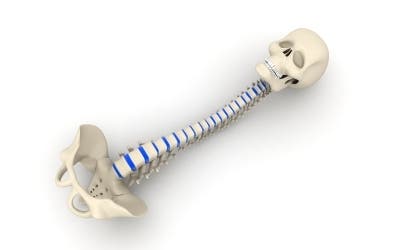
When it comes to spinal injury, achieving a proper diagnosis is vital. Left untreated, several conditions can cause chronic, irreversible damage that could have been avoided if they were identified early on. One study in the Journal of Trauma - Injury Infection and Critical Care found that in a sampling of 569 patients, the correct diagnosis of spinal cord injury was missed in 52 cases, an error rate of 9.1%. Of these missed diagnoses, mismanagement resulted in neurologic deterioration in 50% of the patients.
According to Dr. Amir Vokshoor, a neurological spine surgeon at DISC Sports & Spine Center, disc tears, facet joint trauma, cervical injury, sciatica, spinal stenosis and spondylolisthesis are among the most commonly misdiagnosed conditions, often labeled incorrectly as back spasms. While muscular spasms and tears are very common and can be painful, they can sometimes mask underlying spine injuries.
“Spinal pain can pose a diagnostic challenge for any practitioner,” Dr. Vokshoor explains. “The pattern of pain does not always fit the exact anatomical pathology, and it’s very individualized. At times, all the patient is experiencing is what seems like muscular spasms, where the underlying injury may be to the structure of the disc or facet joints. The innervation of discs and facet joints leads to nociception versus varying degrees of stiffness, tightness and discomfort in different body positions—all, of course, also varying among individuals and in different age populations.”
Find out what's happening in Marina Del Reyfor free with the latest updates from Patch.
In these misdiagnoses, the accuracy of pain as an indicator and the challenges in reporting that pain are contributing factors, but another set of factors involves the diagnostic threshold for imaging, such as MRI and CT scans, as well as the cost of these imaging studies.
Dr. Vokshoor cites a study published in Clinical Orthopaedics & Related Research, in which 11% of patients with lumbar spine fractures were identified in CT scans, but not in plain radiographs alone.
Find out what's happening in Marina Del Reyfor free with the latest updates from Patch.
“This means that 11% of patients with major injuries could be being misdiagnosed if only x-rays are used, and the problem is exacerbated by the fact that the cost of CT scans can be a deterrent to using these imaging studies for diagnostic purposes,” he adds.
As far as what can be done to improve the rate of spinal misdiagnosis, Dr. Vokshoor stresses the importance of both educating doctors on these common mistakes and taking the time on each case to fully understand what the patient is experiencing.
“At times, it is paramount to follow patients throughout the course of their pain to make a definitive diagnosis,” says Dr. Vokshoor. “It could make all the difference.”
Image courtesy of rajcreationzs at FreeDigitalPhotos.net.