Health & Fitness
EPA to Conduct Facebook EIR Traffic Analysis
Traffic and Housing top the list of East Palo Alto community concerns at the City Council's first meeting to review the Facebook Campus EIR.
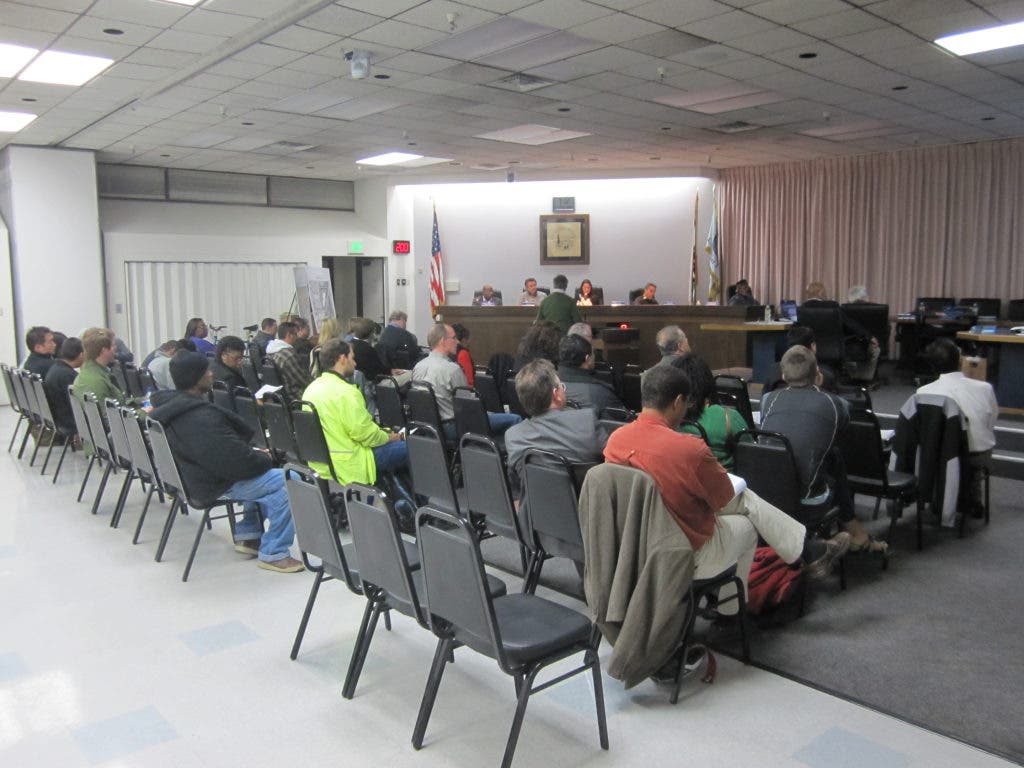

East Palo Alto's City Council began its review of the Facebook Campus Draft Environmental Impact Report (DEIR) last night with a special Study Session.
It was the second in a quick succession of review meetings. The Draft EIR was released Dec 8, and .
Council members were skeptical of the EIR's conclusion that only two intersections along University Ave would be impacted. Council Member David Woods questioned how the intersections with Bayfront Exprwy and the intersection with Donohoe could be impacted - but not any of the intersections in between.
Find out what's happening in Menlo Park-Athertonfor free with the latest updates from Patch.
Council member Carlos Romero doubted that Facebook's Transportation Demand Management (TDM) program to encourage employees to walk, bike, or take transit to work could possibly be more successful at the company's Menlo Park location as compared with its former Palo Alto location.
"I'm not sure this site has the same TDM 'natural qualities' and I think we will wanna look at the numbers." Romero said.
Find out what's happening in Menlo Park-Athertonfor free with the latest updates from Patch.
The City Council agreed to direct staff to contract a traffic engineering consultant to conduct its own traffic study - and to analyze the impacts that Facebook commuters will have on East Palo Alto.
"We have bike enthusiasts here, we have seniors, and we have parents who are very concerned about being able to walk their kids to school. What are the effects of having more cars going up and down University?" Romero asked.
Both Council Members David Woods and Ruben Abrica doubted the effectiveness of constructing a bike path along University Ave from the Dumbarton railroad tracks to the intersection of University Ave & Bayfront Exprwy to partially mitigate the traffic impacts at that intersection.
"That bike path is just hanging there and then what? How does it connect with everything else?" Abrica asked.
Menlo Park Senior Engineer Atul Patel answered that the bike path was chosen as a partial mitigation measure because the city's preferred method of mitigating traffic impacts - adding more vehicle lanes - isn't feasible at that intersection due to the wetlands located nearby, but constructing the bike path would cost roughly the same - about $400,000.
Twelve members of the public commented on the Facebook EIR at the Study Session, six of them promoting bicycling, and suggesting that bike improvements be used to mitigate traffic impacts in East Palo Alto.
Some stressed the importance of continuous, connected routes, which they believe are effective in shifting commuters from driving to biking. Many would-be bike commuters who live south of Facebook are discouraged from cycling and drive instead, they said, because the .
Some described how bicycling benefits the community in less tangible ways. "In my (bike) commute I encounter other cyclists, people walking with their children to school, and walking through the neighborhoods. It's an imporant point of contact with the rest of my community," explained resident Lisa Villarreal.
Resident Michelle Brown, who commutes by bicycle from East Palo Alto to Mountain View, stressed the importance of improving the Willow Rd and University Ave crossings of Highway 101, saying they require "dare-devil tactics".
Affordable housing was also an issue of concern. William Webster, who serves on the East Palo Alto Rent Stabilization Board, warned that Equity Residential, which owns over half the city's affordable housing stock, wishes to destroy existing rental housing in the Woodland neighborhood to construct newer, more dense buildings and that "the specific impetus for this is the Facebook project, [because] new developmet would be attractive to high-income Facebook employees who like to live in close vicinity to where they work."
Marco Naranjo, a representative of Youth United for Community Action (YUCA), a local grassroots community youth organization, asked why residents should believe that Menlo Park will provide enough housing for Facebook employees when the city hasn't updated the Housing Element of its General Plan since 1992.
Marco Agilera, also of YUCA, asked if the buses used to transport Facebook employees to work would be for private use only, or if local residents coud benefit by being able to use them as well. He also asked how the proposed migitations that would add vehicle lanes to East Palo Alto streets would impact pedestrian safety.
At the end of the Study Session, City Council decided to hold a community meeting devoted to review of the Facebook Campus project in order to collect additional feedback on the community's concerns. The meeting will take place in early January, but has not yet been scheduled.
Upcoming Facebook Campus EIR Review Meetings:
* December 14, Menlo Park Transportation Commission, City Council Chambers, 701 Laurel Street, 7 pm
* December 15, Menlo Park Green Ribbon Citizen's Committee, Arrillaga Community Center, 600 Alma St, Elm Room, 6:3p pm
* January 4, 2012 - Menlo Park Housing Commission, City Administration Building Fishbowl, 5:30 pm
* January 4, 2012 - Menlo Park Environmental Quality Commission, Arrillaga Recreation Center Elm Room, 6:30 pm
* January 4, 2012 - East Palo Alto Public Works and Transportation Commission, 2415 University Ave, East Palo Alto, 7:30 pm.
* January 9, 2012 - Menlo Park Planning Commission, City Council Chambers, 701 Laurel Street, 7pm
* January 31, 2012 - Menlo Park City Council study session, Council Chambers, 701 Laurel Street, 7 pm
* February 14, 2012 - Menlo Park City Council Development Agreement Negotiation Direction, Council Chambers, 7 pm