Business & Tech
Investigating What Went Wrong at Café Scientifique
Dr. Don Shockey spoke in Menlo Park about what we can learn when a NASA astronaut's gloves fail.


When the outer skin of an airplane rips open in flight, or a Humvee military vehicle fails to protect passengers from improvised explosive devices, the scientists at SRI International see an opportunity to learn.
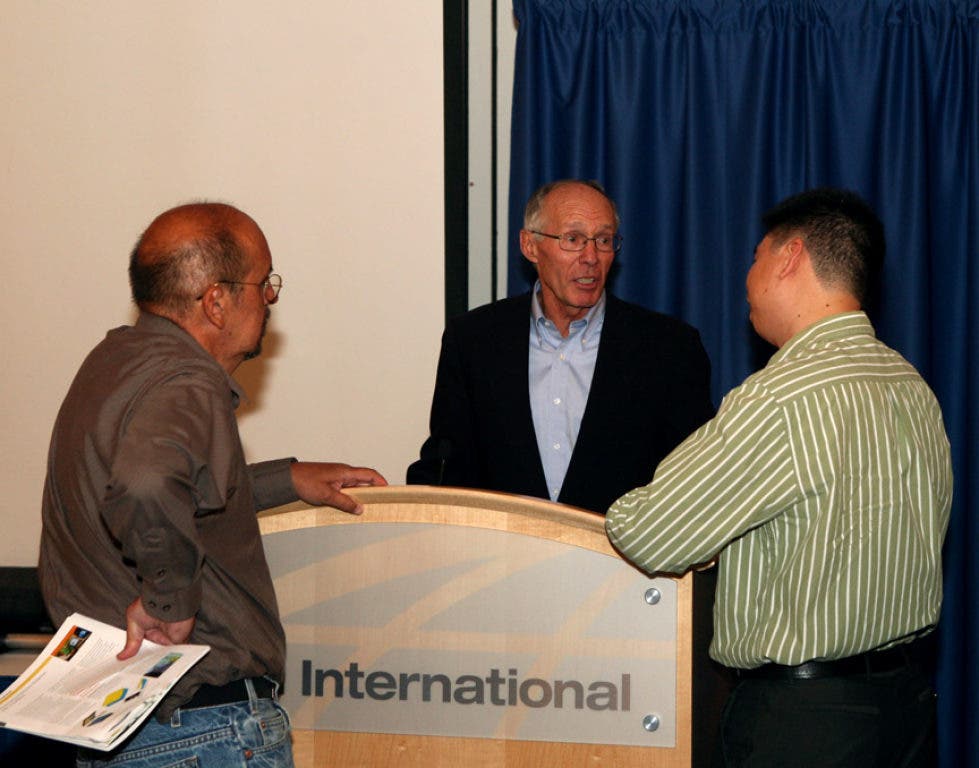
About 175 people attended the May Café Scientifique on the SRI campus Tuesday to hear Dr. Don Shockey, Director of SRI’s Inernational's Center for Fracture Physics, speak about how material fractures, some microscopically small, can cause large failures.
“Failure is unpleasant, but it is also an opportunity” Shockey said. “The key is to find out how and why the failure occurred.”
Find out what's happening in Menlo Park-Athertonfor free with the latest updates from Patch.
By studying the details of the failure, SRI International scientists create a recipe for success. They begin by conceiving of ways to avoid the failure. Experiments are conducted or computer modeling is used to test out possible solutions. And when a viable solution is found, implementation of the new product or protocol is the last step.
Dr. Shockey offered several examples of the incidents that inspired the day's Café Scientifique. In 1989, the engine of a DC-10 exploded and sent fragments into the planes fuselage, severing the control lines and forcing the plane into a crash landing in Sioux City, IA. The Federal Aviation Administration needed to know how to prevent similar failures in the future. The SRI International solution? Layer a fabric stronger than Kevlar—Zylon—between the outer skin and passenger compartment.
Find out what's happening in Menlo Park-Athertonfor free with the latest updates from Patch.
When NASA astronauts returned from space travel with rips and tears in the thumbs of their gloves, they asked SRI International to investigate. It turns out micro-meteorites, which are fast traveling dust specs the size of a grain of sand, had hit them, creating small craters with sharp edges that sliced the gloves. Adding a small patch of rip resistant fabric to the gloves was the solution.
The attentive audience members had a number of questions for Dr. Shockey. Questions included: Is any research being done on self-healing materials? Can embedded sensors detect cracks? Or is it possible to prevent fractures by building materials out of nano particles?
SRI Internatinoal had an unexpected failure of its own on Tuesday morning, when a large heritage size tree fell onto the café patio. No one was injured, nor were any buildings damaged. It makes you wonder if the scientists from the Fracture Center were called upon to investigate.