Community Corner
New Library Exhibition Puts Spotlight on Gendered Violence
"Confronting Violence: Improving Women's Lives" produced by the National Library of Medicine
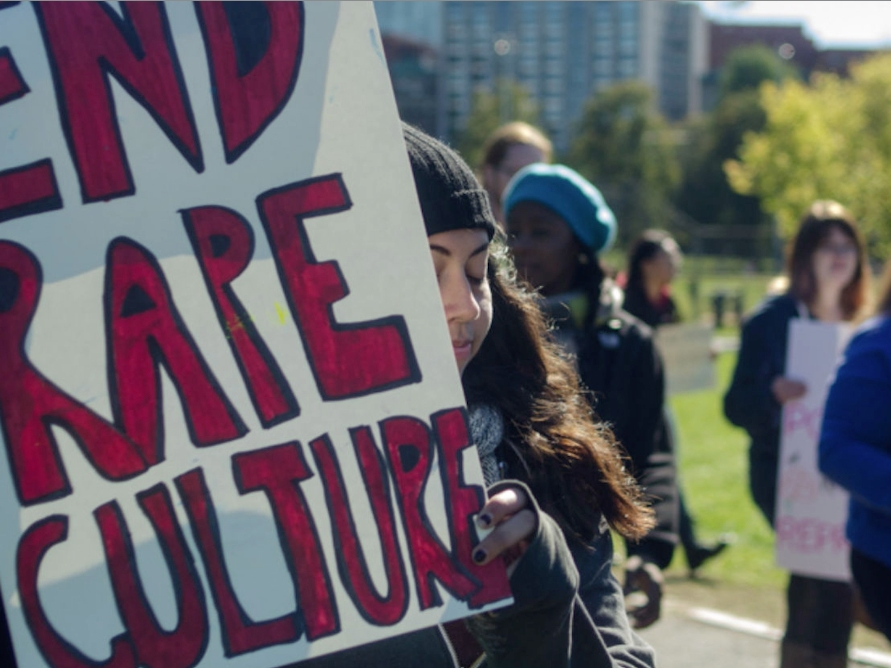
Confronting Violence, Improving Women’s Lives tells the powerful story of how nurse reformers dramatically improved services to battered women and changed the way the medical profession responded to interpersonal violence against women. This traveling exhibition begins an 8-week visit at the Menlo Park Main Library on July 8, provided by the National Library of Medicine, National Institutes of Health.
The exhibition begins by contextualizing nurses within a longer trajectory of reformers who have sought to end family violence and improve women’s lives, from mid-19th century temperance and women’s right advocates to 1970s feminist activists. While feminist agitation spawned significant reform in law and social services, by the late 20th century the medical profession remained largely unresponsive to the needs of women who had suffered abuse.
Nurses began working for change. They created and implemented some of the first hospital protocols for treating women who presented with violent physical injuries. Hospitals across the country eventually adopted protocols that served as models of effective medical intervention on behalf of battered women.
Find out what's happening in Menlo Park-Athertonfor free with the latest updates from Patch.
In addition to developing protocols for care, throughout the 1980s nurse reformers researched, published, and shared ideas on both the causes of domestic violence and best practices for responding effectively to women who were battered. By the 1990s, all of the major medical and public health organizations recognized domestic violence as a significant health issue and urged their members to take action. The depth and breadth of the nurses’ advocacy and research resulted in positive and important changes in less than twenty years’ time.
While these reforms were significant, the work of ending violence in American homes continues to this day. The exhibition concludes with information on how we can all confront violence, work to end it, and improve women’s and our lives.
Find out what's happening in Menlo Park-Athertonfor free with the latest updates from Patch.
The exhibition runs through August 31 at the library, and is accompanied by an event series featuring film screenings, panel discussions, and first-person narratives. The full schedule may be viewed online at www.menlopark.org/adults. All programming is free.
Confronting Violence: Improving Women’s Lives
Special Events
Monday, July 8 at 6:00 p.m. Film Screening: NO! The Rape Documentary
The award-winning film will be followed by a discussion facilitated by staff members from Rape Trauma Services.
Monday, July 15 at 6:30 p.m. Film Screening: The Bystander Moment: Transforming Rape Culture at its Roots
The film explores the role of friends, classmates, and other bystanders in perpetuating various forms of gender violence. Members of Rape Trauma Services will moderate a discussion following the screening.
Wednesday, July 24 at 6:30 p.m. Dare to Be Powerful
Laura Eberly, YWCA Director of Social Change, will share how people can take part in practical solutions to protect survivors, empower advocates, and eradicate gender-based violence.
Tuesday, July 30 at 6:00 p.m. Domestic Violence 101: a Community Conversation
A discussion of the specific tactics of power and control used to perpetuate domestic violence, and some key ways anyone can support the survivors in our lives.
Saturday, August 10 at 11:00 a.m. Boys ‘n’ Guns: Masculinity in a Culture of Violence
Siavash Zohoori was a near victim of a mass shooting at UCSB in 2014. He says that in a time where gun violence is used as conflict resolution, it's not just about gun control; it's also about masculinity control.
Wednesday, August 14 at 7:00 p.m. Winning the Vote: The Fight Continues
In honor of the 99th anniversary of women's suffrage, the League of Women Voters will talk about the "mighty political experiment" of granting women the right to vote.