Community Corner
Officials Celebrate Last Of $760 Million in State Money For BART Extension to S.J.
The train line expansion, to include Milpitas and Berryessa stations by 2018 completion, will be owned by the VTA and operated by BART.


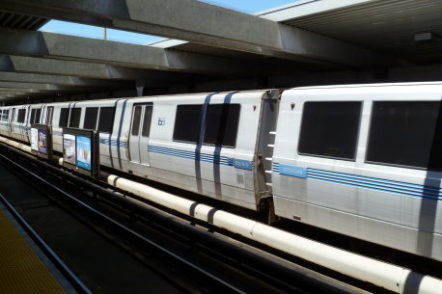
Elected and appointed officials today celebrated the final installment of more than $760 million in state money for a planned 10-mile extension of BART to north San Jose, which is scheduled to be completed in 2018.
Rep. Mike Honda, D-San Jose, San Jose Mayor Chuck Reed, former mayor Ron Gonzales and California Transportation Commission member Jim Earp were among the dignitaries gathered inside a tent next to what will be BART’s Berryessa station, Santa Clara Transit Authority spokeswoman Bernice Alaniz said.
The $2.3 billion extension, starting south of the planned Warm Springs BART station in Alameda County, is being paid for by Santa Clara County using a $900 million federal grant, state funds and money raised from sales tax measures passed by county voters in 2000 and 2008, Alaniz said.
Find out what's happening in Menlo Park-Athertonfor free with the latest updates from Patch.
The train line expansion, to include the Milpitas and Berryessa stations, will be owned by the VTA and operated by BART through a contract agreement, expanding BART’s rail lines to 120 miles and 47 stations in the Bay Area, according to the VTA.
Testing of BART trains on the new track is set to start in late 2017 and the line will begin transporting passengers in 2018, the VTA reported.
Find out what's happening in Menlo Park-Athertonfor free with the latest updates from Patch.
Trains on the extension will arrive every 7.5 minutes and are expected to carry an estimated 46,000 riders per day by 2030, with trips to San Francisco to take about 60 minutes from Berryessa, VTA officials said.
The VTA’s board was expected to vote later today to accept a check from California’s Traffic Congestion Relief Program for the final $39 million of $649 million allocated by the program to fund the extension, according to Alaniz.
The California Transportation Commission also added a large payment, bringing the total state contribution for the project to $768 million, Alaniz said.
Carl Guardino, president of the Silicon Valley Leadership Group who hosted today’s event, praised Gonzales for building a coalition among local governments and voters in the 1990s and 2000s to “keep the decades-long dream of bringing BART to Silicon Valley alive.”
Gonzales, who was San Jose mayor from 1999 to 2006, told the approximately 100 attendees that the Berryessa station was the first step toward the “most important” 6.1-mile second phase that officials hope one day would connect BART to downtown San Jose and Santa Clara.
Reed described the project as “a miracle” because the state of California delivered on a promise to spend more than $700 million on it over the administrations of three governors.
The mayor thanked Governors Davis, Schwarzenegger and Brown, “because as you all know, you’ve lived the ups and downs of the California economy, the California budget -- there were many, many opportunities to take the money.”
But due to the persistence of state and local officials, California’s funding remained and led to the federal money the VTA got that “made it possible for this project to happen,” Reed said.
“Of course, we’re only in the middle of the project, but nevertheless a miracle’s occurred and it’s good to take a day to celebrate it,” he said.
When the Berryessa station is completed, it will have an open-air boarding platform 35 feet above ground and a 1,200-space parking building to go with ground-level car spaces, Alaniz said.
Work crews are currently constructing the raised BART train track that ends at the planned station at 1411 Mabury Road between North King Road to the east and U.S. Highway 101 to the west.
The building of the tracks started on April 12, 2012, including the first two miles in Alameda County, so the county’s project is at the halfway mark, Alaniz said.
“We’re two and a half years into it and we have two and a half years to go,” she said.
Voters in the county passed a half-cent sales tax measure to help pay for the extension in 2000, but that money did not become available until 2006, so the VTA started using the state traffic congestion relief funding to pay for design and engineering costs, Alaniz said.
The final $39 million in congestion relief money is going directly toward construction activity, she said.
The VTA is also working on plans to develop a proposed second 6.1-mile phase for BART, with a 5.1-mile subway tunnel beneath downtown San Jose ending with a ground-level station near the Caltrain depot in Santa Clara.
Funding for the second phase is not secured yet, according to VTA officials.
--Bay City News
Get more local news delivered straight to your inbox. Sign up for free Patch newsletters and alerts.