

On Tuesday, Sept. 25, the Santa Clara Valley Water District Board of Directors approved the Santa Clara Valley Habitat Conservation Plan. Ten years in the making, the plan is a groundbreaking effort to protect local endangered species habitats while streamlining the permitting process for public and private projects.
“It was a monumental effort coordinating all of the regulators to get this done,” said Board Chair Linda J. LeZotte. “I support this plan.”
The water district partnered locally with the cities of San Jose, Morgan Hill and Gilroy, Santa Clara County, and the Valley Transportation Authority. In 2005, it entered into a planning agreement with the US Fish and Wildlife Service and California Department of Fish and Game to develop the plan to meet state and federal Endangered Species Act (ESA) permit requirements.
The plan benefits the district and its local partners by providing streamlined ESA permitting and mitigation processes. It can take public agencies and private developers many years to get permits, which compound project costs. By monetizing the mitigation up front, the district will know what costs are going to be from the outset. Once that fee is paid, the permit will last for 50 years. So essentially, the plan helps to save money on any given project by providing a clear process and comprehensive permitting.
Another key benefit of the plan is that it provides a coordinated regional plan for conserving natural communities and endangered species.
“You can’t save a species on a piecemeal basis,” said Linda Ruthruff from the California Native Plant Society, who spoke in support of the plan.
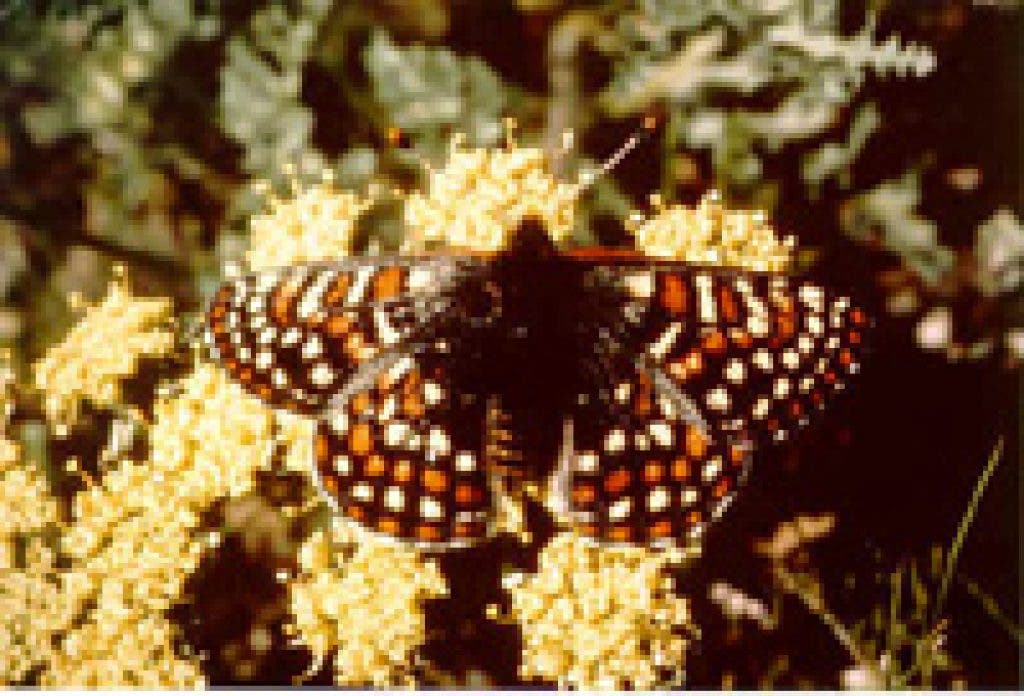
When implemented, the plan will protect 18 endangered species found in the Guadalupe, Coyote and Uvas Llagas watersheds in Santa Clara County by creating a reserve area where habitat will be preserved for these species. Under the plan, some over 49,000 acres of land will be managed as a habitat reserve. Reserve management will restore 500 acres of habitat and 10 miles of stream. Protected species include the Western Burrowing Owl, the Bay Checkerspot Butterfly and other serpentine soil species, the California Red Legged Frog and the California Yellow Legged Frog.
“Without habitat you have nothing. No habitat, no wildlife,” said Director Don Gage, long-time supporter, who spearheaded the plan while a Santa Clara County supervisor.
The water district’s estimated costs would be $8.5 million in development fees and $37.5 million in special fees, primarily for wetland, riparian and temporary impacts from capital projects and maintenance activities. Without the plan, the district’s fees would be significantly higher. Rather than paying multiple fees for ongoing operations and maintenance activities, the district will be required to pay just one fee.
The district is in a special position in that it has already benefitted from the plan. The district was able to use it for projects that were already in the pipeline. The mitigation fees were paid into an escrow fund for the Calabazas Flood Protection Project and the Silicon Valley Advanced Water Purification Center.
The funds that are collected will be used by the Santa Clara Valley Habitat Agency set up by the local partners to acquire and manage preserve areas. These preserves allow for species’ recovery standards identified in the plan. Lands that are acquired for preservation provide compensatory mitigation for public and private development projects, including certain large scale water district projects.
If and when the plan is adopted by all of the local partner permittees, the U.S. Fish and Wildlife Service and California Department of Fish and Game will issue permits to each local agency and to the Santa Clara Valley Habitat Agency which will act to implement the plan. If all of these things occur within the projected schedule, an official habitat conservation plan will be in effect by June 2013.
For more information about the plan, contact Debra Caldon, water district environmental services manager, at 408-630-3057 or via e-mail at dcaldon@valleywater.org. The final habitat plan and environmental documents are available at www.scv-habitatplan.org/.