Schools
Meet Beverly James, Retired Educator
After 39 years at Milpitas Unified, her entire career, she's still passionate about helping kids succeed.

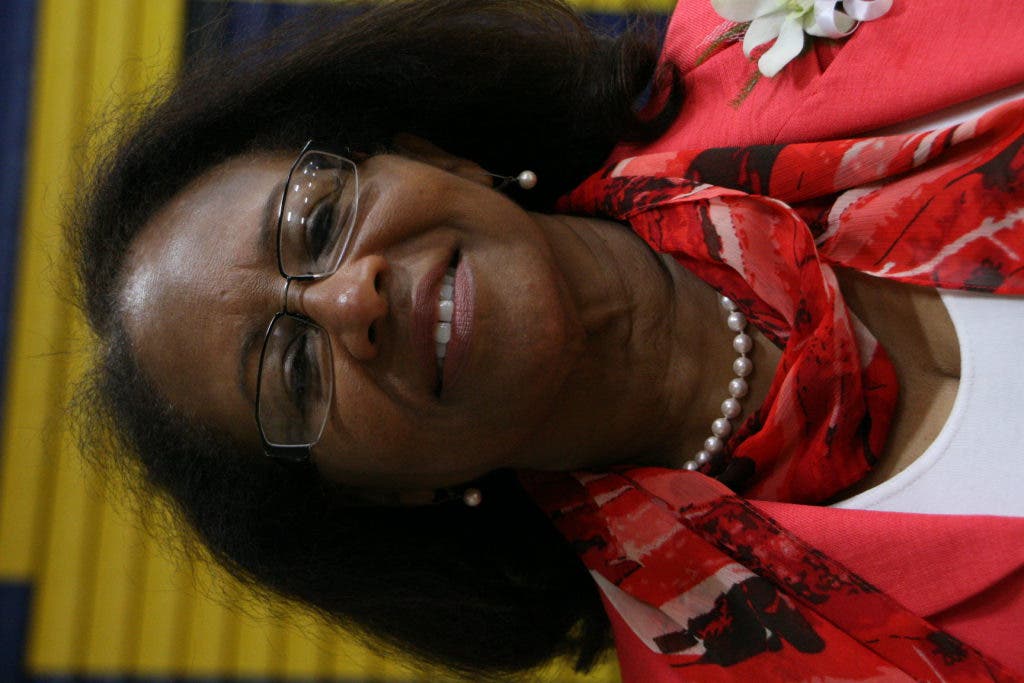

One of the familiar faces at Milpitas Unified, Beverly James, director of assessment and special projects, retired after nearly four decades of service. She started as a teacher at Curtner Elementary fresh out of college in 1972.
Milpitas Patch: Having worked as a teacher, assistant principal and principal, who were some of your former students?
Beverly James: I still run into former students. For example, Councilmember Armando Gomez, he was one of my students; Armando Corpuz, he's a commander in the Milpitas Police Department; Samu Tiumalu, who is the coordinator of the city's park and rec program. And they have fond memories. I would like to think that I had a positive impact on the hundreds of students, teachers and parents that I had the opportunity to work and teach.
Find out what's happening in Milpitasfor free with the latest updates from Patch.
Patch: Perhaps one of the people you influenced the most was your son, Damon, now principal at Weller Elementary.
James: I do think I inspired him to become a principal. To be honest with you, at first I really didn't want him to go into education. And we had many conversations about teaching children and philosophies. He has a special gift of working with students.
Find out what's happening in Milpitasfor free with the latest updates from Patch.
Patch: What would you say about his ability to make a difference?
James: Through the years, he has taken many students under his wing. Having his own school, he is able to have a greater impact. As a principal, the impact you have is on teachers in terms of classroom instruction, formulating minds, implementing sound strategies to assist students and moving a whole school forward.
Patch: Your last position at MUSD focused on testing assessment. Is there too much emphasis being placed on standardized tests?
James: Number one, it's about accountability. The benefit of testing and No Child Left Behind is the accountability piece. Without it, schools didn't care if some kids didn't learn. Because of the testing, there's that emphasis of how do we get these kids where they need to be. Without that test, that was not happening at all.
Patch: There's a concern that teachers are "teaching the test" and less focused on subjects other than math and English.
James: I think there's definitely an emphasis on teaching what's going to be tested. So I think we have to step back and take a look at it. We need to find a balance where we're still being held accountable, yet we're giving kids an equal opportunity to learn across the board.
But because we're so academically focused, what do we leave out? The music, the art, the science experiments. The things that capture kids. We take away those things.
I think at many of our schools there's emphasis on the academic piece and the intervention. But what we're failing to do is to look at the whole child. Their strength may not be academics, but how can we build on that? They could be an excellent singer, an excellent athlete, they could be an excellent artist or orator. We can take what they're good at and make it a catalyst that brings improvement to their academics.
Patch: The tests often show Latino and African-American students lagging behind their peers. We often talk about closing the "achievement gap."
James: This is an area where I am most passionate. Milpitas has made gains; we're working hard at it. But as much work as were doing, we're not moving fast enough. We just aren't seeing the gains that we need to see. Mind you, the percentage of African-American students in Milpitas is very small, but the success rate is also very small. Latinos, the population is larger. The success rate is small. Regardless of gender or ethnicity, all children have the right to learn at a high degree receiving a quality education.
Patch: Why do you think the achievement gap exists?
James: This is a complex issue. One reason is that public education is a white, middle class institution. For example, the rules that are set. African-American children in our churches, they're noisy, because people talk back ... "Amen, hallelujah." But when they get to the school system, there's not that choral response. You're expected to sit quietly. Is there opportunity for children to shine in those settings?
Patch: What about role models?
James: We look at the literature in our school system of what's given to students to read. The list itself can be diverse, but not what's actually given to students to read. How many are written by Latinos or African-Americans? I'm talking in general, not just Milpitas. In addition, there are many children in Milpitas that begin in kindergarten that will never have a Latino or African-American teacher.
Patch: You've said one of strengths is working with new teachers. What advice would you give to a new teacher just starting out?
James: Sometimes we think children come in one special package. But the package that they come in is so diverse. We have to be willing to accept children as they are and move them from that point forward. Not where we want them to be, but from wherever they are. So that means we have to be open-minded and caring, yet set the expectations high.
Get more local news delivered straight to your inbox. Sign up for free Patch newsletters and alerts.