Crime & Safety
How A Laguna Beach Fire Capt.’s Wife, 49, Survived Massive Stroke
Laguna Beach Fire Captain Awoke Early Morning September 5th to His 49-year old Wife, Mother to Six, in Throes of Violent Seizure from Stroke

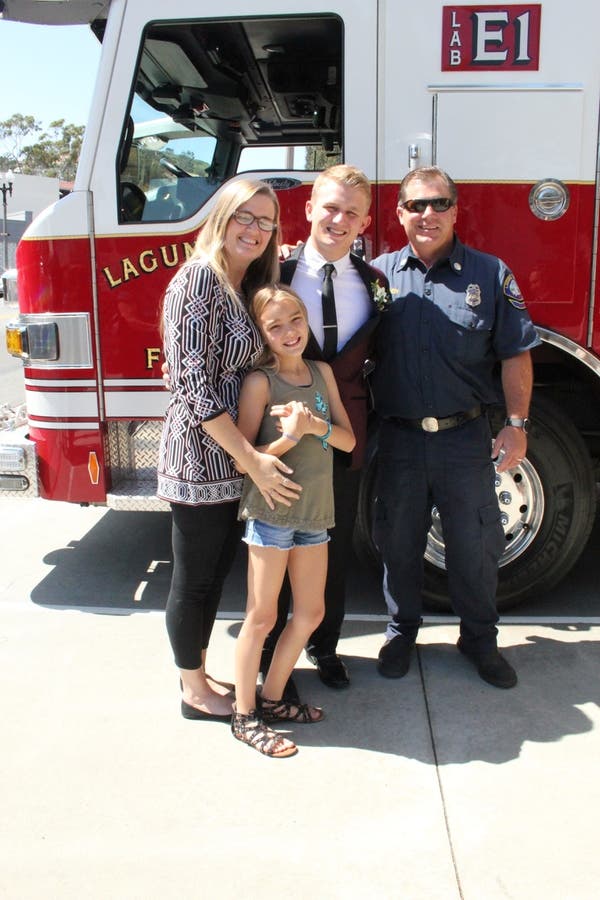


(Mission Viejo, CA) – On Wednesday, September 5th, Laguna Beach Fire Department Captain Paramedic Eric Lether, of Mission Viejo, awoke at 4:45 a.m. to the violent shaking of his wife of 20-years-- and love of his life, Michelle Lether, 49, in the throes of an unrelenting seizure caused by a Cerebral Aneurysm. Eric, an 18-year veteran with LBFD and Orange County native, knew she was in a life-threatening situation in a race against time. The following interview is the first in a series that will cover the story over the next several months documenting the Lether family’s journey back to saving “Mom”: the glue of the South Orange County family of six (Maria, 30, of Orange County; T.J., 28, of Orange County; college student Kyle, 21; college student Brendan, 19; 6th Grader Taylor, 11 and 6th Grader Destany, 12).
Find out what's happening in Mission Viejofor free with the latest updates from Patch.
Find out what's happening in Mission Viejofor free with the latest updates from Patch.
Fire Capt. Lether: “It was a normal night and we had gone to sleep as usual. Our 11-year old daughter Taylor came in to sleep with us. At around 4:45 a.m., I just remember waking up feeling Michelle, 49, violently shaking in bed. Taylor was asleep in between us. As a longtime paramedic I recognized it was a seizure and knew she had no prior history of them. Taylor was crying. It was still dark. I jumped out of bed and turned on the light, grabbed my iPhone on the nightstand and dialed 911. Since I’m always on call, my phone is always on, charged and ready to go. I had Taylor go wake up her older brother Kyle, 21. He quickly came in and I instructed him to go wait outside for the fire department. Our 19-year old Brendan heard the noise and came rushing into our bedroom. Both boys attend college and live at home. Brendan quickly took his little sisters Taylor and Destany, 12, into a back room of the house. Michelle was seizing the entire time. During a seizure, your arms flail and your back arches. It’s pretty violent. The patient is in a totally unconscious state. OCFA Firefighter Paramedics quickly arrived, took care of Michelle and delivered her to Mission Hospital within minutes. I don’t remember much other than being a very scared husband. For Firefighters, we experience things differently. I knew what was going on and it made it that much worse. The first 24-hours was just a blur. I was in shock.”
Fire Capt. Lether: “I drove myself to Mission Hospital which was just down the road from our home. I left the younger girls with their brother Kyle who stayed behind to take care of them. I was just in a state of panic. My mind was racing. I knew she didn’t have a history of seizures -- so I knew this was not good. I am in and out of Mission Hospital all of the time for work, so I knew where to go. I arrived just a minute after OCFA Firefighters brought her into the ER. Mission Hospital did a Code Stroke, which is when they ring a bell and an entire neurological team comes down to the ER – including neurosurgeons, neurologists, nurses, just all sorts of physicians. They are basically calling in the world.
At that time, as they were assessing Michelle, I was alone and just crying. Again, for firefighters – it’s worse. I knew what was going on. I understood the terms being used. I knew it was life and death.”
…23 YEARS EARLIER
Fire Capt. Lether: “Michelle and I met 23 years ago at a community pool in Lake Forest in 1995. We married two years later in Reno, Nevada. We were young and in love but were just starting out in our careers so we didn’t have money for a big wedding. But we didn’t need a fancy wedding – we had each other and such a unique love. I remember vividly the day that I first saw her. It was my birthday. I was at the pool with my roommate. She was just so beautiful. While I was instantly taken by her beauty, it was her outward kindness that drew me to her. It really was love at first sight. From that day forward we began our lives together. She worked successfully in the private sector while I pursued a lifetime dream of becoming a Firefighter Paramedic. She supported me while I completed the education, training and certification. We built such a beautiful life together. We have our ups and downs, but we have always shown up for each other.
We both believe very strongly in God, Church, Faith, family, friends and community. Our love and dedication to our children has meant always setting aside Sunday for each other. We call it Sunday Funday. All the kids come over and we spend that entire day together. First we attend Church in the morning. If it’s football season, we watch the game and cook a big meal. In the off season we play board games or go swimming.
We are a family of Faith. I truly believe God has a bigger plan for Michelle – we just don’t know what it is yet. But in every way, she is truly a miracle.”
9.5.18, 6:00 a.m.
Fire Capt. Lether: “Two neurosurgeons came out of her ER room shortly before 6 a.m. I was in the hallway still, but by then the children had arrived, along with a LBFD Battalion Chief, our Pastor and close friends. It was decided to do an emergency CT scan of her brain. The results were not good. The two neurosurgeons pulled me aside to tell me Michelle had suffered an extremely large cerebral aneurysm that measured 30 mm on the right side of her brain. Normally the Code Stroke team has one neurosurgeon. Michelle’s case was so technical she needed two.
They told me she was critical and that I should begin to have the family gather at the hospital. They told me they would “do everything possible to try to save her”—but wouldn’t know for sure the extent of her brain injury until she was on the operating table. They said they would first attempt a repair of the burst artery that had bled out into her brain. However, if they couldn’t repair the ruptured blood vessel, they would need to perform a more invasive operation called a craniotomy to clip the aneurysm.
Fire Capt. Lether: “Michele’s surgery lasted several hours and we all waited in a specialty surgical area. Eventually, the neurosurgeons came out of the operating room to tell me that they were unfortunately not able to repair the aneurysm with coiling – which would have kept the vessel open to allow blood to continue to flow and feed the rest of her brain. They performed the second more invasive craniotomy, where they had to remove a portion of her skull, in order to cut the affected blood vessel out of the brain. A lot of times they can repair an aneurysm, but in our case, they had to remove it.
They discussed that we weren’t out of the woods and that the next 24 to 72 hours would be crucial. They said Michelle would remain in a room in the ICU during that time for them to keep a very close eye on her. The decision was made for the kids to go home, but I stayed with her and slept next to her on a couch.
One thing I want to highlight is how lucky we were to be so close to a hospital like Mission Hospital. The elite and highly trained team of neurosurgeons, neurologists, nurses and staff saved her life. This is critical for people to understand. When we were in the ICU we had one nurse in our room around the clock. The ICU team of nurses were amazing.
9.6.18, early hours (1-2 a.m.)
Fire Capt. Lether: “I was asleep and suddenly was woken up by a doctor rushing into our room with more nurses. It was probably around 2 a.m. They took Michele out of the room and said she needed an emergency CT scan. She was having a massive hemorrhagic bleed, or stroke, and was rushed back into emergency surgery. The entire team of neurosurgeons was called back in. This was the third surgery and it entailed a larger craniotomy. I called the kids and thankfully a friend came to get them and drive them back to the hospital. It was the middle of the night.
We all waited back in the surgical waiting area. Everyone that was with us during the first surgery came back immediately. After the surgery, the neurosurgeons told us they weren’t sure how much of her brain had been affected, but they would be keeping an extremely close eye on her.
It was at that point that everyone decided not to leave me alone at the hospital. The LBFD Battalian Chief stayed with me in a nearby waiting room around the clock.
Doctors told us from that point the next 24 days would be critical for Michelle and she would be monitored daily for cerebral vasospasms. After the 3rd surgery, she came back to her ICU room. She was in an induced coma, on a ventilator, multiple IVs, hospital gown. Just a very sterile environment.
Each morning they monitored her for vasospasms by using a Transcranial Doppler.
Doctors said that patients with an aneurysm her size: 1/3rd don’t make it out of the ER; 1/3rd don’t’ make it out of the OR; and for those that do survive: 1/3rd have a 60% mortality rate. (death).”
Three Months Later …
12.20.18
Fire Capt. Lether: “In total, since September 5th , Michelle has had roughly 16 CT scans and four surgeries. The fourth surgery occurred as her brain began to heal and they replaced the portion of her skull they removed in September.
She is a miracle. An absolute miracle.
Michelle just came home from the hospital on Saturday, December 15th. She was in an induced coma for 24 days. They brought her out of the coma but she contracted pneumonia so they had to place her back into an induced coma.
When they brought her out of the initial induced coma after 24 days we were very nervous to see what her neurological function would be. But she gave the doctors a thumbs up.
The doctors told us her recovery was going to be a marathon – not a race.”
FAITH IN GOD’S PURPOSE
Fire Capt. Lether: “Our life changed overnight. We were planning a trip to Italy to celebrate our 20-year wedding anniversary—and now we are changing our hallways to accommodate a wheelchair. Before September 5th, Michelle did so much. She worked full-time in the private sector, she helped work at our daughters’ dance studio in RSM to help our two girls afford dancing, she ran our home: she just loved being a Mom and giving our children the best life she could.
Now Michelle is permanently disabled. Her left arm – from the top of her shoulder to the tip of her fingers, is paralyzed. The left side of her face still has numbness. She can move and feel sensation on her torso. Her left leg was initially paralyzed, but they are working to get some movement back.
Life today in December is totally different than what is was in September. Michelle’s passion to give her children the best life possible was what drove her. She did everything with the intention to give all of our children the very best life possible. To see that they had a happy and fulfilling childhood. She was 100% involved with the day to day rearing of the girls. With my schedule as a firefighter, her guidance and private sector job gave the children consistency. Firefighters work different schedules than the private sector and we are always prepared to provide mutual aid if needed in other parts of California that may need help.
She took such pride in taking care of our home: the cooking and preparing meals, grocery shopping, errands around town or appointments for the kids. Her passion and true calling in life is being a Mom and giving her best to any child. She is a very special woman.
Right now I am on a family leave from the fire department. Michelle needs 24-hour care: help getting into and out of bed, going to the bathroom and taking a shower, getting dressed, having food and meals brought to her. She went from totally independent to needing to depend on someone else in an instant. Everything changed for us.
Now she has several doctors appointments each week, including: outpatient physical therapy, occupational therapy and speech therapy. She has been through so much in these last three months. She went from the ICU to a sub-acute rehab care facility, then back to the ICU for the operation to replace the portion of her skull that was removed, then to an acute rehab and now finally home.”
WAYS FOR THE COMMUNITY TO HELP A LAGUNA BEACH FIRE DEPARTMENT CAPTAIN AFTER HE (ALONGSIDE BROTHER FIREFIGHTERS) HAS SPENT TWO DECADES ANSWERING OUR CALLS FOR HELP
“On behalf of the Orange County Fire Authority Benevolent Association, we were pleased to help the Lether family. Both Michelle and Eric do so much for others and we were happy to support a brother in need. Even though Eric works for another fire agency, when we heard what happened to Michelle, our hearts broke for her and we wanted to help a brother firefighter and his family. I am so glad to hear Michelle is doing so much better,” said OCFA Captain Steve Concialdi.
https://www.caringbridge.org/visit/michellelether
Fire Capt. Lether: “The aneurysm changed everything. Everything is totally different. Things we never thought about, like a crack in the driveway could cause her to fall or making sure our home is handicap accessible. We are very lucky that our home is one story, but we have many structural changes that we will need to make.
Michelle requires assistance around the clock every day. She still is being medically monitored for any neurological changes and we know how delicate her situation still is.
We have been extremely blessed in that my fire department family stepped in and has been by our side from the beginning, along with our Church family, our own children and family, friends, and even friends of friends.
But it’s still a long road ahead. The medical team is watching her closely. While they can’t predict with 100% certainty our questions about her long-term recovery, they all agree that they are in awe of how far she has come. There’s optimism, but we just don’t know everything we wish we could know.
For Michelle, making sure the younger girls are still taken care of and enjoying their lives is her number one priority. She wants them to still be able to do fun things in life even though this has happened to Mom. But that’s who Michelle is – just always looking out for and taking care of everybody else.”
Fire Capt. Lether: “In the immediate future, we still need to change our showers, bathtubs, laying a new smooth driveway and other construction projects around the home to adapt to her needs.
The fact that Michelle is home for Christmas is the most important thing. I was scheduled to work Christmas Day, but I just found out that different LBFD Firefighters came forward to work my shift and take on my responsibilities that day. My fellow firefighters truly are a second a family. Now I can be home Christmas Day.
For the kids, it’s been very hard for them to see Mom having such a difficult time. Michelle was a woman that before the aneurism was very strong physically and mentally. The kids are handling it though and are just so happy to have Mom home for Christmas.”
HEALTH CRISIS FOR FIRE CAPTAIN’S WIFE LEAVES HIM COMPELLED TO SPEAK OUT ON STROKE AWARENESS - ESPECIALLY FOR WOMEN AGES 40-60
Fire Capt. Lether: “Michelle is the rock of this family. She was in perfect health. She wasn’t a smoker. Doctors describe it as “bad luck” is all they can come up with. Her will to live and get better not just for herself but for her family is what inspires me.
We want to put our story out to show others that you can pull through this. We have learned that it is pretty common for women aged 40 to 60 to suffer a cerebral aneurism and stroke. We also discovered what an advanced and highly specialized neurology team Mission Hospital offers patients. If we were anywhere else, Michelle may not have lived. We are just so fortunate to have Mission Hospital right here in South Orange County.
One minute we were planning a trip to Italy to celebrate our 20-year wedding anniversary, the next we are putting in wheelchair ramps.
Your life can change that drastically, that quickly.
Michelle improves every day. We just hold onto the belief that everything happens for a reason.
We all think something like this is never going to happen to us. Our situation has really opened the eyes of our friends who are Michelle’s age: just 49. Plus, it is so important to have a will and a power of attorney.
Michelle and I feel that by sharing what has happened to us we might be able to help someone else. We want to help let our peers know about the risk factors for cerebral aneurism and stroke. And how much higher of a risk women ages 40 to 60 are at for this specific health issue.
If we can help others to be more prepared by telling them what’s happened to us, then we are all for it.”
LONG-TIME LETHER FAMILY FRIEND INSPIRED BY KINDNESS OF COMMUNITY HELPING AN INCREDIBLE FIRE CAPTAIN’S WIFE IN HER TIME OF NEED
“My wife Charlie and I met the Lether family years ago and we had an instant connection,” said long-time family friend of 20-years Jim Thivierge. “They are so easy to get along with and are just a great family.”
“They really embrace the essence of what it means to be a family by sticking together and taking care of each other,” Thivierge said. “It has always been so important to them to carve out time each week to spend time together as a family and do things together. We have been blessed as long-time friends to be able to do things together and know we can always count on each other.”
“This has been a huge opportunity for my wife and me to be there for them in their time of need. They deserve it, they are kind and loving people,” Thivierge said. “They have received a lot of help from so many people already and it goes to show who they are and how much they are loved.”
“They just don’t have any ill will towards anyone,” Thivierge said. “But this situation – almost a catastrophe, is going to require more help for them.”
“So many things lined up for Michelle to still even be here with us,” Thivierge said. “That Eric was home, the fast response by OCFA and that they live so close to Mission Hospital.”
“You just want them to be what they were,” Thivierge said. “She is the glue of that family. It has taken a village to fill her shoes. She’s just an amazing person.”
“So many wonderful people have turned out to help already,” Thivierge said. “But help can quickly evaporate. This is a long term recovery. With need of full time care, it is going to take a lot of people to do a little bit.”
“It has been a large community that has been helping the family,” Thivierge said. “From her amazing husband, to the Laguna Beach Fire Department, to family and friends, to Mission Hospital.”
“There’s so much awful news out there, but this is just a wonderful story of people helping people,” Thivierge said. “To see the community pull together especially during the holiday season is very inspiring.”
Cerebral Aneurysm: What is an Aneurysm?
According to the American Association of Neurological Surgeons (www.aans.org/Patients), a cerebral or intracranial aneurysm is an abnormal focal dilation of an artery in the brain that results from a weakening of the inner muscular layer (the intima) of a blood vessel wall. The vessel develops a "blister-like" dilation that can become thin and rupture without warning. The resultant bleeding into the space around the brain is called a subarachnoid hemorrhage (SAH). This kind of hemorrhage can lead to a stroke, coma and/or death.
Aneurysms are usually found at the base of the brain just inside the skull, in an area called the subarachnoid space. In fact, 90 percent of SAHs are attributed to ruptured cerebral aneurysms and the two terms are often used synonymously, according to www.aans.org/Patients.
Aneurysms range in size, from small – about 1/8 inch – to nearly one inch. Aneurysms larger than one inch are called giant aneurysms, pose a particularly high risk and are difficult to treat. The exact mechanisms by which cerebral aneurysms develop, grow and rupture are unknown, according to www.aans.org/Patients.
However, a number of factors are believed to contribute to the formation of cerebral aneurysms, including:
• Hypertension (high blood pressure)
• Cigarette smoking
• Congenital (genetic) predisposition
• Injury or trauma to blood vessels
• Complication from some types of blood infections
Patients with intracranial aneurysms can present with SAH from aneurysmal rupture or with un-ruptured aneurysms, which may have been discovered incidentally or resulted in neurological symptoms. An aneurysm ruptures when a hole develops in the sac of the aneurysm. The hole can be small, in which case only a small amount of blood leaks, or large, leading to a major hemorrhage. An un-ruptured aneurysm is the one whose sac has not previously leaked. Every year approximately 30,000 patients in the U.S. suffer from a ruptured cerebral aneurysm, and up to 6 percent of the population may have an un-ruptured cerebral aneurysm, according to according to www.aans.org/Patients.
A series of 111 patients with un-ruptured aneurysms showed:
• 51 percent with asymptomatic aneurysms
• 17 percent with acute symptomatology — such as ischemia (37% of aneurysms)
• Headache (37 percent of aneurysms)
• Seizures (18 percent of aneurysms)
• Cranial neuropathies (12 percent of aneurysms)
• Chronic symptomatology (32 percent) which included headache (51%)
• Visual deficits (29 percent)
• Weakness (11 percent) and
• Facial pain (nine percent)
The management of both ruptured and un-ruptured cerebral aneurysms poses a significant challenge for patients and their treating physicians.
Treatment Options
There is little doubt on the treatment for ruptured cerebral aneurysms, which are typically secured with clips or coils to prevent re-rupture. Occasionally if the patients’ neurological status is poor on presentation, they have multiple medical co-morbidities, especially in the elderly age group, and the chances of significant recovery seem low, the treating physician may not recommend aggressive management. The ‘Hunt and Hess grading scale,’ introduced in 1968, is generally used at most neurosurgical centers to classify the severity of SAH based on the patient's clinical condition, according to www.aans.org/Patients.
The worse the patients’ neurological status, the higher is the grade:
1. Asymptomatic, mild headache, slight nuchal rigidity (neck stiffness)
2. Moderate to severe headache, nuchal rigidity, cranial nerve palsy, no other neurological deficit
3. Drowsiness / confusion, mild focal neurologic deficit
4. Stupor, moderate-severe hemiparesis
5. Coma, extensor posturing
The treatment for un-ruptured cerebral aneurysms has been a matter of debate for decades. In the largest study on the management of un-ruptured aneurysms “International study of unruptured intracranial aneurysms” (ISUIA), the five-year cumulative rupture rates for patients without a history of SAH and with aneurysms in anterior circulation were 0 percent, 2.6 percent, 14.5 percent and 40 percent for aneurysms;7 mm, 7–12 mm, 13–24 mm, and 25 mm, respectively, according to www.aans.org/Patients.
Broadly, three treatment options for people with the diagnosis of cerebral aneurysm include:
• medical (non-surgical) therapy
• surgical therapy or clipping and
• endovascular therapy or coiling with or without adjunctive devices
Medical Therapy
Medical therapy is usually only an option for the treatment of un-ruptured intracranial aneurysms.
Strategies include smoking cessation and blood pressure control. These are the only factors that have been shown to have a significant effect on aneurysm formation, growth and/or rupture. Both patient and doctor can work together to design an individualized smoking cessation program that is both practical and feasible for the patient's lifestyle. In addition, if suffering from high blood pressure, the doctor may choose to start you on an anti-hypertensive (blood pressure lowering) medication and/or diet and exercise program. Finally, periodic radiographic imaging (either MRA, CT scan or conventional angiography) may be recommended at intervals to monitor the size and/or growth of the aneurysm. Because the mechanisms of aneurysm rupture are incompletely understood, and because even aneurysms of very small size may rupture, the role of serial imaging for cerebral aneurysm is undefined, according to www.aans.org/Patients.
Surgical Clipping
In 1937, Walter Dandy, MD, a famous American neurosurgeon, introduced the method of "clipping" an aneurysm when he applied a V-shaped, silver clip to the neck of an internal carotid artery aneurysm. Since that time, aneurysm clips have evolved into hundreds of varieties, shapes and sizes. The mechanical sophistication of available clips, along with the advent of the operating microscope in the 1960s have made surgical clipping the gold standard in the treatment of both ruptured and un-ruptured cerebral aneurysms. In spite of these advances, surgical clipping remains an invasive and technically challenging procedure, according to www.aans.org/Patients.
How is an Aneurysm Surgically Clipped?
An aneurysm is clipped through a craniotomy, which is a surgical procedure in which the brain and the blood vessels are accessed through an opening in the skull. After the aneurysm is identified, it is carefully dissected (separated) from the surrounding brain tissue. A small metal clip (usually made from titanium) is then applied to the neck (base) of the aneurysm. Aneurysm clips come in all different shapes and sizes, and the choice of a particular clip is based on the size and location of an aneurysm. The clip has a spring mechanism which allows the two "jaws" of the clip to close around either side of the aneurysm, thus occluding (separating) the aneurysm from the parent (origin) blood vessel. In the ideal clipping, normal blood vessel anatomy is physically restored by excluding the aneurysm sac from the cerebral circulation, according to www.aans.org/Patients.
Endovascular Coiling
Endovascular techniques for treating aneurysms date back to the 1970s with the introduction of proximal balloon occlusion by Fjodor A. Serbinenko, MD, a Russian neurosurgeon. During the 1980s, endovascular treatment of aneurysms with balloon occlusions was associated with high procedural rate of rupture and complications. Guido Guglielmi, MD, an American-based neuroradiologist, invented the platinum detachable microcoil, which was used to treat the first human being in 1991. The development of Guglielmi detachable coils (GDCs), and their FDA approval in 1995, revolutionized endovascular treatment of cerebral aneurysms, according to www.aans.org/Patients.
How is an Aneurysm Endovascularly Coiled?
The common goal of both surgical clipping and endovascular coiling is to eliminate blood flow into the aneurysm.
Guglielmi detachable coils, known as GDCs, are soft wire spirals originally made out of platinum. These coils are deployed (released) into an aneurysm via a microcatheter that is inserted through the femoral artery of the leg and carefully advanced into the brain. The microcatheter is selectively advanced into the aneurysm itself, and the microcoils are released in a sequential manner. Once the coils are released into the aneurysm, the blood flow pattern within the aneurysm is altered, and the slow or sluggish remaining blood flow leads to a thrombosis (clot) of the aneurysm. A thrombosed aneurysm resists the entry of liquid blood, providing a seal in a manner similar to a clip, according to www.aans.org/Patients.
Endovascular coiling is an attractive option for treating aneurysms because it does not require opening of the skull, and is generally accomplished in a shorter time frame, which lessens the anesthesia given. Nevertheless, important differences remain between clipping and coiling, including the nature of the seal created. Because coiling does not physically re-approximate the inner blood vessel lining (endothelium), recanalization may occur through the eventual compaction of the coils into the aneurysm by the bloodstream, according to www.aans.org/Patients.
Who Performs the Procedure?
Surgical clipping of a cerebral aneurysm is always performed by a neurosurgeon, often one with expertise in cerebrovascular disease. Most cerebrovascular neurosurgeons have had five to seven years of general neurosurgery training and an additional one to two years of specialized cerebrovascular training, according to www.aans.org/Patients.
Safety and Common Complications
Although the frequencies of certain complications vary according to the intervention, both clipping and coiling share the same complications. Rupture of the aneurysm is one of the most serious complications seen in either procedure. Exact frequencies of ruptures are not well documented, but reported rupture rates range from 2 percent to 3 percent for both coiling and clipping. Rupture can cause massive intracerebral hemorrhage (hemorrhagic stroke or bleeding into the brain) and subsequent coma or death. Although rupture can have catastrophic consequences during either procedure, surgery probably provides a better opportunity to control hemorrhage because of direct access to the ruptured aneurysm and the supplying vessels, according to www.aans.org/Patients.
Ischemic stroke (stroke secondary to decreased blood oxygen) is another serious complication frequently encountered in both clipping and coiling. The pattern and distribution of strokes varies according to the aneurysm location and procedure type, according to www.aans.org/Patients.
WHAT IS A STROKE?
Did you know up to 2 million brain cells die every minute during a stroke? Did you know Mission Hospital has a stroke team dedicated to provide exceptional care within minutes?
The stroke program at the Mission Neuroscience Institute (MNI) features a dedicated team of care providers and physicians to quickly diagnosis and determine immediate emergent care if warranted. Once a stroke patient is recognized, the team is mobilized as soon as the patient enters the doors of the emergency department. This is called a “code stroke.” Not all patients meet criteria for this code activation, but stroke care goes beyond the immediate and entail numerous treatment strategies during the hospitalization and even after discharge.
There are two types of stroke. The most common are coined ischemic, which indicates a blood vessel of the brain was blocked. The necessary blood and oxygen is lost and brain cells began to die. A hemorrhagic stroke occurs when fresh blood leaks into the tissue of the brain. This may due to a ruptured aneurysm, disturbances related to blood pressure or other vascular anomalies.
Acute emergent stroke care can be offered to a patient who develops stroke symptoms and presents to the emergency department within a defined time “window” of care, typically within three hours of onset. Following immediate imaging of the brain and its blood vessels, treatment with a medicine called t-PA can be given. There is certain criteria needed to determine if this treatment can be provided. The medicine t-PA is similar to the body’s own natural t-PA. This protein breaks down blood clots, helping to restore flow of blood that was blocked. If necessary, further intervention using stent retrievers within the actual blood vessel by an angiogram can improve outcome to clear a blocked vessel. Current standards of care for large vessel occlusive strokes often utilize both t-PA and angiographic retrieval.
There are many sizes of stroke and not all patients are able to receive these treatments, and timing is critical. So focusing on the FAST awareness when a stroke occurs is a must. It is established that the prognosis for recovery with these interventions are favorable.
Mission Hospital’s rapid response team for code stroke is ever on the ready, with neurologists and neurointerventionalists on the ready.
OTHER MEDIA/RESOURCES:
- http://www.stunewslaguna.com/index.php/archives/front-page-archive/8272-help-needed-for-family-121118
- https://www.aans.org/Patients/Neurosurgical-Conditions-and-Treatments/Cerebral-Aneurysm
- http://www.mission4health.com/about-us/newsroom/press-releases/2018/mission-hospital-awarded-advanced-certification-/
- http://www.mission4health.com/patients-visitors/for-patients/classes-events/community-programs/
- https://www.mission4health.com/our-services/mission-neuroscience-institute/stroke/
- https://www.mission4health.com/our-services/mission-neuroscience-institute/
- The American Heart Association and American Stroke Association (call 1-800-AHA-USA1, visit heart.org)
- Mission Hospital (www.mission4health.com)
- Transcranial Doppler in Cerebral Vasospasm (HTTPS://WWW.NCBI.NLM.NIH.GOV/PUBMED/2136144)
###
PHOTOS COURTESY COPYRIGHT THE LETHER FAMILY