Community Corner
NASA Flies SoCal Skies, UC Irvine Aids Smoke Effects Study
NASA's DC-8 flying laboratory heads to Los Angeles, Southland during Tenaja Fire, to study the effects of smoke with UC Irvine researchers.


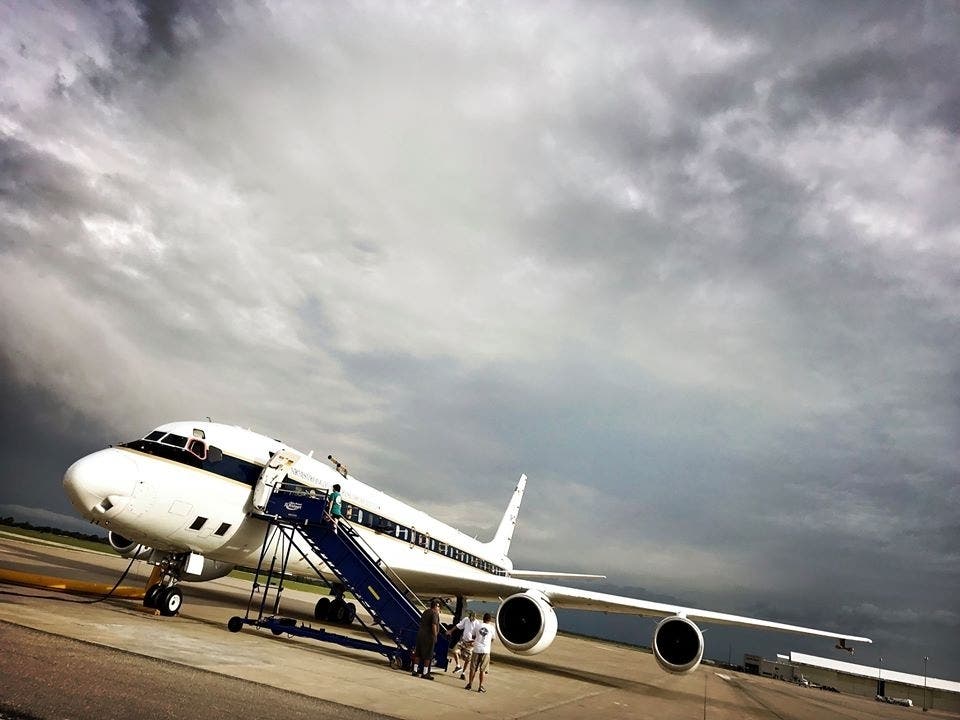
IRVINE, CA — A team from UC Irvine is working with NASA to research the life cycles of smoke from fires in the United States. On Friday, NASA's DC-8 airliner was scheduled to make low-altitude flights over parts of the Los Angeles, studying the dramatic effect of smoke on air quality and weather.
The research aircraft crew is in the midst of a two-month study of "the life cycles of smoke from fires in the United States." The DC-8 will be making flights Thursday over portions of the Los Angeles Basin and San Joaquin Valley to collect air samples, flying at altitudes between 1,500 and 3,500 feet.
According to NASA, a team from UC Irvine will analyze air samples collected by the research aircraft for more than 50 volatile organic compounds - - pollutants that contribute to ozone and particulate matter formation.
Find out what's happening in Mission Viejofor free with the latest updates from Patch.
The plane made similar flights over the same areas on July 22 as it traveled from NASA's Armstrong Flight Research Center in Palmdale to Boise, Idaho. The plane is returning to Palmdale Thursday from Salina, Kansas.
“After sampling a dozen large wildfires in the west, some over multiple days, and 85 smaller fires in the east over a wide range of fuels and conditions, we are returning home with the most extensive characterization of fire emissions ever collected,” said NASA Mission Scientist Jim Crawford. “These samples are tied directly to specific sources makes them all the more valuable for improving our prediction of the environmental impacts of smoke associated with fires.”
Find out what's happening in Mission Viejofor free with the latest updates from Patch.
The California Air Resources Board hopes the measurements will shed light on emission sources and atmospheric processes that lead to ambient air pollution.
"This is an exciting and rare opportunity to gather information that will help us to understand more about the challenges posed by climate change and the role it plays in the causation of wildfires," CARB Executive Officer Richard W. Corey said in a statement. "Our mandate is to protect public health and we expect the findings from these research flights will improve our ability to more fully plan for and communicate the potential health risks posed by wildfires to the public."
The FIREX-AQ mission will conclude sometime during October to November as the team tentatively plans to observe a prescribed burn in Fishlake National Forest in Utah.
Get more local news delivered straight to your inbox. Sign up for free Patch newsletters and alerts.