Schools
Study Shows That California Has The Lowest Math Standards In The Nation
According to the LA Times 75% of 10th graders' Diplomas At Risk

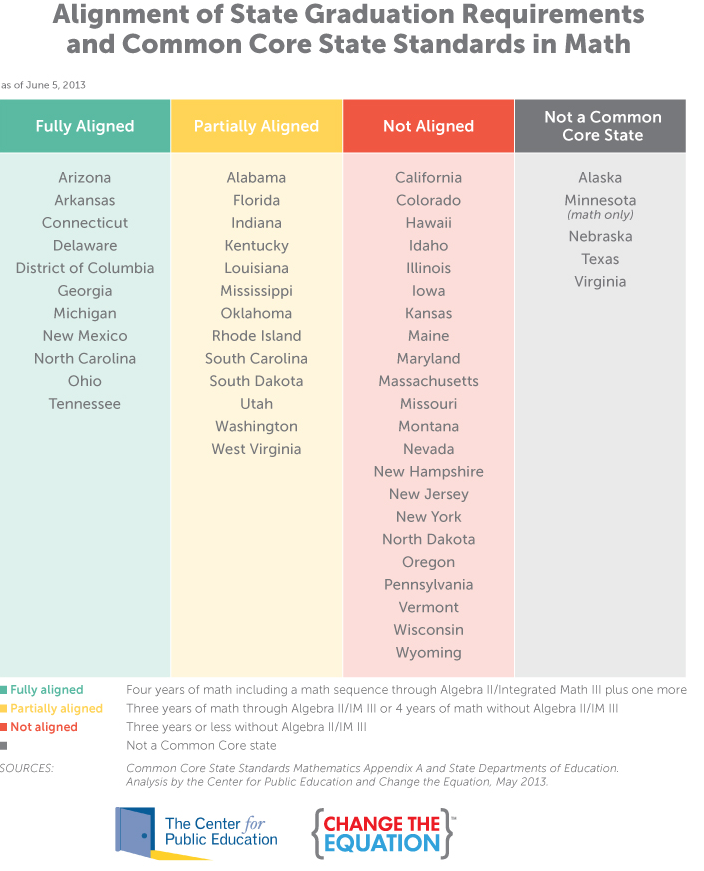
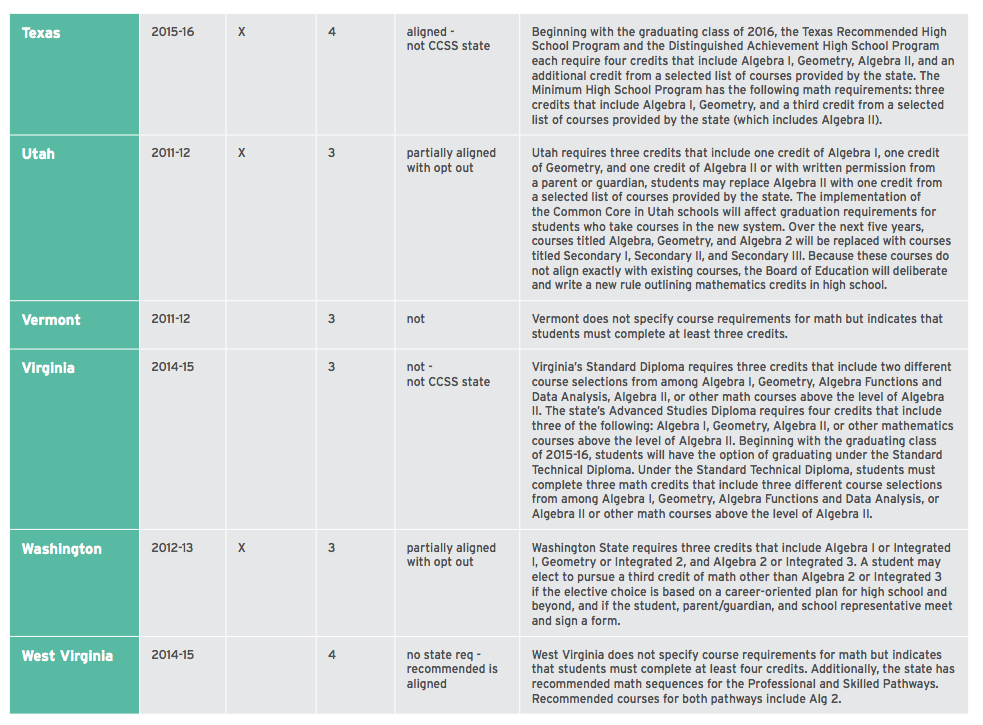
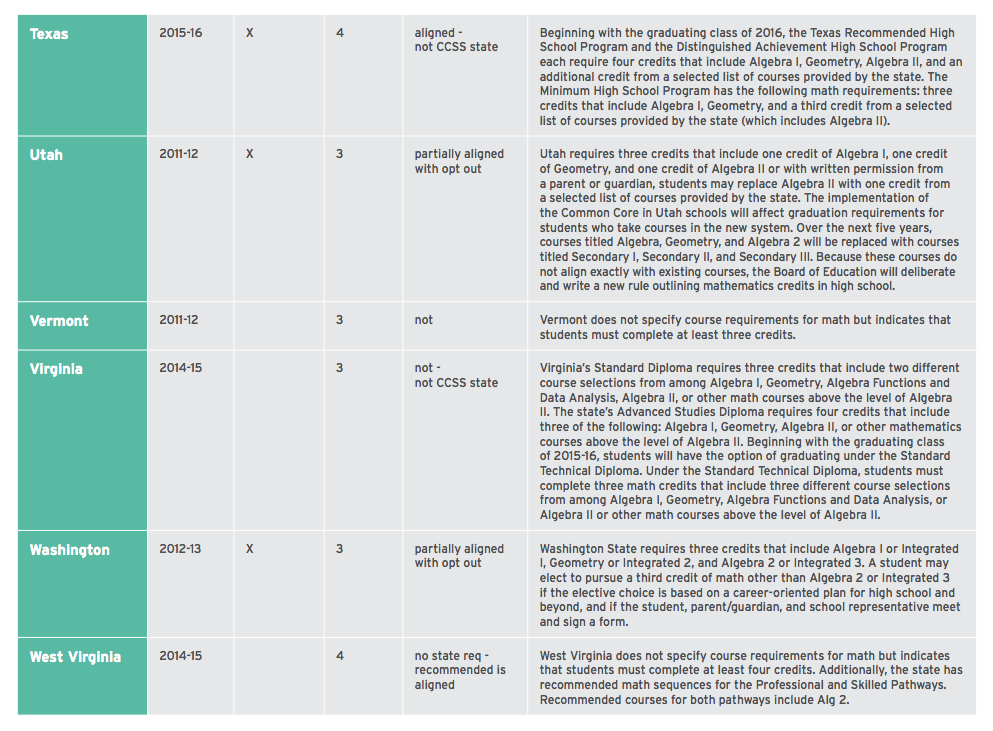
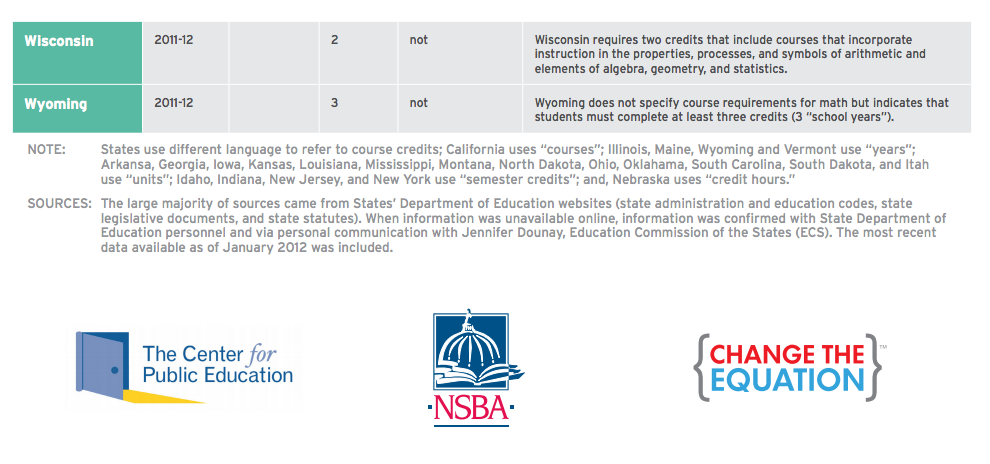
Out of Sync: Many Common Core States Have Yet To Define A Common Core-worthy Diploma (At a Glance)
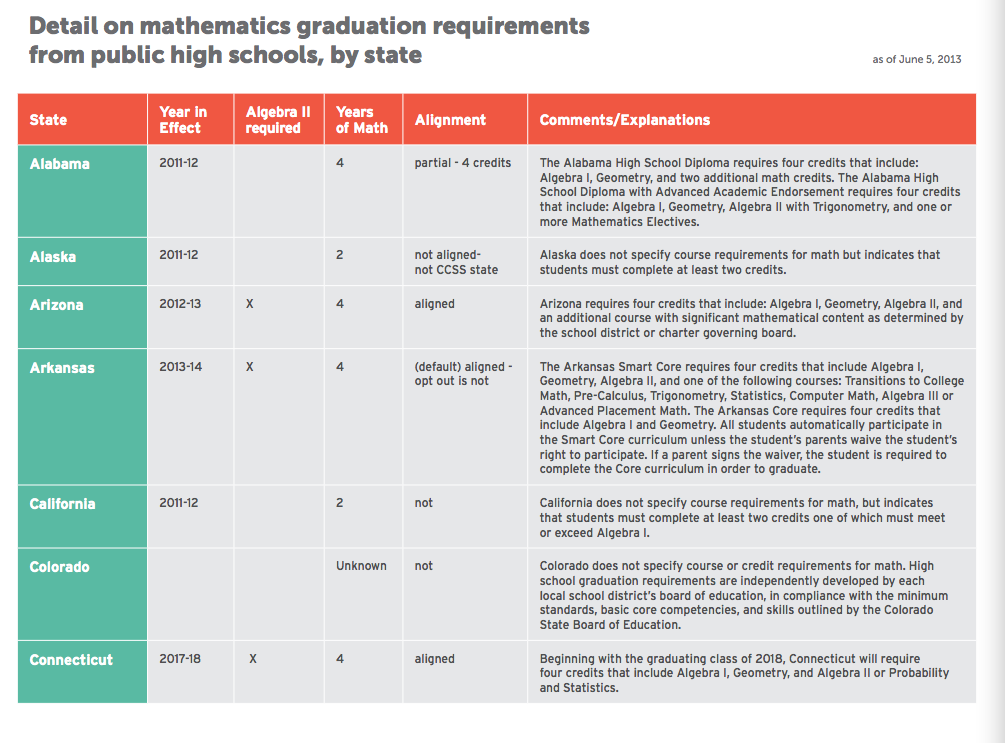
In 2010 California “voluntarily” adopted the new Common Core State Standards in order to receive a waiver from the Federal No Child Left Behind Act. That required California to change high school graduation requirements from the Old California State Standards of 2 years of high school math and the completion of Algenbra 1 to 3 years of high school math (Algebra I, Geometry, Algebra 2) and the completion of Algebra 2. If California were to actually comply with the Common Core Math Standards 75% of current 10th graders in LAUSD would not graduate.
LA Times Article: http://www.latimes.com/local/education/la-me-lausd-college-prep-20150506-story.html
Center for Public Education Report: http://www.centerforpubliceducation.org/out-sync
Find out what's happening in Mission Viejofor free with the latest updates from Patch.
Forty-five states and the District of Columbia have voluntarily adopted rigorous Common Core State Standards for what their K-12 public school students should know and be able to do in mathematics and English Language Arts. Yet most of these states have yet to take a critical step towards making those standards a reality: they do not require high school graduates to complete the math classes that typically cover the content described in the new standards.1 Until states and districts re-examine their graduation policies, a high school diploma will not necessarily signify college- and career-readiness as envisioned by Common Core.
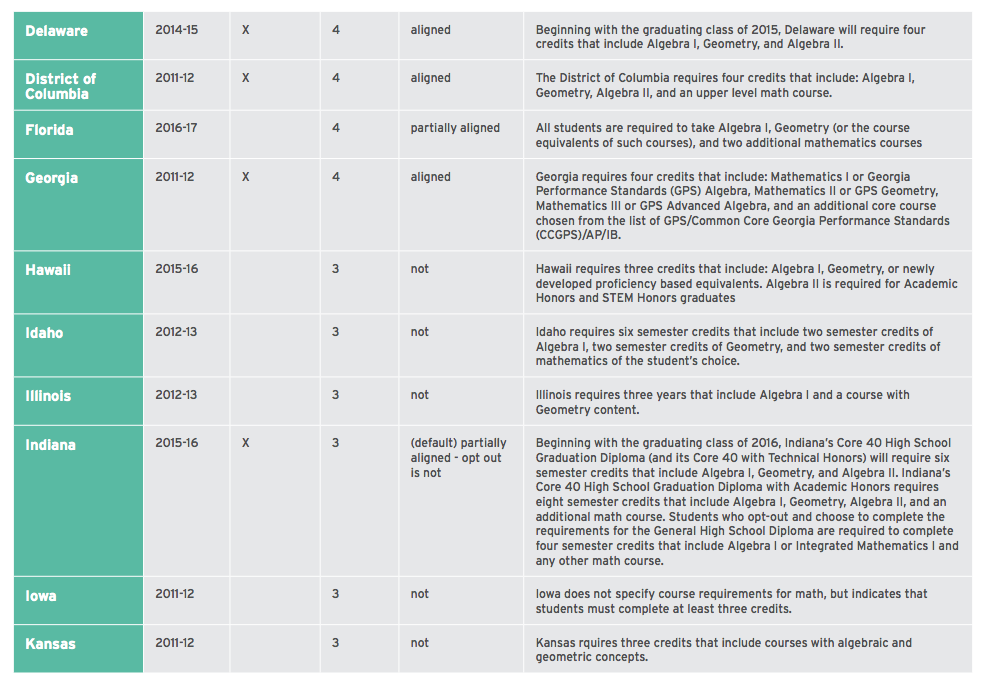
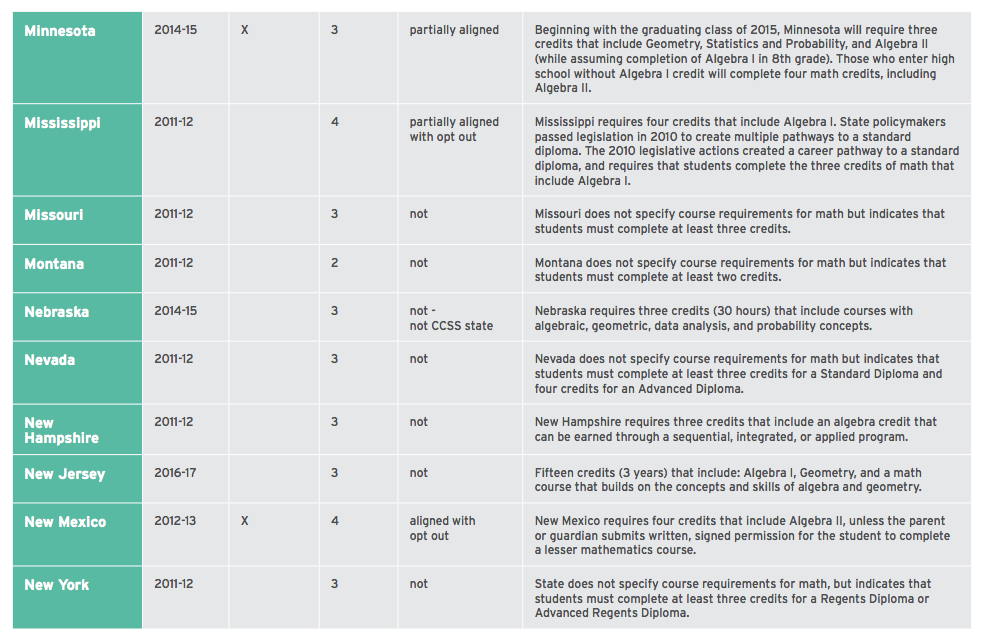
Change the Equation and the National School Boards Association’s Center for Public Education have compared states’ high school graduation requirements in math to the Common Core standards to see how well they align. We determined that graduation requirements most likely to be aligned to the Common Core standards must include math in each year of high school and convey substantial content typically taught in Algebra I, Geometry, and Algebra II classes. (See our methodology for a complete description of how we determined alignment).2
Find out what's happening in Mission Viejofor free with the latest updates from Patch.
According to our analysis, graduation requirements in only 11 Common Core states meet this definition of alignment, and requirements in 13 are partially aligned.3 This leaves 22 states that have adopted the Common Core but lack corresponding graduation requirements that match the expectations of new standards.4 Some Common Core states with rigorous graduation requirements are rolling them back. Florida recently removed Algebra II from its requirements, and Michigan may follow suit.

It is important to note that our definition of alignment does not tell the whole story. Even states whose graduation requirements appear to reflect the demands of the Common Core may still have much work to do to ensure that their high school course sequence and content is truly aligned to the standards. Because the Common Core State Standards describe outcomes, it remains up to states and districts to outline the classes and curriculum that best deliver the mathematical content and practices the standards define.
The only way that students will meet the Common Core Standards, of course, is to ensure that the necessary material is taught. Indeed, the “traditional” course pathway —Algebra I, Geometry, Algebra II, and further mathematical coursework—might neglect critical Common Core content or mathematical practices if the courses are not re-examined and aligned to the new demands and teachers are prepared to teach the content. States and districts whose requirements stop before Algebra II are even less likely to expose all their high school students to the full range of Common Core material.
We do not mean to suggest that every state should require a course called “Algebra II.” States and districts may decide to organize Common Core content into coherent and rigorous alternative pathways towards high school graduation that do not easily align with traditional course titles. Such pathways would include much of the content taught in the most rigorous Algebra II classes as called for in the new standards. When well designed, such pathways might in fact better align with the goals of Common Core than would a poorly designed sequence leading to Algebra II and beyond. Yet few states have clearly defined such alternatives thus far. 5
Neither the Common Core standards nor high school graduation requirements are federally mandated, nor should they be. States should continue to determine how best to bring their students to proficiency, and ultimately to a high school diploma. But states and districts can send an important message to communities that they are serious about the higher bar set by the new standards. Ambitious graduation requirements will provide a vital foundation for state and local efforts to ensure that every student develops the knowledge and skills defined in the Common Core and thereby show their commitment to prepare all students for college and careers.