Schools
Union Demands End to Saddleback School District Pay Cut
The union representing classified employees says the district violated the union's collective-bargaining rights when a 13.5 percent pay cut was approved last summer. The district denies the charges. Find out why the burden of proof may be on the union.
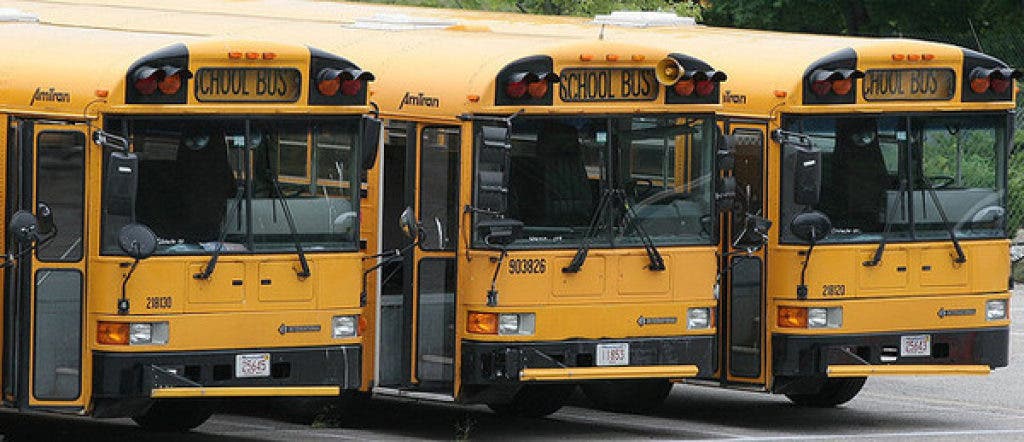
A labor union seeks to restore a pay cut approved last summer by Saddleback Valley Unified School District, saying the district violated the union's collective bargaining rights. The district denies this. In the end, it may be the union's job to prove it.
The district’s chapter of the California School Employees Association representing Saddleback Valley Unified’s 1,300 classified employees is seeking to restore at least some of the 13.5 percent in pay cuts imposed by the school board last summer. The union has filed a formal complaint with the state’s labor relations board accusing the district of violating its employees’ collective bargaining rights.
At issue is the two-year cut package totaling $4.5 million, which was unanimously approved by the school board in August. All of the district’s non-teaching classified employees are taking a 2.8 percent salary cut, 10 to 15 mandatory unpaid furlough days, freezes to longevity raises and a higher share of cost for health insurance.
Find out what's happening in Mission Viejofor free with the latest updates from Patch.
The complaint accuses Saddleback of failing to negotiate with the union as required by law, and says that it unilaterally imposed new conditions of employment without bargaining.
“They cut the lowest-paid employees significantly harder than anyone else, even though we have the least to spare,” said Scott Bennett, a member of the union’s negotiation team who works as a computer analyst in the district office. “The average teacher’s cut was around 10 percent, and the administrator’s cut was 12.1 percent. Our cut averaged 13.5 percent. A classified employee that has HMO benefits for their family pays $358 a month. Teachers and administrators with the same plan pay $100.”
Find out what's happening in Mission Viejofor free with the latest updates from Patch.
The district denies the charges. It filed its own unfair labor practice claim against the union in January, which is under review by the Public Employment Relations Board.
Both sides are scheduled to meet on June 29 at the Public Employment Relations Board’s office in Glendale to discuss the complaint.
If they don’t reach agreement, it could be decided by an administrative-law judge, where the burden of proof will rest with the union.
The union’s complaint names three charges, including a claim that Don Sedgwick, who was the school board’s president in August, unlawfully “interfered with employee rights” by telling workers present at a school board meeting that they had “ended up with a worse deal” because their union did not negotiate a mutual agreement with the district.
In a phone interview, Sedgwick said he expressed his personal opinion that CSEA members would have been better served if they had reached an agreement for economic concessions at the same time as the other employee groups, such as the unions representing teachers, psychologists and administrators.
The other unions’ concessions – including furlough days – were spread over three years instead of two, he said.
“I let them know what my personal opinion was. I felt they really lost out by not having settled it earlier,” Sedgwick said. He said he believes all employee groups were treated equally and fairly, but it was “unfortunate they all weren’t settled at the same time.”
In all, the district’s employees made concessions totaling $26 million to help the district deal with a shortfall of $33 million beginning in the 2010-11 school year. The district cut an additional $7 million with lay-offs and program cuts.
“It’s not easy for us to make these cuts to our wonderful employees,” Sedgwick said. “The board is committed to making the district solvent, but we still haven’t gotten there.”
The pay cuts ultimately imposed by the board were the same ones recommended by the fact finding panel set up during negotiations which included one union member, one district member and a neutral third party, said Margarett Lewis, assistant superintendent and the district’s chief labor negotiator.
But Bennett said that the cuts imposed by the board last summer were made based on a worst-case financial scenario which later improved, and that the union just wants its share restored. He also said he disagrees with the argument that classified employees were just being asked to do their part in responding to the district’s financial woes.
“The district told us in October of 2009 that they needed $4.5 million from classified (employees) as our fair share,” Bennett said. “At the end of June 2010, they laid off $3.3 million in classified employees, about 11 percent of our workforce. At the end of August, they then imposed an additional $4.5 million in cuts. A total of $7.8 million in classified reductions is far more than their previously-stated target.”
The CSEA’s unfair labor practice charge against the district was filed with the Public Employment Relations Board in July of 2010 during negotiations. In March, PERB determined the charge could move forward as a possible labor-law violation.
Separately, in January, the district filed its own unfair labor practice charge against CSEA, alleging that the union has engaged in “bad faith” by engaging in surface bargaining, regressive bargaining, and offering “predictably unacceptable” proposals.