Community Corner
History of African Americans in Monrovia
Presentation at the Monrovia Historical Museum on Sunday, March 29th

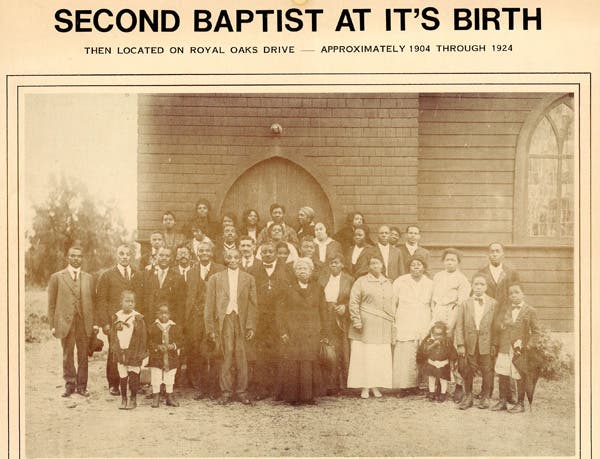


“History of African Americans in Monrovia: South of the Tracks” is the presentation at the Monrovia Historical Museum on Sunday, March 29, 2015 at 2 pm. Pasadena City College History Professor, Susie Ling, has done a year of research to document this important story. “Monrovia is unique in that it had an African American community since the 1880s,” said Ling, “In many ways, this is a quintessential American story. People came West to build better lives for their children. There was chain migration, hard work, purchase of homes, and pursuit of educational advantages.”
The African Americans lived side-by-side with their Mexican American and Asian American neighbors in the southeast corner of Monrovia. Some of the homes on Maple and Walnut were constructed in the 1910s. The Red Line came down on Olive Avenue and residents of color were expected to stay south of these Pacific Electric tracks. In fact Huntington Elementary School was 94 percent African American at one time. The segregated public school was not closed until 1970 – years after the 1954 Brown v. Board of Education Supreme Court case.
“My interviewees told stories of racial discrimination,” said Ling. “They talked about how the public pool had ‘Colored Days’ and how certain establishments would not serve Blacks. There was a ‘crow’s nest’ or balcony area in the former Lyric Theater for African Americans. Live Oak Cemetery was segregated in its beginning years. Blacks even had a hard time getting a library card.” But the story is also about how African Americans fought for social justice, built community organizations, and nurtured families. “There are three historic Black churches in Monrovia that are still very active. There was also a Monrovia chapter of NAACP and a Junior NAACP. The Anna H. Jones Women’s Club is nearing 100 years,” said Ling.
Find out what's happening in Monroviafor free with the latest updates from Patch.
“The most surprising parts were the racial fights at Monrovia High School each year between 1969 and 1972,” continued Ling. The Black Student Union at Monrovia High was established in 1969 and has a very proud and long history. “The diversity and history of Monrovia is something we should all be proud of. This is our shared legacy.”
The Monrovia Historical Museum, staffed by community volunteers, is located at 742 East Lemon Avenue in Monrovia’s Recreation Park, and is open to the public each Thursday and Sunday afternoon.
Find out what's happening in Monroviafor free with the latest updates from Patch.
Photographs, left-to-right: Second Baptist Church of Monrovia was founded in 1902 (courtesy of Betty Thomas); Monrovia’s Anna H. Jones Club in the 1970s (courtesy of Peter Ostyre’s Monrovia Centennial); Dorinda Parker, Jessica Blount, Christine Hall, and Arlene Fisher on Maple Street in Monrovia circa 1942 (courtesy of Jessica Valentine).