Community Corner
In 1887 He was 'The Man' in Monrovia
William N. Monroe not only gave his name to the growing city but also played major roles in its development.
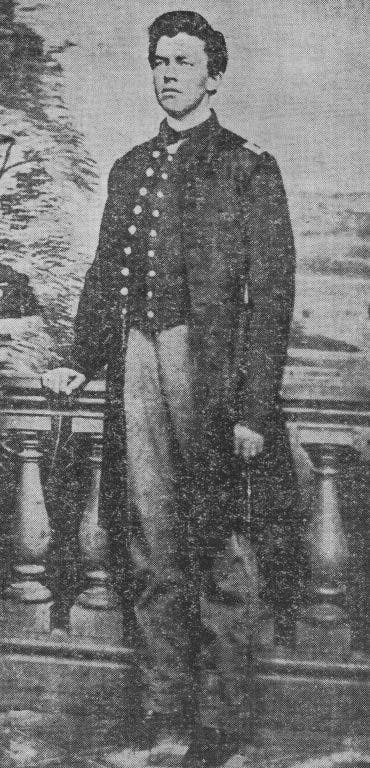

It would have been a forgivable sin had you come to Monrovia in the late 1800s and thought that the town was inhabited primarily by a family by the name of Monroe. For the number of Monroes who called the area home was considerable.
There was W.N. Monroe, his wife and four kids who were the first of the clan to arrive. Shortly thereafter, two of his sons formed the Monroe Bros. business in town.
Then came the patriarch of the family, Sanders A. Monroe, and his wife, Catheren, heads of a family of which W. N. was only one of 10 children. A brother of W.N., Campbell O. Monroe, his wife and four children, were other early arrivals as was W.N.’s “Uncle Billy” Monroe, who was a mail carrier in Monrovia. F. M. Monroe was one of the brothers who had a large family, adding to the list of town residents with the Monroe surname. In fact, all five of W.N.’s brothers and their families were in Monrovia by September 1887. And so it went.
Find out what's happening in Monroviafor free with the latest updates from Patch.
But it was W.N. Monroe whose name was the most prominent in the new town. First and foremost, of course, was the fact that the city was named after him. (It should be noted that the town almost came to be named “Spenceville.”) The actual spelling of the name seems to have come from the oft heard phrase “via Monroe,” meaning that one traveling along the foothills in those days would pass by the Monroe residence (“The Oaks”) and more often than not spend a few days in the family’s spacious Victorian home. So it was that Monroe gave his name to the town that was called “Monrovia.”
W.N. Monroe played pivotal roles of leadership from the time of his arrival (1884) until his death here in 1935. His prominence in town affairs was evident to the end when, a few months before his death at the ripe old age of 94, Monroe led the Monrovia Days parade celebrating the start of the city back on May 17, 1886.
Find out what's happening in Monroviafor free with the latest updates from Patch.
Besides being one of five men to form the original 60-acre town site of the new city (the others were Edward F. Spence, John D. Bicknell, J. F. Falvey, and James F. Crank), Monroe was elected its first mayor on Dec. 8, 1887.
He was one of seven directors of the newly formed Granite Bank, was active in the Republican Party, was a member of the Board of Education, was the director and general manager of the San Gabriel Valley Rapid Transit Railroad Company, and for a time was the owner of the Grand View Hotel. His name appeared on most committee lists that dealt with issues of the city, churches and political events.
Besides his involvement in the buying and selling of land in this area (he initially purchased 240 acres of land from E.J. “Lucky” Baldwin), William N. Monroe was known as a railroad man. He spent two years in Chile building a railway (starting in 1889) and handled a large railway contract in Tecomavaco, Mexico, in 1891.
While Monroe was not the first settler in the area--that distinction seems to belong to M.D. Beall, who arrived here in 1866)--there is no doubt that his presence helped create the town as we know it today. If the term “Father of Monrovia” could be applied to anyone, it most certainly would be to this man.