Business & Tech
Video: Monrovia Company's Robot 'Hummingbird' Actually Flies!
Aerovironment performed a demonstration of its tiny drone that can hover like a hummingbird.




It looks like a hummingbird, it flies like a hummingbird, and someday, the military may use a Monrovia company's new harmless-looking aircraft to spy on enemies or even deliver a tiny payload.
Aerovironment, the locally based technology company that produces everything from electric car chargers to war drones, has developed the first unmanned aircraft that furiously beats its wings to hover just like a hummingbird. Unlike a hummingbird, all of its movements can be directed by a human via remote control.
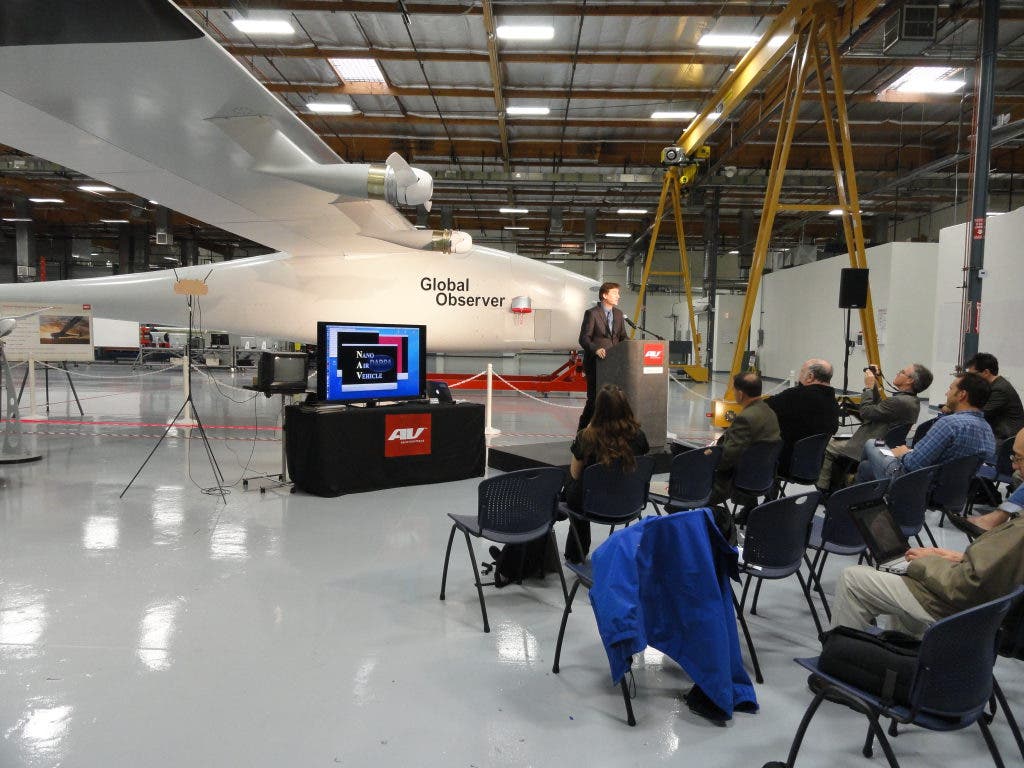
The company showed off the innovative new device it describes as a "technological milestone" Friday at its Simi Valley facility, sending the little bird-like robot back and forth, up and down--all with the touch of a joystick.
Find out what's happening in Monroviafor free with the latest updates from Patch.
Aerovironment Project Manager Matt Keennon said the "Nano Hummingbird" drone was the work of a crack team of engineers and designers at the company who put the aircraft together as part of a contract with the Defense Advanced Research Projects Agency (DARPA).
"The common thread was the innovation and burning desire to push creativity and imagination," said Keennon of the team.
Find out what's happening in Monroviafor free with the latest updates from Patch.
DARPA came to Aerovironment in 2006 with a computer simulation of what they would like for their Nano Air Vehicle (NAV) program: a hummingbird-like drone that could hover, sneak into tight spaces, and carry small objects.
The video showed the bird launching from the hand of a soldier, flying above a city street, and hovering at an open window before passing through and dropping its tiny "payload" inside a lab making improvised explosive devices. It then exited without raising alarm and flew back to its handler.
When engineers from Aerovironment saw the proposal, they were dubious about the possibility of creating such an aircraft, Keennon said.
"We knew right up front how basically impossible this was going to be," Keennon said.
But eventually the team was able to produce the hummingbird drone--comprising metal, plastic, carbon composite materials and electronics--that can travel up to 11 mph (the goal is to get up to 22 mph) and carry 10 percent of its own weight.
The Nano Hummingbird has a wingspan of just 16 centimeters and weighs less than an ounce. It has four on-board motors that do the work of what hundreds of tiny hummingbird muscles can accomplish and carries its own energy source, Keennon said.
The device is bigger than your average hummingbird, but "smaller and lighter than the largest hummingbird currently found in nature," according to a company news release.
The bird bot is still considered a prototype and is not in the stage of development where it can be mass produced or sold, Keennon said. DARPA wanted Aerovironment to prove it could build such a device, and now that it has, the next step is to produce a marketable version.
"The success of the NAV program paves the way for a new generation of aircraft with the agility and appearance of small birds," said DARPA NAV program manager Dr. Todd Hylton in a written statement.
Now the challenge is to perfect the technology and make the little drone viable for use in the field.
"We just hope it can do something useful," Keennon said.
Get more local news delivered straight to your inbox. Sign up for free Patch newsletters and alerts.