Community Corner
Monrovia Resident Wins Competition in Political Strategy
Sean Gera is one of a team of five graduate students from Claremont Graduate University who won first place in the Wikistrat 2011 Grand Strategy Competition.
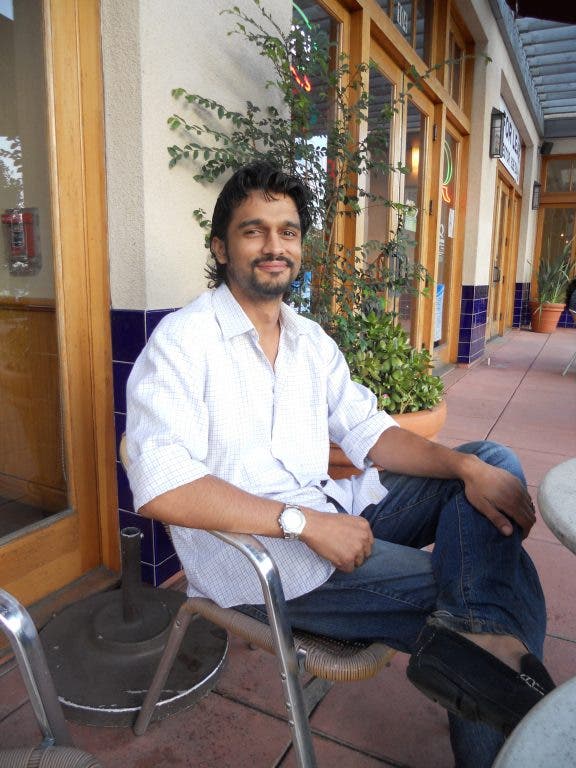
Sean Gera, a Monrovia resident and first-year Ph.D. student at Claremont Graduate University’s School of Politics and Economics, is part of a team of five students who won first place and a $10,000 prize in a month-long international competition hosted by the global consulting firm Wikistrat.
The Wikistrat 2011 Grand Strategy Competition involved teams from 31 graduate schools and think tanks from around the world, according to CGU.
Each team was assigned a country and then used Wikistrat’s interface to tackle five critical geopolitical issues: global energy security; global economic rebalancing; terrorism; the Sino-American relationship; and Southwest Asia nuclear proliferation.
Find out what's happening in Monroviafor free with the latest updates from Patch.
CGU’s team competed against teams from Yale, NYU, Oxford and other top schools.
“We had to come up with a national strategy of policy objectives for Pakistan,” said Gera, who is pursuing a Ph.D. in world politics and an MBA with a focus on strategy. He also said that it was an interesting experience for him to “role play” for Pakistan, especially because his father had come from the same geographical region that is now Pakistan before the partition of India in 1947.
Find out what's happening in Monroviafor free with the latest updates from Patch.
Gera said that the CGU team comprised an international group of students with multiple areas of expertise, and that they often devoted 10 or 12 hours a day to the competition.
“I was really impressed with a lot of these guys,” he said. “We had a really good team.”
The other team members included Piotr Zagorowski, a Ph.D. student in world politics; Byron Ramirez, a Ph.D. student in political science and economics; Benjamin Acosta, a Ph.D. student in comparative politics and cultural studies; and Steven Childs, a Ph.D. candidate in world and comparative politics.
Gera said the team wrote essays every week to address the five criteria and supplied maps, charts and other visual aids to accompany their work. The CGU team also created mathematical models and analyzed migration patterns, demographics, and political, security and economic behaviors. Gera said that the program at Claremont is unique because it places a strong emphasis on modeling.
In the last week of the competition, simulated global shocks were applied to each country. The scenarios included the effects of political instability in Saudi Arabia, an Internet crash affecting global trade, and a tsunami hitting China.
“They test your resiliency, that’s key. That’s the resiliency of your policy objectives and the national trajectory that you create,” Gera said. “We tried to keep it real and make it feasible.”
“I guess the judges liked our approach,” he added. “We stuck with what was working for us. I think it paid off.”