Community Corner
Monrovia's Mexican American History
October 4th Presentation at the Monrovia Historical Museum

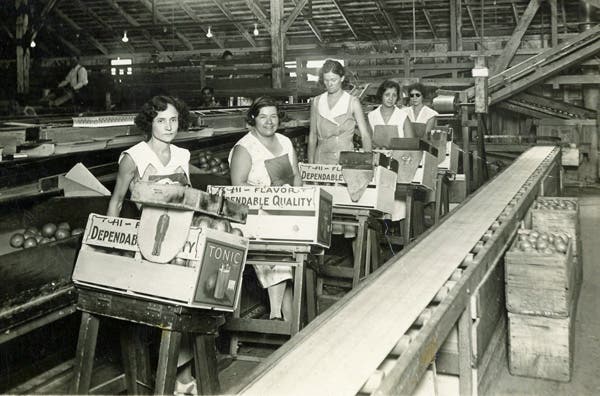

Before the 210 Freeway and housing developments, the foothill community of Monrovia was permeated with citrus groves and an easier life. In the 1940s, Rosalie Cardiel Garcia played hopscotch on Huntington Drive, next to her house. “My brother and I would lie down on that street,” remembers Rosalie. Of course they would get up if they saw a car coming, but then they would lie down on Route 66 again. Rosalie’s husband, Lloyd, remembers Rosalie’s grandmother living near his own grandmother, Lucinda Garcia, on Almond Avenue in Monrovia. “I would see her milking the cow or watering. She would roll her own cigarettes. She would wear an apron. She was very sun-darkened. I would say, ‘Yep, there’s Doña Tacha.’” Grandmother Anastasia was widowed twice and worked hard to raise her six children.
Rosalie continues, “My father was a welder. He helped build the Santa Fe dam; they always talked about that. Then he worked for United Concrete in Irwindale for many years. But when it got too much for him, he worked for Live Oaks Cemetery for about four years. He had a gift for gardening.”
Rosalie and Lloyd – married for almost 60 years - are members of the Monrovia Latino Heritage Society. They remember Monrovia’s Mexican American community before World War II. Rosalie said, “We didn’t really understand discrimination. But there were no Mexicans who lived north of Foothill Boulevard. We just all accepted it. Much later, I asked myself, ‘Who made those laws?’ But at that time, we just went along with it.”
Find out what's happening in Monroviafor free with the latest updates from Patch.
On Sunday, October 4th, at 2pm, the Monrovia Latino Heritage Society will present a lecture entitled “Recuerdos de Monrovia: History of Mexican Americans” to discuss the ethnic history of this community. Professor Susie Ling of Pasadena City College has collected about 20 oral histories for her PowerPoint presentation. The event with be at the Monrovia Historical Museum and is open to the public. It is co-sponsored by the Museum, the Monrovia Historic Preservation Group (MOHPG), and the Monrovia-Duarte Black Alumni Association. All are welcomed.
Images above (left to right): Monrovia packing house, circa 1920s (photo courtesy of Johnny Romero); Lucinda Garcia’s descendants at the dedication of her memorial park in 2013 (photo courtesy of Susie Ling).