Schools
Examining the New American Dream
The American Dream still exists, but students question whether it's attainable.


Article on American Dream
To a different generation, the term American Dream had a mythical quality about it, the idea that in the U.S. everyone had equal opportunity to be successful. Translated into practical terms, it meant having a job, buying a house, being economically successful.
Find out what's happening in Moorparkfor free with the latest updates from Patch.
Fast forward to 2011, four years after the start of one of the most severe economic crises in American history. How has the recent recession affected belief in the notion of an American Dream? Patch decided to ask that question to several people in the Moorpark community.
Career
Find out what's happening in Moorparkfor free with the latest updates from Patch.
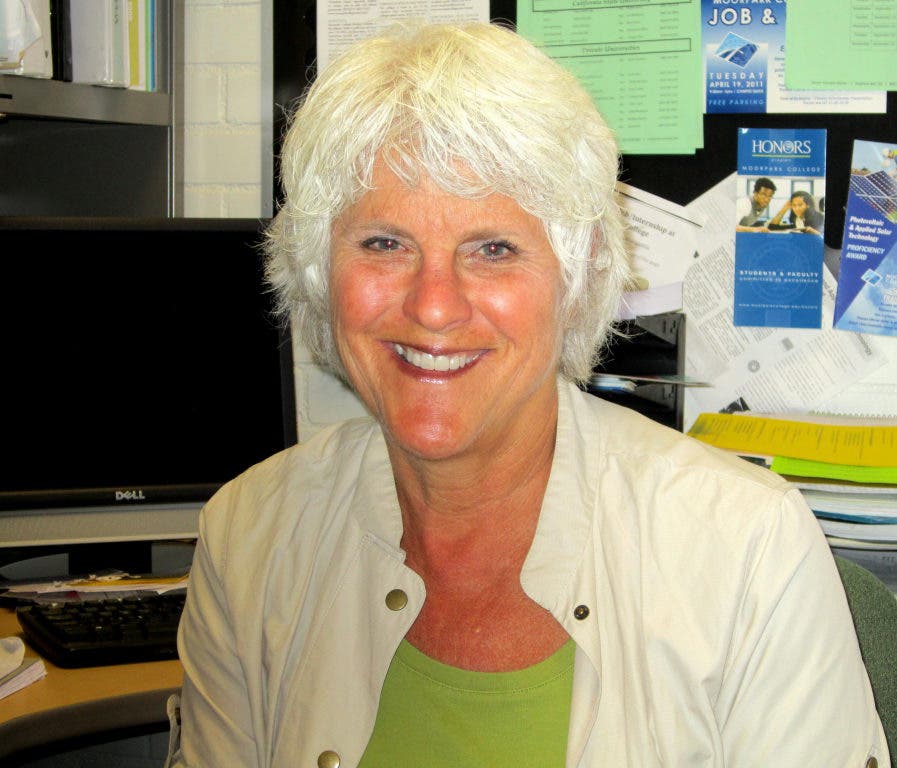
Judi Gould, the director of the Career/Transfer Center at Moorpark College, sees lots of students come through her office: freshmen coming directly from high school, adults in transition, those looking for specific career training. She has noticed that students these days have more anxiety about their future.
“I think students are very uneasy about getting jobs,” she said. “They’re watching and hearing about their peers and parents not getting jobs.”
She’s also noticed a change in perspective from the previous baby boomer generation.
“I think students are just beginning to realize they’re not going to have the same lifestyle as their parents,” said Gould.
She cited an example—an exercise that she routinely does with incoming students.
“Five years ago,” she said, “I asked students if they would take a job with a salary under $45,000. Not many raised their hand. Now I ask the same question and just about everyone raises their hand. They realize that, with a job starting at $45,000, they would be lucky to get that.”
For Gould, part of the hope behind the American Dream was the opportunity to get a college education, then find a career with a good salary. These days, however, getting that education and finding that job has become more difficult.
“It’s more of a challenge these days,” she noted. “Students realize that even with their education, they may not get a job right out of college. It’s important these days for them to think about continuing their education. Students improve their odds of obtaining and keeping a job, the more education they have.”
The most significant change in choosing a career has been that students now have to think harder about what they really want to do, and that reaching that goal may be more difficult than in previous years.
“We are in a time of significant change,” said Gould, “so it’s difficult for students to plan. You can have a student plan, but a school may change that plan. Students may have to be on their toes to figure it out. A student has to be more proactive in thinking about it.”
Students today have had to think more long-term about their careers. Instead of focusing primarily on salary, they have had to look inward and discover what they truly love to do. As Gould pointed out, a career might be temporary, but passions and interests keep growing.
“It’s a process you’re going to use throughout your lifetime. Looking inward and seeing what makes you tick is a very important process.”
Gould also noted that more adults are returning to school. Their goal is career change—fast.
“Career change has been much more difficult for adults,” she said. “I think for most of them it’s been a surprise. Adults here just want to get in and find something where they can get work.”
Gould noted how Moorpark College has had to dramatically expand specific career training programs in new areas such as Photovoltaic and Applied Solar Technology.
“We now have waiting lists for these training programs,” she said.
Students
How about the generation that was in high school when the recession hit? Students who are now on the verge of exploring and working through career choices?
Jiovana Hermosillo, a sophomore chemistry major from Simi Valley, Tyler Penrose, a sophomore from Newbury Park, and Mark Michael, a sophomore business administration major from Moorpark spoke about the dream.
Hermosillo, whose family is from Spain, has a view that remains very traditional.
“It’s the option to be successful,” she said. “It means making a name for myself and becoming something.”
For Penrose, the term had more of an inward focus.
“It’s a chance at true happiness,” he said, “and to be financially well-off.”
For Michael, he looked at the term from a practical perspective.
“It’s having two feet planted,” he said, “and to be individually successful.”
How has the last four years affected their views about the future?
“I’m optimistic,” said Hermosillo, “because I see that America believes in the younger generation and their emphasis is on getting a higher degree of education.”
But Hermosillo admitted that getting that education today is more of a challenge.
“It’s harder to get into classes,” she explained. “They’re cutting down on the number of classes offered.”
Still, she sees American culture has having optimism built into its DNA.
“There has to be some form of hope to keep living in America,” she said. “We don’t take no for an answer.”
Penrose agreed.
“I’m more optimistic,” he said, “because I don’t think the citizens will give up on us.”
For Michael, the current challenge means readjusting his expectations.
“You have to get out of your comfort zone to make a living,” he said. “You need to want more to achieve more. Things just aren’t handed to you any more.”
What about finding a job after finishing their college education?
Hermosillo felt confident her career choice would lead to employment.
“Yes, I believe I’ll get a job,” she said, “because I’m in math, science, and computers, and there will always be jobs available in those fields.”
Penrose was less confident.
“No,” he said, “but I’ll just have to keep trying.”
Michael knew that current job numbers weren’t in his favor.
“The statistics for getting jobs out of college are much lower the last five years,” he said. “People have to aim toward services rather than product.”
What about career planning?
For Michael, he admitted that choosing a career was going to be more difficult than in the past.
“It’s more of a dog-eat-dog world when it comes to taking classes,” he said. “You can’t really do what you want.”
What did he see himself doing several years down the road?
“I want to open up a business,” he said, “but I’ll have to be under the leash for a couple of years.”
Penrose’s career plans remain loosely connected to his college studies.
“I’d like to own my own business, open up a hot rod shop,” he said. “College will help me in the business aspect.”
Business
Patrick Ellis, President and CEO of the Moorpark Chamber of Commerce, has a front row seat in the Moorpark business community. He talked about how the recession has changed the way people do business in this city.
Ellis stated that term American Dream really had to do with home ownership. Once considered an American ideal and a safe investment, he reflected on how that view has changed.
“I think with everything that’s happened since 2008, the idea of home ownership is still there,” he said, “but for a lot of people, that dream is kind of jaded. People learned there were a lot of faults with the system.”
For Ellis, home ownership now comes with a heavy price tag.
“The dream still exists,” he said, “but now people are struggling just to get by.”
The approach to business investment has also changed. The days of quick money through IPOs and the stock market have been considerably trimmed.
“People are more cautious in the ways they invest their money,” Ellis explained. “They are hesitant to invest in something new. They’re looking for something with a track record.”
Ellis observed that businesses are struggling to find the capital they need to stay in business. While the idea of entrepreneurship still exists, it’s harder these days to find the cash to get that seedling idea off the ground.
“It’s probably the number 1 issue,” said Ellis. “Businesses are ready to expand, but the funding sources are just not there.”
So, for the moment, the ideal of American business ownership has had to adjust to leaner economic times.
“I think people are starting to realize that it’s not as easily attainable as it was a decade ago,” said Ellis.
For many, the term American Dream may have been redefined, but, as Hermosillo pointed out, optimism and hope are still a strong part of the American culture. While the challenges may be greater and the money less abundant, businesses are still being opened, colleges are still offering classes, and students of all ages are still studying because they believe in their future.
There may be fewer possibilities, but possibilities remain, and as long as people believe in this, some form of the American Dream will stay alive. A little rusty, a little worn, but recognizable.