Business & Tech
Heading Off Hurt
This Moorpark hypnotherapist uses the power of the mind to help people change habits and manage pain.


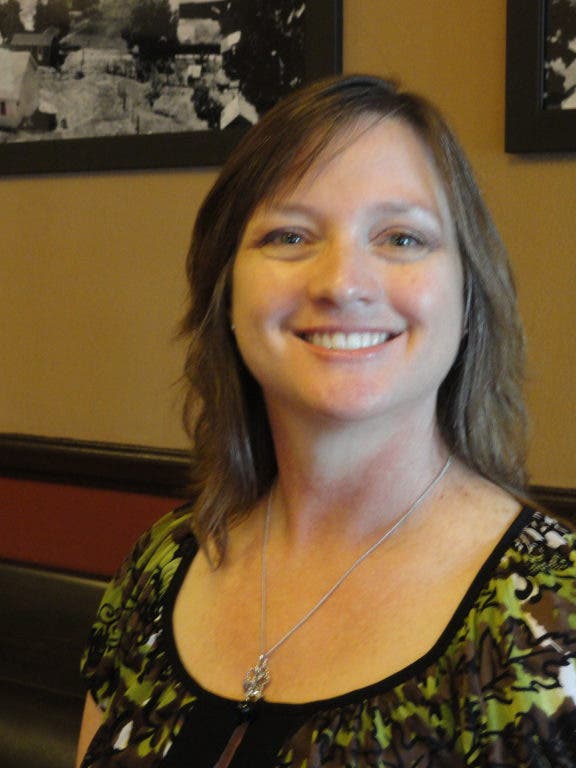
can talk people right to sleep. But she —and her clients—think that’s a good thing.
As a hypnotherapist, part of her job is relaxing people into a trance, or hypnotic state, so she can reach beyond the logical, reasoning mind to leave suggestions for the subconscious. It’s not actually sleep, though. Those familiar with hypnosis describe it as that sort of twilight feeling you get right before you fall asleep, when you’re extremely relaxed but still in control of your voluntary actions.
“You’re fully aware of everything that’s going on,” Spencer explained. “You’re able to speak. You’re not vulnerable and you can stop it or direct me at any time.”
Find out what's happening in Moorparkfor free with the latest updates from Patch.
Despite worries she’s heard—ranging from people thinking they might lose all control to the belief that putting someone in a trance opens them to demonic possession—hypnotherapy is simply suggestions made to the subconscious when people are in a receptive state.
After a thorough consultation with clients about their goals, Spencer strategizes with them and, she said, “the trance just reinforces it.”
Find out what's happening in Moorparkfor free with the latest updates from Patch.
She explains the conscious part of the mind is the logical, rational side, whereas the more powerful subconscious works with emotion and habits. When someone rationally tries to change a behavior or habit, the subconscious steps in to preserve what it knows.
“When you’re changing behavior, your subconscious doesn’t recognize that and tries to bring you back to your comfort zone,” said Spencer.
To reach the subconscious, hypnotherapists keep the logical part busy, or distracted. This is possible, said Spencer, because the conscious, logical part can only process about seven tasks at once.
“You can be looking at me, and you hear me, you hear the music in the background, but you aren’t really aware of how your jeans feel against your leg,” she explained.
So with hypnosis, therapists overload the logical part of your brain, bypassing it to reach the subconscious where it can replace negative or self-defeating thoughts with positive ones, leading to a desired change in behavior.
Spencer has helped children and adults lose weight, quit smoking, overcome fear and nervousness and achieve countless other goals.
But of all the ways she helps people, the one that may be most important to her is helping ease people’s pain. It's what prompted her to enter the profession.
When her late husband was battling cancer, he used visualization, a form of self-hypnosis, to help block out the pain.
“Trance,” she explained, “can be an escape mechanism,” and her husband would picture in his mind being in a peaceful place far away from his real and painful state.
He eventually lost his fight with the disease, but according to Spencer, he knew something good could come of his experience.
“He said, ‘If anything can be learned from this that can help someone else, it’s worth it,’ ” Spencer said.
Taking that to heart, and seeing the relief his self-hypnosis provided her husband, she began to look further into hypnotherapy and eventually became certified. She now works with patients—and patients’ doctors—to help manage pain, depression and other ailments.
“People are looking for ways to empower themselves. Not everyone wants to take a pill,” she said. “Things like antidepressants are wonderful tools when people need them. I’m so glad we have them, but there are so many other ways to work with these conditions.”
Spencer did note that there are no licensing requirements in California for hypnotherapists, so anyone can represent him or herself as such. She said people should be aware there are no formal institutions in the state that offer doctorate degrees in hypnosis, for example, so unless a person is already a mental health professional, if they’re representing themselves as licensed or as holding degrees in the field, prospective clients might want to check into their educational backgrounds further.
For those thinking about working with a hypnotherapist, she suggests finding someone with whom you can communicate easily.
“Look for someone who listens, someone who respects who you are and why you are the way you are,” she said.
Spencer has an upcoming seminar for those interested in learning how to make hypnotherapy work for them. Get details about the seminar or about hypnotherapy in general by writing to Jackie@HypnoticInspiration.com or by calling 805-796-5780.
Get more local news delivered straight to your inbox. Sign up for free Patch newsletters and alerts.