Community Corner
Opinion: The Day L.A. Exploded
In 1992, the stage was set for upheaval even before the Rodney King trial verdict.

Today marks 20 years since Los Angeles was forever changed by the 1992 riots.
Upheaval had been coming for a long time. Gang membership had soared in the previous decade, galloping far ahead of law enforcement’s attempts to contain it.
Projects, like Nickerson Gardens, were vermin infested violent hell holes that too many families called home.
Find out what's happening in Moorparkfor free with the latest updates from Patch.
Racial hatred between the black population and the Korean merchants was about to erupt, especially in the wake of the acquittal of a female Korean store owner who had been tried for shooting a young black girl who was walking out of the store carrying a bottle of orange juice for which she had not paid.
The LAPD had its own problems, many stemming directly from the militaristic police chief, Daryl F. Gates. Let’s not forget the chief’s pet project, the battering ram tank he had acquired with the intention of one-upping local drug dealers in fire power. In a publicity stunt that may have been the biggest backfire in television history, the chief led a raid on a house in South L.A. Inside were a mother and her children eating ice cream in the kitchen. Ooops.
Find out what's happening in Moorparkfor free with the latest updates from Patch.
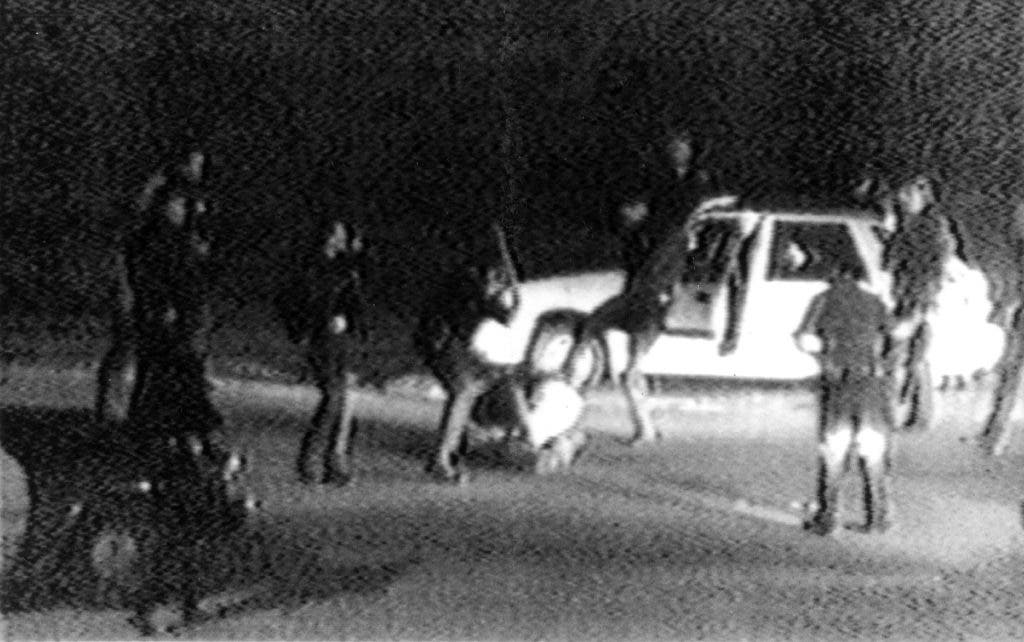
With that twisted mentality ruling the police department, Los Angeles was just waiting for the fuse to be lit. In the 1965 Watts riots, the spark that sent the quiet streets into spasms of violence was the police killing of a black motorcycle rider. For the 1992 riots, the stage had been set by the mob beating of motorist Rodney King, as captured on grainy black and white videotape in 1991.
The sight of the uniforms kicking a man who was already lying helpless on the ground sickened the entire city.
The public mood was too volatile for the officers who beat King to get a fair trial in Los Angeles. Instead, Simi Valley was selected, a town well-known for its large number of resident police and firefighters.
I had been living in Moorpark for three years. As I pulled into the Ralph’s parking lot in Wood Ranch, the verdicts were read. Sitting in my car just a few miles from the courthouse, I listened to the “not guilty” verdicts. I marveled at the shoppers who were oblivious to the historic moment.
Thoroughly depressed, I rushed through my grocery shopping, anxious to get home. Within the hour, there was the first wisp of smoke, a burning mattress, at Florence and Normandie. But I couldn’t spot a single police vehicle.
Soon after that first fire, the gravel truck driven by Reginald Denny slowly moved into the intersection. There, angry, violent thugs attacked the truck, yanking Denny out of the cab and into the street. He was beaten mercilessly, right there on camera in front of the entire world. Still, no sign of police.
One after another, the mob members that had gathered to beat the stuffing out of Denny, took turns trying to out-violence each other. Finally, a large brick was raised above the head of one man and was smashed down onto Denny’s skull. Later, it was learned that Denny had 91 skull fractures among his multiple potentially deadly injuries.
The bloody kill-fest ended only when a few nearby residents, who had been watching the debacle on TV, came running out to stop the attack, risking the chance that the mob would turn on them. It didn’t. The beating stopped.
By that point, I couldn’t believe that the LAPD was still absent. They had let the only opportunity to possibly contain the violence slip away. The cops were inexplicably AWOL.
Throughout the night, looters and rioters set fire to parts of the city, unimpeded by police. By the time the police did arrive, they did little. They were in battalion formation for self-protection, remaining in formation as looters boldly ran right by them hauling TV sets, furniture and anything else they could steal. But by that time, there were too many looters and too few cops.
The riots lasted for six days. According to the Associated Press, 55 people died, 2,325 people were injured, 1,573 buildings were torched and the damages totaled a record $1 billion.
Incredibly, Reginald Denny lived. In a subsequent trial, Denny’s attackers were also acquitted. The criminal justice system was utterly dysfunctional.
Chief Gates had been at a fundraising dinner, aware of the verdicts and the tinderbox conditions. But he first issued strict orders not to disturb him.
All of the top LAPD officers were perfectly obedient and remained at their stations holding down the fort as they watched on TV as the fires began to migrate into the heart of Los Angeles, leaving the citizenry utterly unprotected.
In my neighborhood, we counted the likely number of pistols, rifles and shotguns that the wives of police officers and fire fighters were probably pulling out of their closets. Police sharpshooters had been stationed at strategic points on Rocky Peak, making sure than the hoodlums stayed outside of Simi Valley.
And we felt safe in our Ventura County homes.