Neighbor News
Essential Ophthalmic Surgical Instruments Used in Eye Surgery
Explore ophthalmic surgical tools, types, material, maintenance, and advancements for precision eye surgery and safer clinical outcomes.
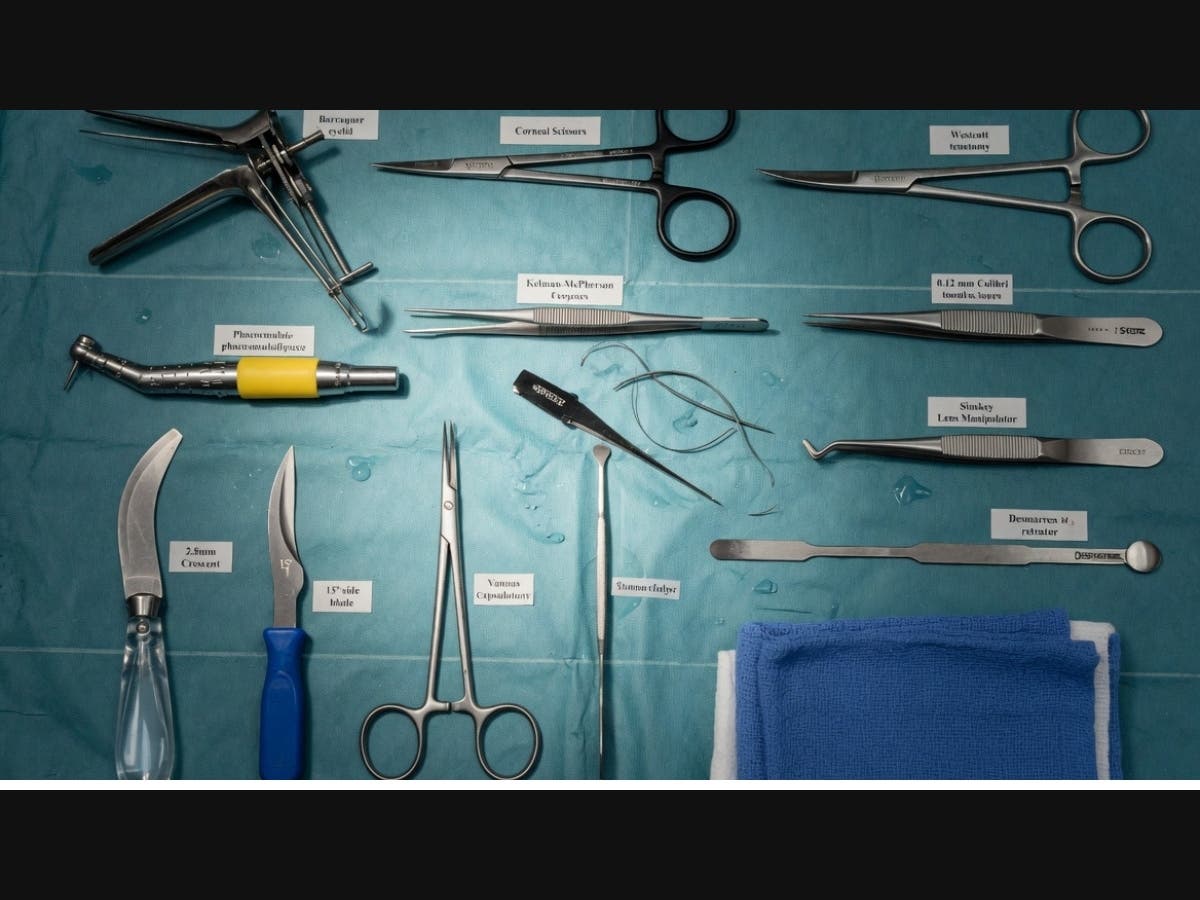
Accuracy in ophthalmic surgery does not start with the initial cut. The instruments chosen by a surgeon, and their close familiarity with
- The biomechanics of each tool
- The composition of their materials, and
- Their ergonomic design directly impacts the outcome of surgical operations, in which the margin of error is measured in microns
The tools encompassed in this clinical reference are the essential instruments of ophthalmic surgery. High-quality instruments are used in the major subspecialties, such as anterior segment, vitreoretinal, oculoplastic, and strabismus surgery.
Be it to establish a surgical tray, to analyze the new instrumentation, or to train a resident, this guide will be a systematic survey of the equipment that is the hallmark of the present-day ophthalmic surgery.
Find out what's happening in Mountain Viewfor free with the latest updates from Patch.
What are Ophthalmic Surgical Instruments?
Ophthalmic surgical instruments are specialized, precision-engineered medical devices used in eye surgical operations and their surrounding structures. Unlike general surgical instruments, ophthalmic instruments operate within one of the smallest and anatomically complex parts of the human body.
These instruments span a broad functional spectrum. At the most fundamental level, they include mechanical tools such as
Find out what's happening in Mountain Viewfor free with the latest updates from Patch.
- Lid specula,
- Fixation forceps,
- Keratomes, and
- Scissors that allow the surgeon to access, manipulate, and close ocular tissue.
The Role of Superior Eye Surgical Instruments
When it comes to ophthalmic surgery, it could be a single instrument that does or does not do what is needed at a crucial point. A high-quality instrument is the difference between success and a complication that will make the patient blind. This fact makes the quality of instruments not a personal choice but a medical necessity.
The reasons to invest in high-quality ophthalmic instruments are as follows.
- High-quality ophthalmic surgical tools give accurate, smooth ocular cuts, directly affecting the surgical success and minimizing tissue trauma.
- Such tools help to reduce the complications in surgery, like Toxic Anterior Segment Syndrome (TASS).
- Investing in high-quality instruments is always expensive, but they are durable in the long term. These tools also do not rust easily if kept properly with care.
Common Types of Ophthalmic Surgical Tools
There are wide variety of tools available to perform different kinds of procedures. The following are the most common types of microsurgical instruments.
- Incision and Dissection tools: These are important in creating accurate incisions on the cornea or on the lens capsule. The most important ones are Cataract Knives, Corneal Scissors, Iris Scissors, and Stitch Scissors (such as Westcott or Fine Stitch Scissors).
- Grasping and Holding Forceps: These are used to fix fragile tissues or sutures without damaging them. Typical ones are Chalazion Forceps (Lambert or Desmarres), Iris Forceps, Cilia Forceps, and specialized Colibri Corneal Forceps.
- Knives and Needles: Keratomes, Sclerotomes, Cystotomes, and Foreign Body Needles are always applied to a particular entry point and lens work, and to remove debris on the eye surface, respectively.
- Probes and Dilators: Lachrymal Dilators and Probes are needed specifically to investigate and open the tear ducts to make sure that they drain properly.
- Retractors and Specula: Eye Retractors and Eye Specula are to be used in order to retract the eyelids or any other tissues that are not part of the surgical site to get a clear view of the surgical site.
- Diagnostic and Measurement Tools: Devices such as the Schiotz Tonometer are being used to measure intraocular pressure, which is vital during and after a considerable number of eye surgeries.
- Auxiliary Instruments: This category consists of Eye Hooks, Picks, Spatulas, and Loops that help the surgeon to work on the lens or iris in the most delicate way possible.
How to Choose the Right Microsurgical Instruments for Your Clinic?
Selecting the right surgical instruments depends on the specialty for which it is going to be used. In this case, we are dealing with eye surgical instruments. Our focus should be on technical precision, ergonomic comfort, material durability, and sterilization requirements.
The following table will help you with the selection procedure.
| Feature | What to Look For |
| Material | German-grade stainless steel |
| Tips | Accurately aligned, fine tips |
| Handles | Ergonomic, textures, or lightweight for long surgeries |
| Ratchets | Smooth operation and secure locking |
Maintenance and Sterilization of Eye Instruments
| Aspect | Best Practices & Key Actions |
| Immediate Care | Clean within 20 minutes of use. To avoid drying of the tips of the instruments, they should always be kept wet. |
| Cleaning Process | Work with pH-neutral enzymatic detergent. Wipe the open position of the instrument with a soft brush or a lint-free piece of cloth to prevent damage |
| Water Quality | The final rinse should always be done with critical water (sterile distilled or reverse osmosis) to avoid the formation of any mineral deposits and contamination |
| Lubrication | After cleaning, but prior to sterilization, apply water-based lubricants to hinges to eliminate rust and inflexibility |
| Inspection | Use a magnifying glass to determine the cleanliness, alignment, sharpness, and any physical damage |
| Sterilization | The most common one is autoclaving (heating sterilization with steam). Check the indicators of sterilization to ensure safety levels are achieved |
| Storage & Handling | Keep instruments in silicone mats or plastic bags. Cover sharp tips with rubber protectors and do not keep tools in contact with one another |
Advancements in Ophthalmic Instrumentation
Ophthalmic surgical instrumentation has undergone a dramatic change in the last ten years. The intersection of materials science, digital imaging, robotics, and artificial intelligence is re-determining technically what can be done in eye surgery. This pushes the performance boundary of precision many times beyond the range of the unassisted human hand.
The major shift is being seen in microincisional surgeries. These procedures require 1.8mm or smaller incisions and require ultra-thin and highly durable tools. These innovations are particularly beneficial for procedures such as
- Phacoemulsification (cataract surgery)
- Vitrectomy
- Minimally invasive glaucoma surgeries (MIGS.
The outcome? Less post-operative inflammation, quicker healing, and significantly reduced risk of complications.
Conclusion
The most important factor in successful and safe eye surgeries is to use the right ophthalmic surgical equipment. These processes are so sensitive that the smallest pair of scissors, even the finest forceps, should be in excellent condition. Clinics can prolong the life of their instruments and offer the best care to their patients by selecting high-quality materials.
High-quality equipment not only simplifies the surgeon's work but also results in shorter recovery times and safer outcomes. GerMedUSA offers an extensive array of precision-engineered ophthalmic surgical instruments.
FAQS
What are the most frequent eye surgical instrument materials?
The majority of ophthalmic equipment is composed of high-quality stainless steel or titanium. Stainless steel is said to be strong and sharp, whereas titanium is lightweight, non-magnetic, and very resistant to corrosion.
Why should the immediate cleaning of ophthalmic tools be so significant?
Eye surgery can be conducted using substances such as viscoelastics, which dry fast. When these substances solidify on the fragile points of the ends or on the inner sides of small tubes (cannulae).
What is the frequency of lubricating ophthalmic instruments?
Hinges and moving parts (keys) of your instruments should be sprayed with a lubricant. This needs to be done after cleaning and prior to entering the autoclave. This does not lead to the metal stiffening or rusting over time.
Is it possible to clean eye tools using standard operating tools?
No, it is preferable to clean optical equipment separately. As they are tiny and fragile, they can be easily bent or broken if they are combined with larger and heavier surgical instruments during the cleaning treatment.