Health & Fitness
Religious Leaders Plan Passover, Easter Online Services: RivCo
As Jewish and Christian high holy days approach, two religious leaders offer insight amid coronavirus.

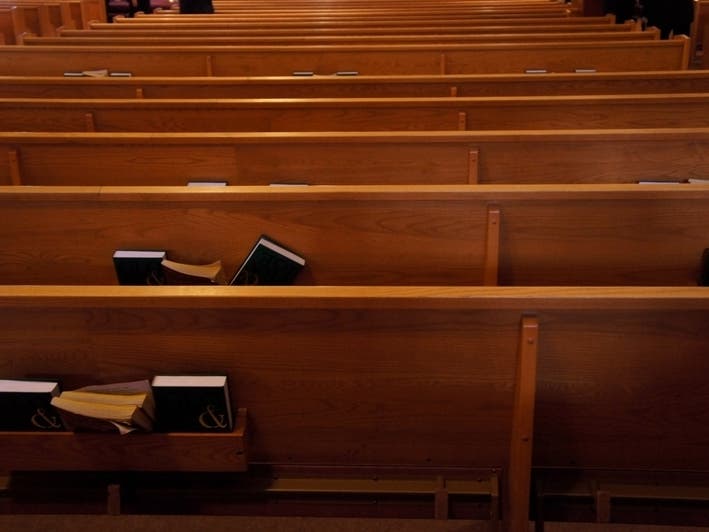
RIVERSIDE COUNTY, CA — Seminal occasions on the Christian and Jewish calendars — Passover and Easter — are about two weeks away, and with confinement practices in place to contain the coronavirus pandemic, houses of worship in Riverside County are resorting to livestreaming to stay connected with their flocks, which two religious leaders said Thursday has positive aspects.
"This might have the benefit of helping people understand how easily the world can be turned upside down," Temecula-based Calvary Baptist Church Pastor Bill Rench told City News Service. "There are things I'm encouraged about. People generally seem to be more receptive to the message of the Bible. This seems to have drawn us closer together, deepening our love and concern for one another in the midst of all this."
Rench said his congregation of roughly 250 last joined together for services the day before Gov. Gavin Newsom's March 19 executive order urging individuals engaged in "non-essential" functions to stay home as much as possible to avoid COVID-19 exposure risks.
Find out what's happening in Murrietafor free with the latest updates from Patch.
According to the pastor, the church was already limiting in-person gatherings due to county Public Health Officer Dr. Cameron Kaiser's directive two weeks ago for no more than 10 people to occupy the same space.
"Everybody's looking forward to the time we can be together again," Rench said. "This has made us much more appreciative of the freedom to assemble."
Find out what's happening in Murrietafor free with the latest updates from Patch.
He said Easter Sunday service on April 12 will be presented via the church's YouTube channel, with music, sermons and prayers.
"Our position is that God is in control, so we're not in a state of panic or anxiety," the pastor told CNS. "But this is unprecedented in my lifetime. We've learned to live with things that produce a lot of misery and death, like tuberculosis or even the flu. Many thousands die every year. I'm not sure what to think about the extent of this lockdown and how much is really necessary. I'm reserving judgment."
He said COVID-19 doesn't appear to come close to the impacts described in Exodus and the Book of Revelation, and he has noted that in online sermons.
"God gets our attention at times like these," the pastor said.
Rabbi Shmuel Fuss, director of the Chabad Jewish Community Center of Riverside, told CNS that switching to online broadcasts and interactions via Zoom and Facebook have had the unexpected effect of increasing the number of participants in programs and services.
"There is nothing like a face-to-face meeting. I cherish that," Fuss said. "But in light of the situation we have, we're fine and have found a positive outcome. We're connecting with people who couldn't participate before because of distance, time of day, work. Now we connect virtually, and there are more people participating in programs and activities than before. They just log in. It's pretty cool."
According to Fuss, the online edition of Passover services between April 8 and April 16 will be a first for him, but he's "staying positive" about the effort.
"If one thinks good, he creates good. It generates good energy and brings good things to us. You have to be in the zone," Fuss said. "In our faith, we know God is in control. He's invested in every detail of what happens, and we can draw upon God's unconditional kindness."
Fuss said some Chabad members have fretted about preparing for Passover without hands-on guidance, especially involving the Passover Seder.
"It's DIY seder this year," he said. "People are worried about how to cook. But we arranged for seder in a box. Takeout seder. Passover was meant to be observed at home anyway."
He said the lesson of the observance is generally humility, and this year's COVID-19 outbreak underscores the "real meaning of that."
"We thought we had it all figured out," the rabbi said. "Now this little bug has brought the world to its knees. It's very humbling, and it has a lot of relevance now."