Business & Tech
UPDATE: County Decides Not to Increase Fees for Construction Projects Just Yet
The Riverside County Board of Supervisors wants more time to review info on the revised development impact fee schedule.


By PAUL J. YOUNG, City News Service:
Faced with new options that have “complicated” its decision-making process, the Board of Supervisors this week postponed voting on whether to hike fees imposed on developers with projects planned in unincorporated areas of Riverside County.
The board was slated to hold its final public hearing on the proposed new development impact fee -- or DIF -- schedule. But because Executive Office staff did not submit some information until the last minute, as well as other concerns, the supervisors voted 4-0 to defer further action on the matter until Nov. 25. Supervisor John Tavaglione was out of the room when the votes were cast.
Find out what's happening in Murrietafor free with the latest updates from Patch.
“We now have three different choices (of how to implement the revised DIF schedule),” said Supervisor Kevin Jeffries. “The agendized item didn’t contain three proposals for the public to look at. It’s much like Sacramento, where you are asked to vote on something in the Legislature when you haven’t even had a chance to read it.”
Jeffries acknowledged that most of the material presented by the Executive Office had not changed since the board’s last hearing on the DIF schedule in early July.
Find out what's happening in Murrietafor free with the latest updates from Patch.
“But things have gotten more complicated since then,” he said, noting the Building Industry Association’s opposition to prospective fee components that would require commercial and residential builders to pay toward maintenance and expansion of area jails. Builders have argued there is minimal, if any, connection between new housing developments and correctional costs.
“You can’t tell me there are no family assaults or car thefts in new neighborhoods. I don’t buy it,” Jeffries said.
He also worried that keeping the impact fees at the proposed reduced levels “drives us to seek other revenues” for the upkeep of roads, parks and trails.
“We need every dime we can find out there,” he said.
Development impact fees are charged for construction of homes, office buildings, apartment complexes and other facilities. Fees have been capped at the same rate for five years. In August 2009, after a crash in regional homebuilding, the board slashed DIFs by 50 percent as an incentive to doing business with the county.
Critics complained that the board was giving developers too big a break while gaining little in return. County officials countered that without the reductions, the area stood to lose out on potential revenue altogether.
Between fiscal years 2001-02 and 2011-12, the DIF program generated just over $200 million, according to county figures. That money, which under state law cannot be mixed with general fund revenue for discretionary use, was allocated to infrastructure projects in unincorporated communities countywide.
Cities have their own DIF programs.
Under the county’s proposed new DIF schedule, an estimated $367.4 million would be generated through 2020.
The proposed revised DIF program ordinance, preferred by the Executive Office, entails increasing fees over the next nine months, until they reset at elevated rates, in some cases exceeding pre-recession levels.
Using this phased-in approach, rates would start out at 40 percent below their new proposed base levels. Then, in January 2015, rates would climb to within 20 percent of the proposed base, and in July 2015, DIF rates would normalize.
In the San Gorgonio Pass, the DIF assessment for construction of a single-family dwelling is currently $2,478. Had the board approved the executive staff’s recommendation Tuesday, the fee would have risen to $2,631 in November and $3,508 in early 2015, then reach its proposed base level of $4,385 by July 1 of next year. The pre-2009 fee was $4,956 per dwelling.
The two other proposals submitted during the board meeting Tuesday called for a 24-month phase-in and keeping fees at their current levels for another year before any type of modification is made.
“You are gifting the same developers that the county has favored for years,” Temecula resident Paul Jacobs told the board. “You are letting them off the hook by slowly ramping up to a bargain rate. Why are developers first in line to receive assistance over any other industry -- or your constituents?”
Supervisor John Benoit said he could appreciate critics who complain that “we’re not charging developers enough.”
“We lowered the fees during tough economic times. It helped a little. But it’s time for us to get back in the range where we started,” Benoit said.
Future impact fee revenue will go toward jail expansions, roadway grade separations, fire station and youth correctional facility expansions, library books, interchange improvement projects, parks and the Interstate 10 “Life- Line” Bypass, which entails building frontage roads paralleling the east-west artery between Banning and Palm Springs so that motorists aren’t stranded in the event of a massive traffic jam.
Revenue collected within one of 20 county-designated areas must be applied to plans or projects in those specific locations.
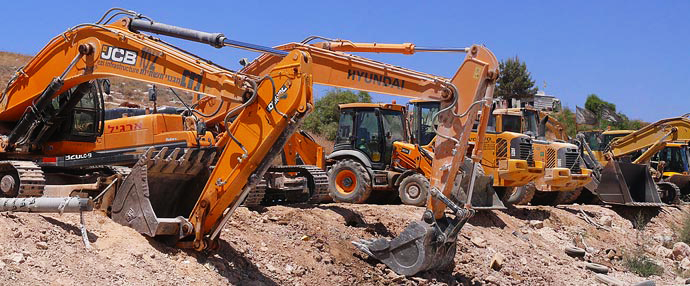
(Image via Shutterstock)
Get more local news delivered straight to your inbox. Sign up for free Patch newsletters and alerts.