Health & Fitness
1962: Why Cuba?
Second post in the Cuban Missile Crisis Series: Cuba's strategic importance to the US; its domination by the US; and the emergence of the rebel Fidel Castro.
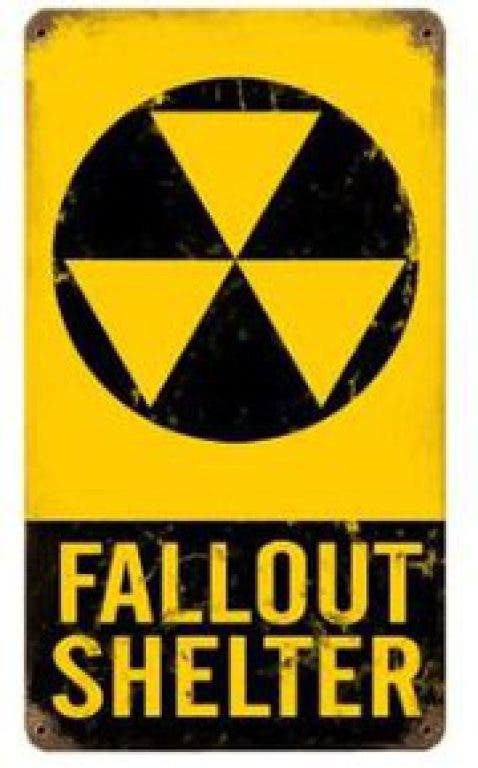
Part 2 in a series chronicling the Cuban Missile Crisis of 1962
Cuba’s Strategic Importance
Cuba lies at the mouth of the Gulf of Mexico and atop the Caribbean Sea. Havana is only 90 air miles from Key West, Florida. Given its location, the U.S. needs a friendly Cuba next door—or a Cuba under its thumb.
Cuba dominated by the U.S.
Find out what's happening in Napa Valleyfor free with the latest updates from Patch.
Throughout the 19th century the U.S. talked sporadically of buying or annexing Cuba. The U.S. defeat of Spain (1898) permitted a de facto annexation of Cuba without the need to pay for it.
The United States dominated Cuba from the end of the Spanish-American War through the end of 1958. By the 1950s, U.S. companies or individuals owned 40 percent of Cuba’s sugar industry, 80 percent of its utilities, and 90 percent of its mining operations. The wealth flowing from these industries stayed at the top of the island’s socio-economic structure, however.
Find out what's happening in Napa Valleyfor free with the latest updates from Patch.
The government of the Republic of Cuba, originally sponsored and then supported by the U.S., was consistently a corrupt, undemocratic coalition of politicians and military leaders who suppressed reformers.
By the time Castro seized power in 1959, the United States had mounted four military incursions into Cuba to put down “civil unrest”: in 1898 during the Spanish-American War; and in 1906, 1912, and 1917.
Fidel Castro Emerges
In 1952, General Fulgencio Batista seized power. He was supported by the U.S. but opposed by Fidel Castro, a lawyer-turned-revolutionary with no apparent political program. A 26 July 1953 attack led by Castro on an army barracks failed miserably. After his release from prison in 1955, Castro fled to Mexico. There he formed a new group dedicated to depose Batista.
mailto:phufstader@sbcglobal.net
Sources
For Cuba’s status as an “American vassal,” see Michael R. Beschloss, The Crisis Years: Kennedy and Khrushchev, 1960-1963. New York: HarperCollins Publishers, 1991, 91.
For U.S.-Cuban relations generally and for U.S. invasions of Cuba, see Lawrence Chang and Peter Kornbluh, eds., The Cuban Missile Crisis, 1962: A National Security Archive Document Reader. New York: The New Press, 1998, 3-4.