
Less than a mile from my home is the newly-developed Trancas Crossing Park. This park is located along the Napa River behind the Bank of Marin building which used to be the old Tom Foolery Bar. Today, Sunday, the sixth of November, my wife and I walked to the entrance of the park and then strolled and explored the .85-mile looping trail.
This flood plain area reveals much of Napa’s history. Indigenous tribes inhabited the area for many years. We met a couple on the walk who have found arrowheads along the river in this area.
Find out what's happening in Napa Valleyfor free with the latest updates from Patch.
The 53-acre river landscape park is bordered on one side by the Napa River and its riparian forest and on the other side by Salvador Creek. The area was part of an 1838 Spanish land grant to Salvador Vallejo's Napa Rancho. In recent times it was owned by Johnny Miller, the famous golfer, who donated it to the Land Trust of Napa County which developed the park.
This area is right on the edge of the tidal influence up the Napa River. It was the first place Vallejo’s cattle could naturally ford across the river. Vallejo built a redwood tranca (barrier in Spanish) in the river which was known as Arroyo de Las Trancas at that time. Thus the street Trancas, and Trancas Bridge. Once a dam in this area actually diverted water for Napa. Across this arroyo was built a series of bridges and in 1938 a three-arched stone bridge was constructed. In 1960 it was replaced by the present bridge. Some of the original stones from 1930 are still at the base of the present-day bridge.
Find out what's happening in Napa Valleyfor free with the latest updates from Patch.
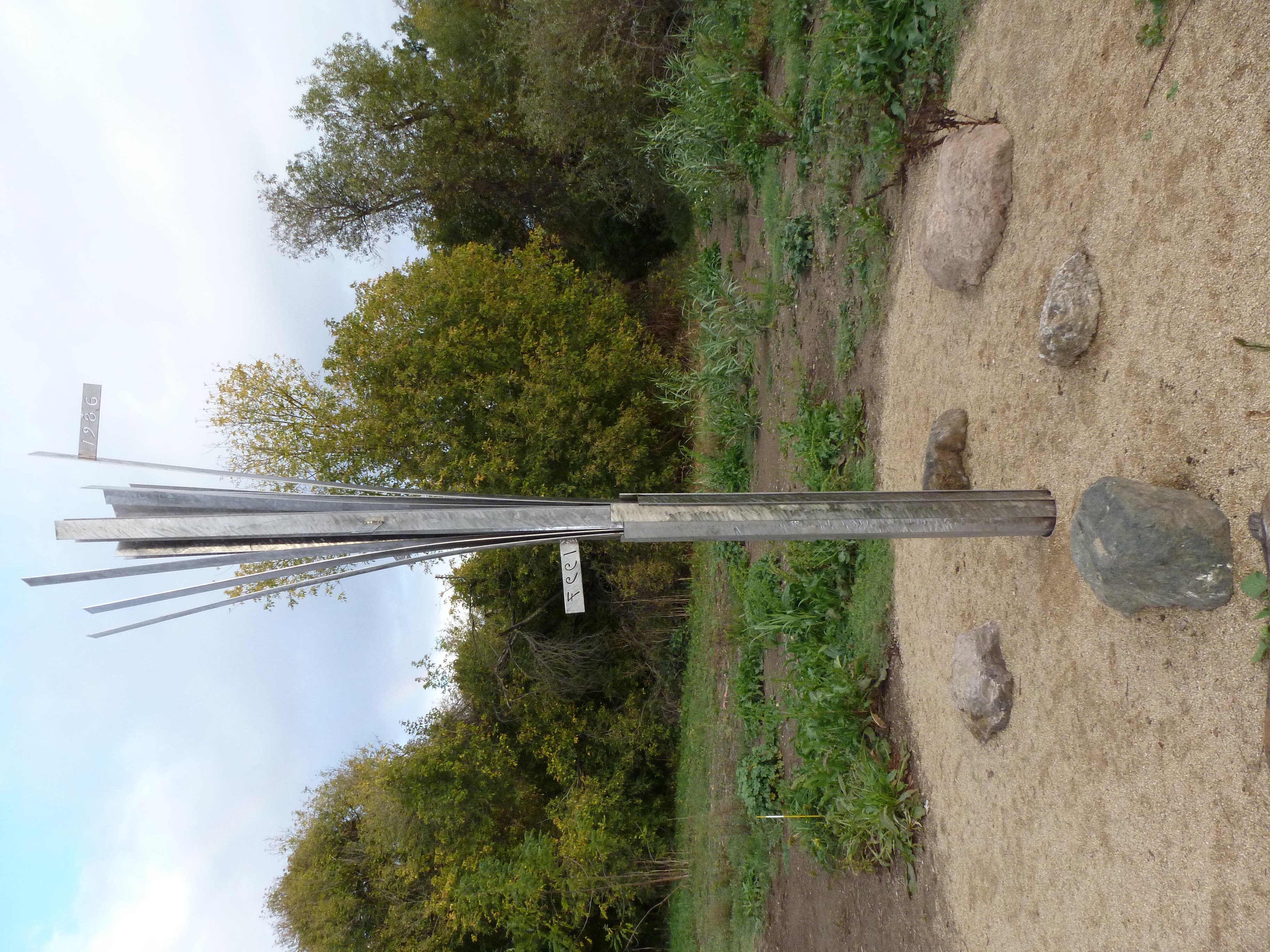
At one end of the park is a beautifully-polished 13-foot-high metal sculpture with metal flags depicting the date and height of the largest floods. Also periodically along the paved walkway are signs which tell of the fauna and flora in the area and of the area's history. Landscapers have planted native trees and bushes trying to recapture what this flood plain looked like many years ago.
I highly recommend this non-strenuous walk along this historic area.