Health & Fitness
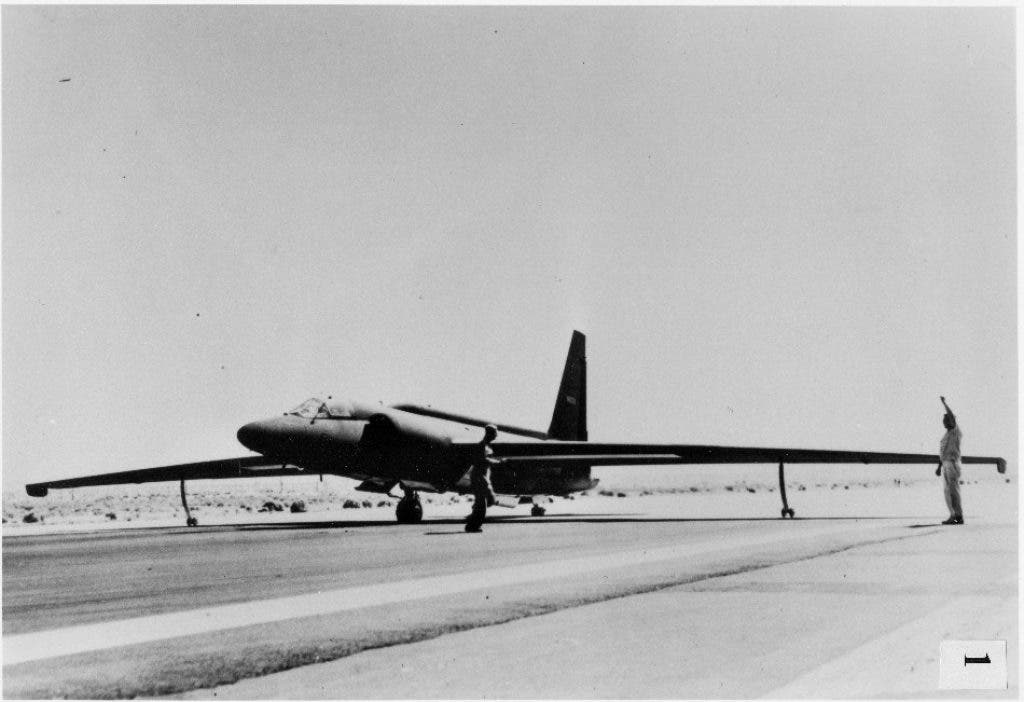
Downed Taiwanese U-2 Curtails Reconnaissance Over Cuba
Cold War dominoes: a Taiwanese U-2 shot down over Communist China curtails CIA U-2 flights over Cuba.
Fifty-seventh Chapter in a Series Chronicling the Cuban Missile Crisis of 1962
Communist China Shoots Down Nationalist U-2
On September 9th, 1962, Soviet-built surface-to-air missiles (SAMs) shot down a Chinese Nationalist U-2 over Communist China.
Although this was the second time the Soviet SA-2 had shot down a U-2, that news would have been a yawner in Washington but for one unpleasant development: by September 9th, eleven launch sites for the Soviet SA-2 were being built in Cuba. Many more such SAM sites were expected there. When those sites were operational, American U-2s overflying Cuba would be sitting ducks—like the Taiwanese plane and its pilot.
Find out what's happening in Napa Valleyfor free with the latest updates from Patch.
The Battle Over U-2 Flights
The shoot-down half a world away brought a simmering battle over CIA U-2 flights to a full boil.
The State Department had opposed the CIA’s U-2 missions over sovereign nations ever since they began in 1956. Indeed, the State Department had fought bitterly with the CIA over foreign policy since the agency’s creation in 1947.
Find out what's happening in Napa Valleyfor free with the latest updates from Patch.
On September 10, 1962, we factor in a White House badly scarred by the CIA’s blundering in the 1961 Bay of Pigs fiasco—and permanently embittered against the CIA for the damage it had done to the Kennedy presidency, both at home and abroad.
Secretary of State Dean Rusk and Kennedy aide McGeorge Bundy had shared in the President’s disgrace over the Bay of Pigs. Ever since, they had been particularly anxious to spare the President—and themselves—further embarrassment.
Immediately after the Chinese shoot-down, Rusk and Bundy joined forces. They questioned whether the need for photographic intelligence on Cuba could justify further damage to the U.S. reputation if a CIA U-2 was again shot down on a spy mission over a sovereign nation. The Rusk-Bundy team feared that the President—and they—might not survive that damage.
Curtailing U-2 Over-flights of Cuba
The Rusk-Bundy coalition eventually gained the support of the President’s brother, Attorney General Robert F. Kennedy. Together they pressured CIA Deputy Director Carter into rescheduling the remaining September mission over Cuba as four separate missions, two of them around Cuba in international air space and the other two quick “in-and-outs.” The first two of these missions, flown in late September 50 years ago, will be described at the end of this month.
Consequences of Curtailing U-2 Missions
This abrupt change to U-2 missions over Cuba was a political decision taken to spare the White House embarrassment just before the mid-term elections. The need for intelligence on Cuba took a very distant back seat to the political need.
That political decision, however, produced what Republican critics eventually nicknamed a “photo gap,” a term that aped the “missile gap” slogan that Kennedy had campaigned under in 1960. The change in mission tracks was less a “gap” than a “curtailment,” however. Missions were still flown; they just weren’t flown where they were needed.
Regardless of what you called the change, this political decision meant that no U-2 missions were flown over the interior of Cuba for nearly six weeks—precisely where and when they were needed.
Soviet Missiles Start Arriving in Cuba
As Max Holland puts it, “It was during this period, of course, that offensive missiles began to arrive.”
The CIA’s National Indications Center has the first shipload of Soviet medium range ballistic missiles (MRBMs) arriving in Cuba on or about September 8th.
We now know that once these missiles were unloaded, they were trucked to the western end of Cuba, where the island lies closest to the United States. That area would not be photographed until October 14. In the interim, Soviet crews were working night and day to finish the missiles’ sites.
McCone Never Hears about “Photo Gap”
On August 24th Director of Central Intelligence John McCone left Washington to get married. He and his bride then left for their month-long honeymoon on the French Riviera (the President had approved his absence). Deputy Director General Carter was in charge of the CIA during McCone’s absence.
During his honeymoon McCone and Deputy Director Carter exchanged a long series of classified cables (the “Honeymoon Series”) during which McCone repeatedly expressed his belief that SAM sites were being built in Cuba to protect nuclear missile bases there.
Nowhere in this series, however, did Carter inform McCone that his CIA was no longer flying U-2 reconnaissance missions over Cuba’s interior. McCone did not discover this devastating curtailment until he returned to Washington in late September.
It must have been a rude shock.
Email your questions to phufstader@sbcglobal.net or post a comment.
Sources and Notes
The Times September 10th report of the shoot-down of the Taiwanese U-2 originated with the Associated Press: “Nationalist U-2 Downed by Reds Over East China,” p. 1. “Communist China” was formally The People’s Republic of China, informally the PRC or Mainland China.
The Taiwanese U-2 had been purchased from the United States.
Dino Brugioni gives a detailed account of Washington’s reaction to the Chinese shoot-down in his Eyeball to Eyeball: The Inside Story of The Cuban Missile Crisis (Robert F. McCort, ed.). New York: Random House, 1991, 132-140. As might be expected of a CIA officer, Brugioni’s account does not flatter the State Department or Secretary Rusk.
Another excellent analysis of this moment in the Cuban Missile Crisis is Max Holland’s “The ‘Photo Gap’ that Delayed Discovery of Missiles.” Studies in Intelligence, Vol. 94, No. 4, posted on the CIA’s Center for the Study of Intelligence web site on April 15, 2007.
The September 8 arrival of MRBMs in Cuba appears on p. 14 of National Indications Center (CIA), The Soviet Bloc Armed Forces and the Cuban Missile Crisis. A Chronology: July – November 1962. Washington, D.C.: 18 June 1963.
Some of the “Honeymoon Series” cables appear in Mary McAuliffe, ed., CIA Documents on the Cuban Missile Crisis, 1962. Washington, D.C.: October 1992. See specifically nos. 13-20, 22-25, 27-42, and 34-35. No. 35 is dated September 21, 1962.