Health & Fitness
The August 29th U-2 Mission
A CIA U-2 mission ends the three-week gap in photographic intelligence on Cuba.

Fiftieth Chapter in a Series Chronicling the Cuban Missile Crisis of 1962
50 Years Ago Today: a News Conference and a U-2 Mission
On Wednesday, August 29, 1962, exactly 50 years ago today, John F. Kennedy held a news conference.
When a reporter asked about Cuba, the President said that
Find out what's happening in Napa Valleyfor free with the latest updates from Patch.
a) the United States had no evidence that Soviet troops had arrived in Cuba;
b) the United States had no evidence that antiaircraft missiles had arrived in Cuba; and
Find out what's happening in Napa Valleyfor free with the latest updates from Patch.
c) he did not intend to invade Cuba “at this time.”
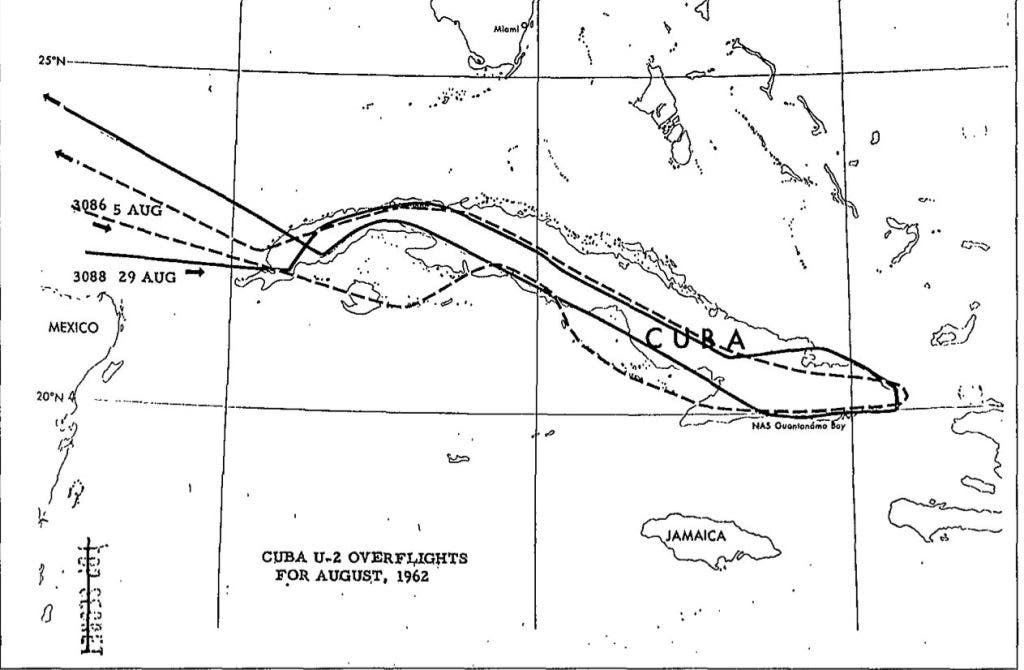
That same day a CIA U-2 took off to photograph Cuba for the first time in three weeks. During the flight, Mission 3088’s cameras recorded the information about antiaircraft missiles the President said his administration had not yet received.
The August 29th Photographs
As the declassified CIA map at the head of this chapter shows, Mission 3088 covered the entire island of Cuba.
The photographs from Mission 3088 were interpreted at the National Photographic Interpretation Center (NPIC) near Washington on Thursday, the 30th. Dino Brugioni, who worked at NPIC during this period, says that shortly after analysts began to examine the developed film, one of them shouted, “I’ve got a SAM [surface-to-air-missile] site!” By the end of the day’s work, analysts had discovered eight SAM sites under construction in northwestern Cuba.
One of those sites appears in the third photograph attached to this chapter. The distinctive “Star of David” pattern of SAM sites photographed so many times before in the Soviet Union was unmistakable. The Soviets had been busy during the August photo gap.
Brugioni says that these pictures also showed that the “FRUIT SET” fire control radar had been deployed at some of these sites. The FRUIT SET would guide the SA-2 to its target. He adds that HUMINT (human intelligence) concerning the eight SAM site areas had already reported “tents, construction activity, military vehicles, and land expropriation. Many of these reports also had revealed the presence of Soviets at the sites.…”
At long last, therefore, Mission 3088’s photographs had verified the HUMINT which the U.S. intelligence community had been receiving from agents, refugees, and defectors. Contrary to their recent denials, the Soviets were bringing military equipment to Cuba.
The Implications of the SA-2s in Cuba
The SA-2 was solely a defensive weapon. It was intended to guard ground installations against enemy air attacks. It could be used only against aircraft flying above 3,000 feet.
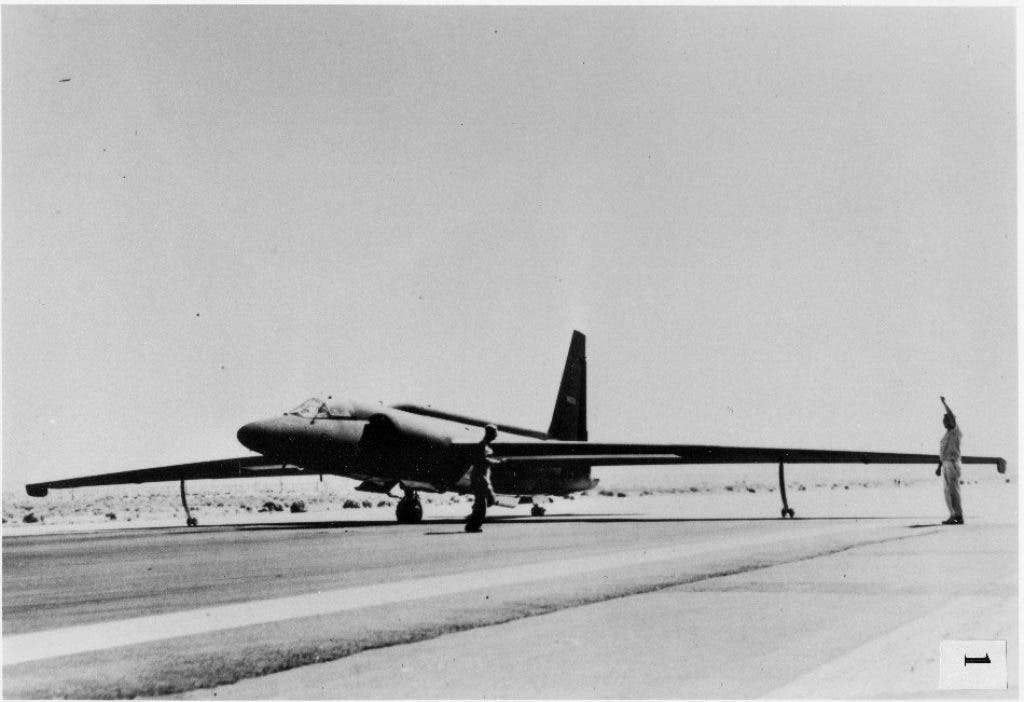
The only American aircraft currently flying above Cuba was the U-2, pictured at the head of this chapter. The U-2 was armed only with cameras. It was harmless—unless it photographed something the Soviets wanted to hide. The SA-2s must have been sent to Cuba, therefore,
a) to discourage or shoot down U-2 flights over installations the Soviets wanted to hide; or
b) to defend installations against high-altitude attacks should the United States invade.
No one except Director of Central Intelligence John McCone had asked or would ask what those installations might be.
McCone’ theory, which he had first stated on August 10th: the Soviets intended to establish strategic bases in Cuba whose nuclear missiles would be capable of reaching the United States. McCone believed that the SA-2s were being installed to protect those missile sites when they became operational.
But none of the other high-level policy makers believed him, including Secretary of State Dean Rusk, Secretary of Defense Robert McNamara, and National Security Advisor McGeorge Bundy.
One fact the Kennedy administration could never forget, however, including Rusk, McNamara, and Bundy: a Soviet SA-2 had shot down a U.S. U-2 over Russia on May 1, 1960.
President Kennedy was shown the new photographs on August 31.
Email your questions to phufstader@sbcglobal.net or post a comment.
Sources and Notes
Details of Mission 3088 come from Norman Polmar and John D. Gresham, DEFCON-2: Standing on the Brink of Nuclear War during the Cuban Missile Crisis. Hoboken: John Wiley and Sons, Inc., 2006, 77. This page also confirms the three month gap in U-2 missions “because of bad weather.” Strictly speaking, however, it would have been bad weather forecasts that delayed the missions.
The “Transcript of the President’s News Conference on Domestic and Foreign Matters” was printed on p. 10 of the August 30, 1962, issue of the New York Times.
Dino Brugioni’s discussion of the significance of the August 29 U-2 photographs begins on p. 104 of his Eyeball to Eyeball: The Inside Story of The Cuban Missile Crisis (Robert F. McCort, ed.). New York: Random House, 1991.
The CIA map at the head of this chapter is Document 1 in Mary McAuliffe, ed., CIA Documents on the Cuban Missile Crisis, 1962. Washington, D.C.: October 1992.
The pictures of the U-2 and the SAM site come from the Dino A. Brugioni Collection, National Security Archive, Washington, D.C.: http://www.gwu.edu/~nsarchiv/nsa/cuba_mis_cri/photos.htm.