Community Corner
How A Sculpture Sparked A Fight In Wine Country
City officials scrap planned mural effort after concerns over process, transparency, and community input reshape priorities.


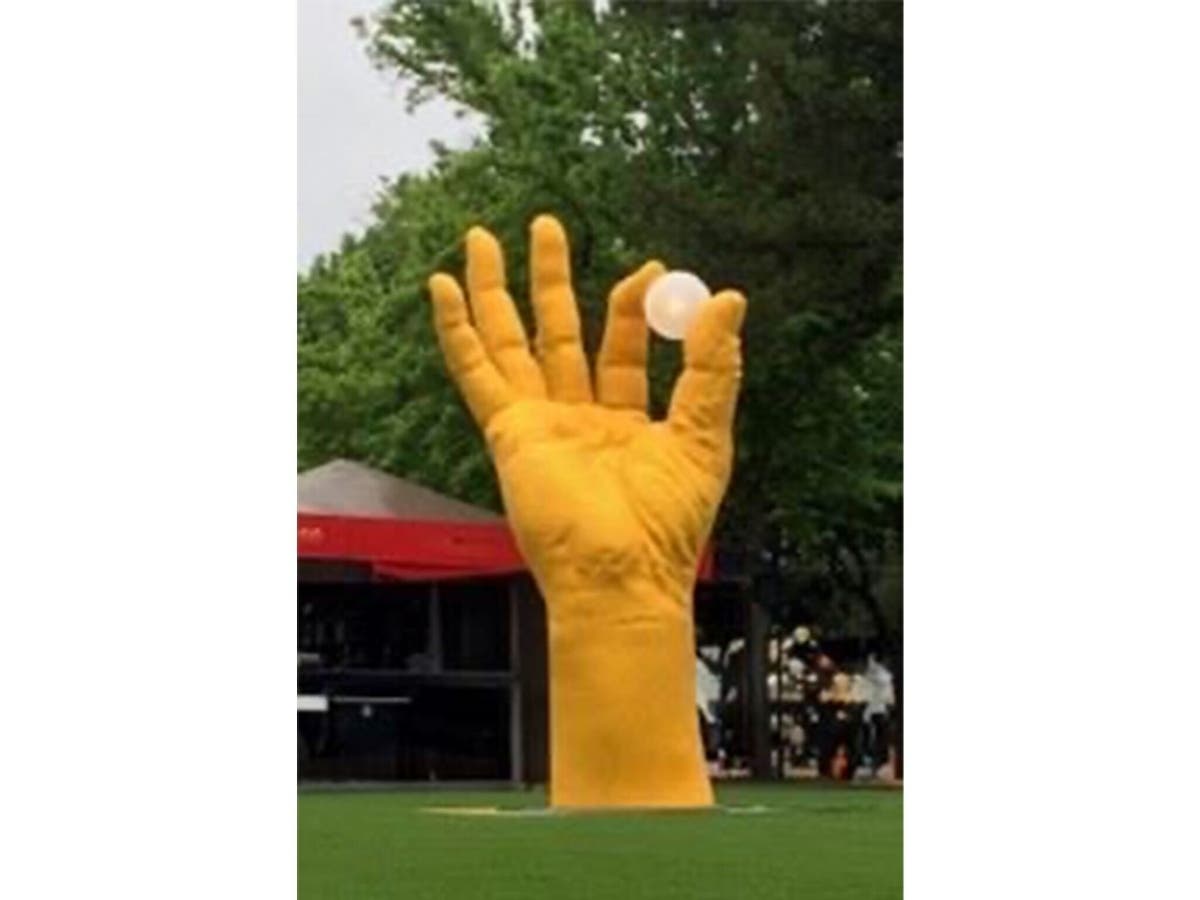
NAPA VALLEY, CA— St. Helena officials canceled the installation of 13 large-scale sculptures by the prominent Napa Valley artist Gordon Huether, including the towering yellow-orange “Hand of the Land,” which was originally slated to rise 18 feet next to Lyman Park.
The works—also featuring pieces like “Reflections,” "TRAX, and “Barrel Rings”—were to be displayed on loan along Main Street, near City Hall, the public library, and key downtown corners as part of a city-backed Art Walk celebrating St. Helena’s 150th anniversary.
The initiative was launched to bring art into civic spaces and energize downtown beyond its wine-country image.
Find out what's happening in Napa Valleyfor free with the latest updates from Patch.
“Bringing color and joy into our public spaces will allow us to highlight the creativity and history that define St. Helena, especially now as we celebrate the 150th Anniversary of our City’s incorporation,” Mayor Paul Dohring said on the St. Helena website in February. “We’re excited to advance projects that lift our spirits, spark creativity, strengthen our community identity, and make us all feel a little more inspired—and a little more at home.”
The artist posted on Facebook that he was honored to have his work chosen for the art walk. But the plan unraveled by mid-March as city officials, residents, and stakeholders waded into the sometimes bruising, rough-and-tumble, politically charged domain of public art.
Find out what's happening in Napa Valleyfor free with the latest updates from Patch.
Some critics objected to the way the process was handled, which was somewhat informal. But others suspected the real problem is an 18-foot tall, bright orange sculpture made of steel and fiberglass.
Aesthetic NIMBY-ism or Public Process
The City Council voted in on March 10 to approve the public art project — if the plans cleared the Parks and Recreation Commission.
But the commission, whose authority is advisory only, overrode the council on March 16 with a 5-0 vote against the public art project, halting momentum for what had been billed as a celebratory, citywide installation.
Instead, they encouraged Huether to file an application with the Parks and Recreation Department. The commission also requested an official call for public artists — both moves that are outlined in St. Helena’s public art policy.
The "Hand of the Land"
Supporters said murals and sculptures could enliven the city and boost its status among nearby destinations, while opponents asserted the city’s process lacked transparency and insufficient community input —exposing deep disagreements over whose vision for public space should prevail.
The concept for the St. Helena project drew inspiration from nearby Yountville, where public art has become part of the visitor experience. Instead, Huether and his work were swept into a broader dispute over process and public input.
Huether's big, orange “Hand of the Land” sculpture, in particular, became a lightning rod. The piece—previously displayed at BottleRock and once proposed for downtown Napa— drew both criticism and fascination.
It was originally conceived to go in front of a upscale downtown Napa hotel. Once conceived, Huether said he was attacked for the work and the developer of the hotel was attacked too.
“There’s something about orange hands that gets people going,” he said Thursday.
Huether decided to make the sculpture for himself and installed it outside of his studio on Monticello Road, where it attracts curious visitors, who pose for photos with the giant hand, Huether said.
Huether, who grew up in St. Helena and launched his career at his father’s kitchen table in town, said he envisioned donating works to the city for loan as a way to give back to the city.
Known primarily for large-scale permanent commissioned installations —including a major installation underway at the Salt Lake City airport— he also produces sculptures at his studio, making an art walk of loaned pieces feasible.
But ahead of a Parks and Recreation Commission meeting, 25 residents submitted written comments on the proposal—only two expressed support for the public art project. Many of those commenters were the same residents who voiced concerns at the City Council’s March 10 meeting, according to the Press Democrat.
Critics of the project argued that the city bypassed its own public art policies and failed to bring in the community, fueling tension over control and representation in civic decision-making.
"It’s a selfie moment”
The fallout highlights a broader tension playing out across wine country. As cities seek to “up their game” with cultural amenities, public art has become both a tool for economic vitality and a flashpoint for civic debate.
Communities who want public art are trying to be noticed, draw visitors in, and give residents something to brag about.
“Napa is a tourist-driven economy,” Gordon Huether said, and visitors expect more than a destination—they want an experience. They want to stroll streets lined with thriving businesses and encounter art that adds energy and identity to the setting. Pieces like “the hand,” he said, go beyond aesthetics to create spectacle—“a selfie moment” that becomes part of the visit itself.
And public art, once a niche domain, has evolved into a multibillion-dollar industry, complete with formalized processes, competition, and, increasingly, politicization.
For St. Helena, the cancellation leaves open questions about what comes next. City officials have begun exploring alternatives, including temporary or rotating installations that offer flexibility without permanent commitments. For now, the walls and parks are unchanged, while stakeholders debate over what belongs in St. Helena—and who decides.
Get more local news delivered straight to your inbox. Sign up for free Patch newsletters and alerts.