Community Corner
For Napa Residents Rebuilding Their Lives, a Garden Means More Than Food
At a Napa housing site, residents harvest greens while recalling gardens and stretching food budgets. Now they pick lettuce from a garden.


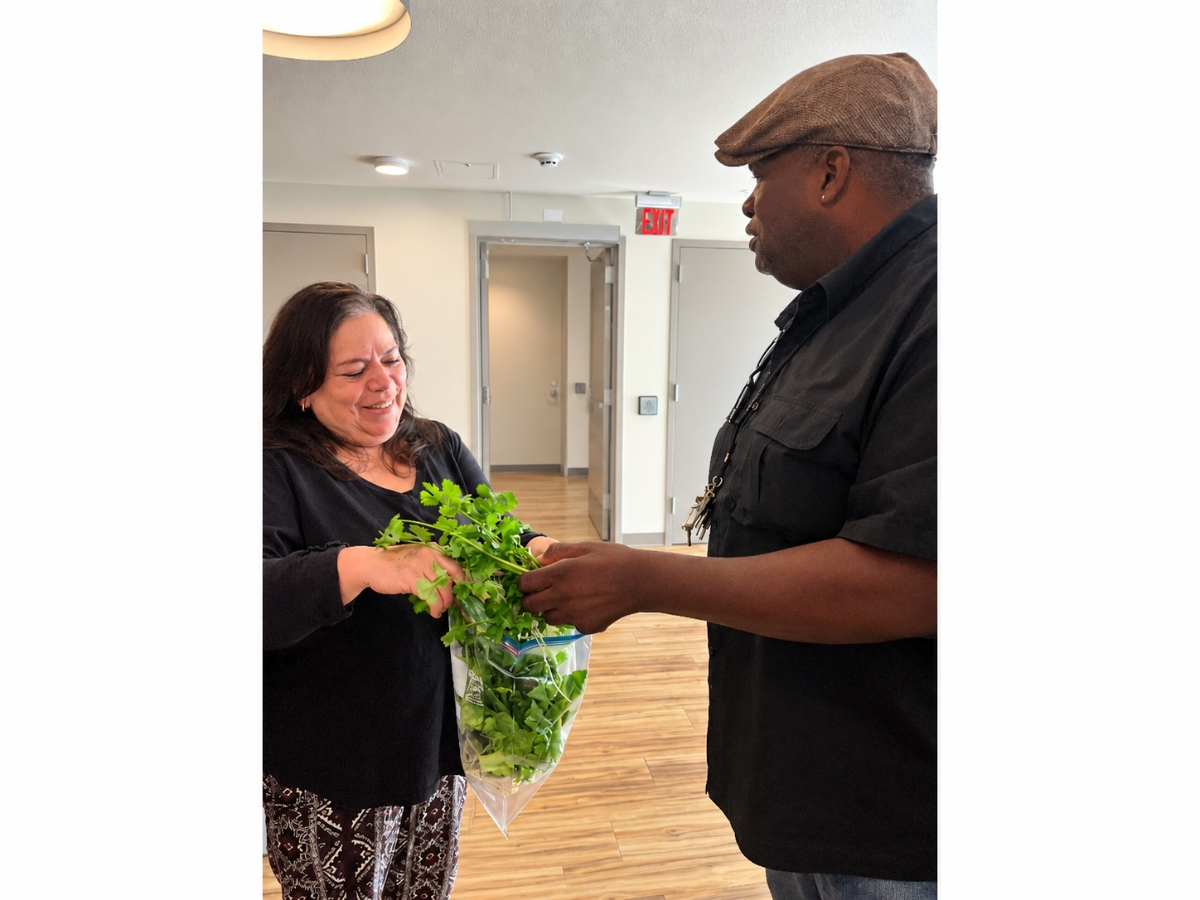


NAPA VALLEY, CA — A handful of fresh lettuce and cilantro can do more than fill a plate. For residents rebuilding their lives after homelessness, the harvest brings back the flavor memories of gardens they once tended — and the chance to choose food they want to eat.
Near the end of the month, when Sherry Allen, a resident of Heritage House in Napa runs out of food benefits, she turns to a hydroponic garden for fresh vegetables and herbs.
Heritage House, run by Abode Services, provides apartments for people who have experienced homelessness.
Find out what's happening in Napa Valleyfor free with the latest updates from Patch.
Allen said she once grew tomatoes, zucchini, cucumbers, and beets at home with her sister in children’s swimming pools turned into backyard garden plots just a few miles from Heritage House.
Other residents carry garden memories from Mexico — gardening as a child in Jalisco, Mexico and plots of vegetables in Napa tended by former farm worker Juan Manuel Macías.
Find out what's happening in Napa Valleyfor free with the latest updates from Patch.
The indoor garden cannot grow everything residents once planted, and its harvest does not replace a pantry.
But at the Abode housing site, it's a way of giving residents fresh greens they can pick themselves when money and food run short.
“It helps us,” Allen told Patch Thursday standing in front of wall of romaine lettuce and heritage cilantro.
Heritage House, run by Abode Services, provides apartments for people who have experienced homelessness.
The garden is a Flex Farm made by the company Fork Farms to help residents afford fresh food in a region where record-high food prices turn daily meals into difficult financial decisions.
Abode is calling attention to both the technology and food insecurity during Hunger Action Month, which this year is highlighting ways of building stronger food systems.
Abode said a Flex Farm can grow more than 394 pounds of produce a year. The unit can produce about 30 pounds of fresh food each month for Heritage House residents, according to Abode.
The goal is to help grow fresh vegetables year-round.
The Flex Farm device resembles a standing tanning booth, with rows of roughly one-inch openings for seedlings.
Staff start seeds in a bed of rockwool plugs, then place the sprouted plants in the openings. A pump circulates water mixed with nutrients, and a light runs 16 hours a day.
Abode Services Resident Services Coordinator Trev Williams said the Heritage House seedlings grow into romaine lettuce and heirloom cilantro in about 28 days.
A resident, Martha Macías, said she likes the variety, adding that the garden’s lettuce and cilantro taste better than what she could buy at a market. She uses them in salads, including salads with nopales.
The hydroponic garden gives her peace of mind because she can see how the food is grown and harvested. .
Williams pulled a head of romaine from the unit with its roots attached and told Macías she could replant it.
Williams said another partner collects produce from farmers markets for Tuesday deliveries, while donations and food bank pickups help stock an open pantry.
The local Catholic Charities also makes weekly fresh produce drop-offs.
Fresh food should be for everyone, Williams said, standing in front of the garden.
The garden gives residents access to fresh food in a region known for growing it, he added.
The needs of formerly unhoused communities do not end when they find housing, he said. “Many people are still just rebuilding their lives."
Get more local news delivered straight to your inbox. Sign up for free Patch newsletters and alerts.