Community Corner
Sea Lion SOS: 'Extremely Emaciated' Baby Sea Lions Popping Up on Coast
The mothers may be abandoning their pups as they search for food, researchers said. Or, they fear, the pups may have an unidentified disease


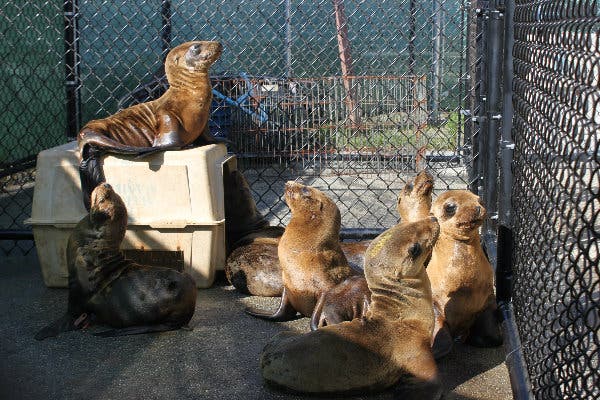


More than 100 sea lion pups have turned up emaciated on a 600-mile stretch of California beaches this birthing season and marine mammal researchers don’t know why.
Researchers at the Marine Mammal Center in Sausalito said the nonprofit has responded to 120 pups in the first five or six weeks of 2015. Last year the center didn’t treat 100 pups until April.
“This is very alarming,” said the center’s spokeswoman Yvette Koth.
Find out what's happening in Napa Valleyfor free with the latest updates from Patch.
The birthing season started about seven months ago, and the pups are usually still nursing with their mothers on the Channel Islands until they’re 11 months old, said the director of the center’s veterinary science department Dr. Shawn Johnson.
The mothers may be abandoning their pups as they search for food, according to the researchers. The fish the seals eat may be feeding farther from the islands than in the past, causing mother seals may be going after the fish but not returning to their pups on the islands, Koth said.
Find out what's happening in Napa Valleyfor free with the latest updates from Patch.
The other possibility is that the pups are suffering from an unidentified disease, Koth said.
Perhaps more alarming is that this is the third year the center has seen a larger than normal number pups needing help and the number seems to be growing each year, according to Johnson.
Last year 711 pups needed treatment. In 2013, 304 needed help.
The pups are turning up on beaches at about half the weight they should be. Johnson said the pups coming to the center are about 15 or 16 pounds when they should weigh 35 or 40 pounds or more.
Johnson called the pups “extremely emaciated and thin.”
The Marine Mammal Center is the world’s largest marine mammal hospital in the world. It serves 600 miles of the California coastline from Ft. Bragg in Mendocino County south to Santa Barbara.
Residents can help the center save the pups in two ways. Donations to the center will help it feed the pups, which are released into the wild once they are at a healthy weight. Reporting an emaciated pup to the center is the second way.
Researchers are asking that the public stay at least 50 feet away from any pups or sea lions when calling the rescue hotline at (415) 289-SEAL.
If residents can take a photo, the photo will help researchers know whether the pup needs help.
Koth asked that residents also provide a good description of the location so rescuers can find the pup on the beach.
--Bay City News
Photos courtesy of BCN and Mandy Oliver
Also see:
- Toxic Blue-Green Algae At East Bay Park Kills 3 Dogs
- Some Birds Cleaned Of East Bay, Peninsula Mystery Goo Released
- Part of Mt. Diablo State Park Closed for 5 Months for Falcon Nesting Season
- Bill To Protect Berryessa Snow Mountain Introduced
- CA Attorney General Seeks To Reinstate Ban on Foie Gras
- Oh Where, Oh Where Has Griffin Gone? Day No. 57 for Great Dane Missing From Napa
- From U.S. Humane Society: $5K Reward For Puppies Tossed In Trash In Pleasant Hill
- O Tannenbaum, O Tannenbaum: Zoo Animals Love Your Branches
Get more local news delivered straight to your inbox. Sign up for free Patch newsletters and alerts.