Community Corner
Shelters Cut Ties With 'No-Kill' CA Rescue Accused Of Slaying And Dumping Dogs In Mass Grave
California shelters retrieved dogs from the Humboldt County rescue as investigators examine allegations involving missing and dead animals.


California animal shelters are continuing to cut ties with a Humboldt County 'no kill' animal rescue accused of slaying dogs it was paid to care for. The ongoing case raises questions about a little-seen network that helps move animals out of overcrowded public shelters.
Weeks after authorities searched the Fortuna-based organization, Miranda’s Rescue, authorities have not publicly said what led to the deaths of eight dogs found buried on the property.
No charges have been filed against rescue owner Shannon Miranda or any employees. However, several Bay Area shelters, including agencies in Napa, Berkeley and Oakland, severed ties with the rescue after learning of the gruesome allegations.
Find out what's happening in Napa Valleyfor free with the latest updates from Patch.
The owner could not be reached by phone because the voicemail was full and not accepting new messages.
Mass burial site
The case has drawn attention to how private rescue organizations work with public shelters, but operate outside their management and oversight. It's a vital but rarely visible part of California’s animal welfare system: a network of private rescues that accept animals from crowded public shelters, often for transfer fees, and promise to care for them, rehome them, or keep them alive when local agencies run out of space.
Find out what's happening in Napa Valleyfor free with the latest updates from Patch.
The Humboldt County Sheriff’s Office began investigating Miranda’s Rescue in April after receiving information that dogs transferred from shelters across California may have been killed and buried at the facility instead of adopted out, according a search warrant affdavit.
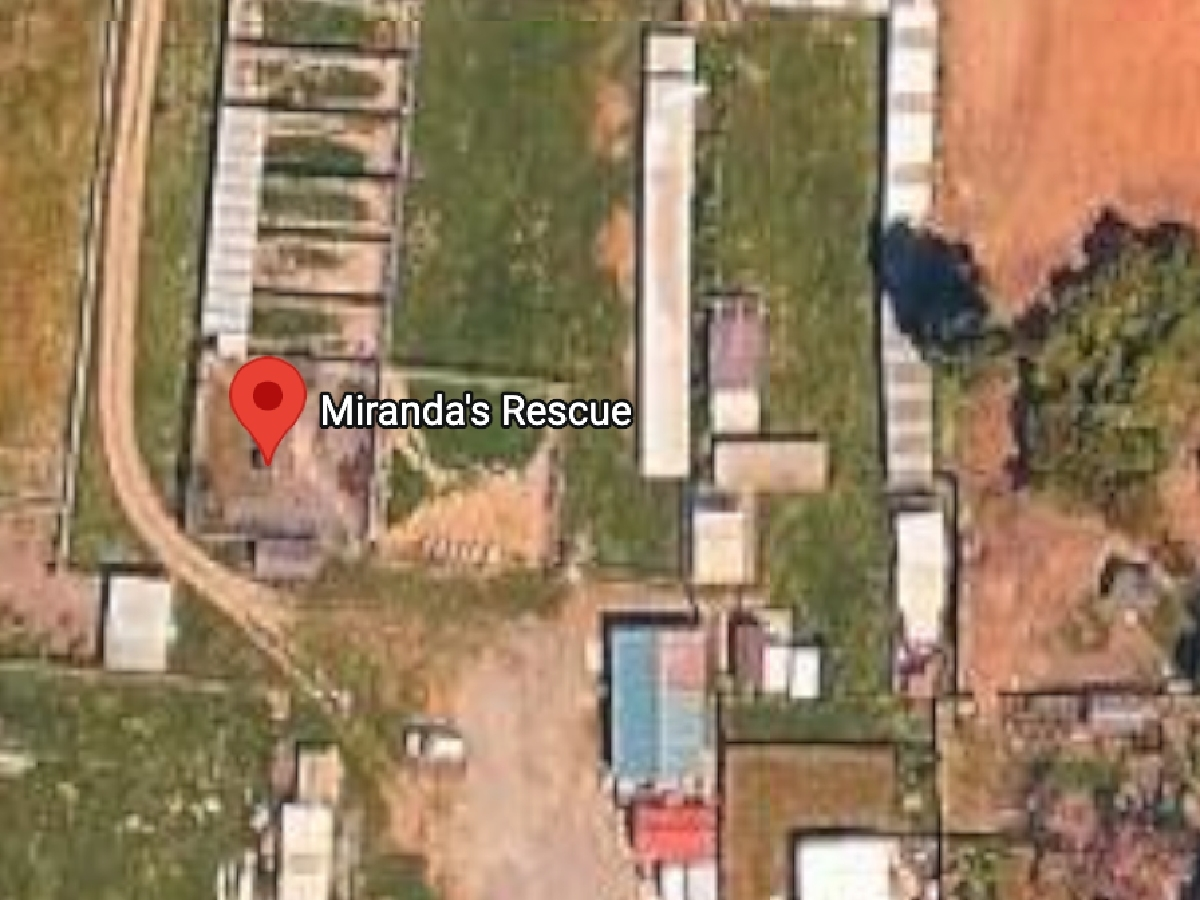
Sheriff’s Detective Julian Aguilera served a search warrant on May 1 at Miranda’s Rescue, located at 1603 Sandy Prairie Road. He described a 30-acre sanctuary and adoption facility with multiple kennels, barns and enclosed animal areas. Aguilera wrote in the affidavit that during a tour of the facility, he found the living dogs appeared well cared for and housed in suitable conditions.
Two animal welfare advocates went to extraordinary efforts to trigger the criminal investigation. It began April 22 when two women contacted the sheriff’s office with what authorities called “credible information” that the rescue was accepting dogs and killing them primarily for financial gain, according to the affidavit.
According to Aguilera, a woman who runs her own animal rescue purchased property bordering Miranda's because she suspected he was mistreating animals. The woman, Jennifer Raymond, put up trail cameras that captured footage that appeared to show dogs being dumped in a mass grave at Miranda's property, Aguilera wrote in his affidavit.
Raymond and another animal rescuer, Jenna Kilby, entered Miranda’s property through a hole in a fence on April 26 and discovered deceased dogs. The women subsequently led deputies to the burial site.
“No-kill” policy
According to the affidavit, the women scanned the dead dogs' microchips, determining one of eight slain dogs — Zora — was transferred from Oakland Animal Services on March 31, 2026.
Miranda had texted Oakland shelter officials to report that Zora had been adopted, according to Aguilera.
Investigators confirmed through a microchip that Zora was among eight dogs found in a pile of deceased animals. Because of blood and dirt on the remains, investigators were originally unable to determine whether Zora had suffered a gunshot wound.
Miranda told investigators he received money for caring for transferred dogs.
When Aguilera showed Miranda photographs of dead dogs found stacked in the bed of a truck on the property, he reportedly became emotional and denied ownership of the animals. Investigators later determined that one of the dogs in the photographs was Zora.
Oakland Animal Services officials told investigators they had received a photograph of Zora from Miranda's Rescue on April 25 showing the dog on a leash accompanied by a message stating that Zora had been adopted.
An Oakland Animal Services representative also told investigators that many large dogs like Zora transferred to Miranda’s Rescue were difficult to place in urban homes because of space constraints.
Shelters across California, including Napa, Contra Costa, Alameda, Solano, Monterey and Palm Springs reportedly entrusted animals to Miranda’s Rescue, which claimed to have a “no-kill” policy. They reportedly paid the organization between $400 and $1,450 per dog. The payments were intended to cover care, and rehoming services.
The rescue received about 600 dogs from shelters in the past year, according to the search warrant affidavit.
Only one transfer agreement explicitly prohibited Miranda from euthanizing animals in its care, according to Aguilera's affidavit.
None of the shelters contacted responded to calls.
The Affidavit
The criminal investigation centers on allegations that dogs were unlawfully euthanized and buried. Investigators are examining potential violations of California Penal Code 597(a), which prohibits animal cruelty.
Miranda reportedly told Aguilera, according to the affidavit, that he was not truly operating a “no-kill” facility and was doing the best he could with limited resources.
But Miranda was cooperative with investigators, Aguilera said in the affidavit. Miranda allowed law enforcement access to his home and rescue facility, denied wrongdoing, and said he typically used veterinarians when euthanizing animals. However, he acknowledged there were times when he euthanized dogs himself using a firearm, according to the affidavit.
Aguilera also found Miranda was housing more animals than the facility’s stated capacity. The rescue reportedly had room for about 60 dogs but was caring for 69 at the time of the investigation, according to the affidavit.
According to Oakland Animal Services, its agreement with Miranda’s Rescue required the rescue to find adoptive homes for transferred dogs, rehabilitate and train difficult animals, and keep dogs on the property if they could not be placed.
Among the agreements reviewed by investigators, Solano County’s contract uniquely prohibited Miranda’s Rescue from euthanizing dogs simply to create space for additional animals. However, several reviewed do include "no-kill" policies in their public mission statements.
Records reviewed by investigators showed that Oakland Animal Services transferred 445 animals to Miranda’s Rescue between 2023 and 2025.
Investigators estimated those transfers represented approximately $66,750 in adoption-fee value, excluding any fees Miranda may have received directly for caring for the animals.
In April, seven dogs from Oakland were scheduled to be delivered to Miranda’s Rescue.
“It is my belief that Shannon murdered these dogs so that he could accept more from Oakland Animal Services for financial gain,” Aguilera wrote in the affidavit.
“Oakland Animal Services sent dogs to Shannon that were considered unadoptable, under the impression that they could live out the remainder of their lives at the rescue if their behavior was not corrected and if they were not adopted.”
When an Oakland services director planned to take dogs back, Shannon told him that he did not have good records, and that some had to be "put down" or had "jumped out of cars," according to the affidavit.
The Humboldt County Sheriff's Office is investigating allegations of animal abuse, cruelty, fraud and conspiracy involving Miranda’s Rescue. They have not publicly released any findings and declined in an email to answer questions about the investigation.
Lifesaving effort
Following a sheriff's search of the property, the cities of Rio Dell, Ferndale and Fortuna suspended their contracts with the rescue, the Times-Standard reported.
However, the Oakland Animal Services said in a public statement on the shelter's website that there is evidence at least five dogs transferred to Miranda’s Rescue in Fortuna were later killed after the rescue had reported them as adopted.
The agency sent a total of 827 dogs to Miranda’s since 2020, which was 13.5% of the dogs transferred to rescue partners during that period, according to a statement addressing questions about Miranda’s Rescue on the organization's website.
FOAS paid fees totaling $376,000. Some of these funds came from the agency's general budget, and some, the agency said, "came from donors who wanted specifically to support what we all saw as a lifesaving effort."
In the joint statement, Oakland Animal Services and Friends of Oakland Animal Services said they were "devastated" by the allegations and deeply regret transferring dogs to Miranda’s Rescue. The organizations said they believed the dogs were being given a second chance, but now believe they were deceived by false adoption reports.
"We have seen evidence that at least five dogs who had been reported as adopted were subsequently killed there," according to the statement.
At the same time, the agency also received positive feedback about Miranda's Rescue from other clients regarding the reputation and care of the animals, according to the statement.
Also, staff and volunteers who made transports to Miranda’s over the past several years shared positive feedback, having observed animal care and interacted with their staff, according to the agency. "None observed any animal mistreatment."
Humboldt County Animal Control later informed Oakland that only one OAS dog, Redwood, transferred to Miranda’s Rescue in October, remained alive at the facility. The agency said they are are working to bring Redwood back.
The organizations said they are reviewing their rescue-partner vetting process and rewriting transfer agreements to increase transparency and accountability.
Who Is Responsible?
Private rescues remain subject to animal cruelty and neglect laws, veterinary-practice rules, zoning requirements, kennel permits, nonprofit reporting requirements and any transfer agreements they sign with public shelters.
California law also requires public and private animal shelters to keep records for each animal taken in, medically treated, impounded or euthanized, including treatment, the veterinarian of record and final disposition, for three years.
But private rescues are not typically inspected in the same routine way as restaurants, nursing homes and other heavily licensed facilities. Oversight often depends on local permits, transfer contracts, complaints, welfare checks, veterinary records, zoning enforcement or criminal investigations.
Miranda’s Rescue was operating under a compliance agreement with the Humboldt County Planning and Building Department rather than a valid conditional use permit, according to the Times-Standard.
The rescue’s previous permit had expired, but county officials allowed the organization to remain open while it applied for required building and use permits, the newspaper reported.
In Humboldt County, facilities that keep multiple dogs may need a kennel license. County code says officials may not issue a kennel license without a certificate from the Animal Control Officer stating that the kennel complies with county animal rules.
“When we first heard about the investigation, we were all shocked,” Napa County Animal Shelter Manager Megan Scouller told ABC 7 News.
Scouller said the rescue had been a trusted resource when the shelter needed space for animals in its care.
“Since learning about the investigation, our team has worked closely with law enforcement and partner agencies to ensure the safe return of these animals,” shelter officials said in a statement.
Scouller did not immediately respond to requests for further comment.
Napa shelter staff said the returned dogs have spent months waiting for permanent homes and are ready for adoption.
Napa County Animal Shelter is waiving dog adoption fees to encourage placements and create space for other animals in need.
Prospective adopters can visit Napa County Animal Shelter at 942 Hartle Court in Napa or contact the shelter at 707-253-4382 for information about available dogs.
Get more local news delivered straight to your inbox. Sign up for free Patch newsletters and alerts.