Politics & Government
Community Learns About Measure G
A meeting was held Wednesday night to learn more about a $63 million school facilities bond for local schools.
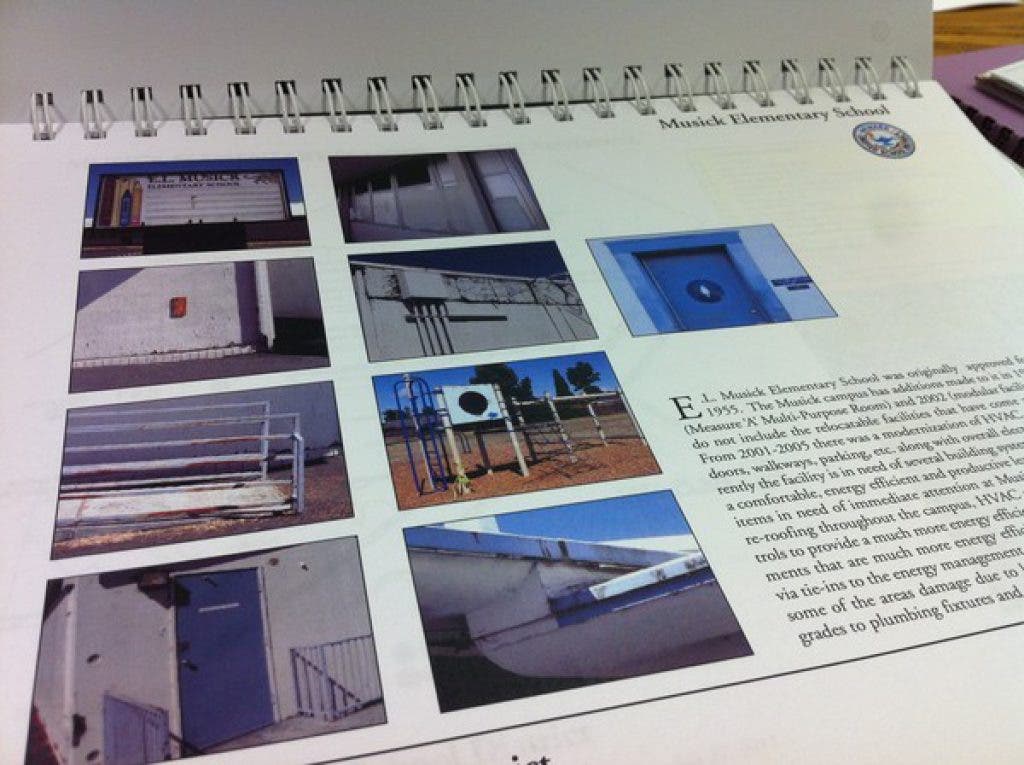
This November, Newark voters will decide whether to approve a $63 million facilities bond issue for local schools to update technology infrastructure, renovate classrooms, labs and libraries, and improve energy efficiency.
The Newark Board of Education decided in to put the bond, Measure G, on the November ballot.
The reasoning behind the timing, Superintendent Dr. Dave Marken said at a community meeting Wednesday night, is to take advantage of potentially lower construction costs before the 2012 election, when several neighboring school districts will try to pass their own bond measures.
Marken said a committee has already identified a list of facilities needs that cost $152 million. Those include a high-priority list that contains $80 million worth of repairs.
Many public schools within Newark Unified School District are between 40 and 50 years old. According to the district, some still contain asbestos, lead and other hazardous materials and are poorly insulated, which drives up energy costs. Others have roof leaks or toilets and water fountains that don't work due to aging plumbing. Wheelchair accessibility is also an issue.
Marken said another critical priority is the district's outdated computer servers, which are 15 years old. A consolidated system built at the district's main office would save thousands in energy costs alone, he said.
Together, the district estimates repairs made through the bond would generate up to $500,000 in energy savings annually. Officials say they want to keep the bond's tax rate for property owners at or below $39 per $100,000 of assessed value.
Marken, who joined the school district in July after spending 14 years as a school administrator in Dublin, made the case for passing the ballot measure to a largely supportive audience of 15 residents at John F. Kennedy Elementary School. The school's principal Kathleen Waffle as well as Newark Board of Education president Charlie Mensinger and board member Jan Crocker also attended.
Marken said the bond wasn't perfect, but it was a step in the right direction. He said it would help the district complete much-needed projects and ensure enough funds for curriculum and teacher salaries. It would also create local construction jobs and benefit the city of Newark as a whole.
If the district doesn't bring in additional funding, Marken said, "I can tell you unequivocally that in 10 years, Newark will be in a world of hurt."
Marken addressed arguments that the school district should better manage its budget rather than seeking a bond issue measure from homeowners. He said Newark schools have lost $13 million in state funding in the past two years, on top of cuts in previous years.
Such cuts have meant California now provides the least per-pupil spending of all 50 states, a distinction it earned last year, he said. School districts across the state are struggling and relying on local communities to help make up the difference.
"It's really difficult to misuse virtually nothing or very little," he said. "If we don't take control and fund our schools, it's clear the state won't."
Marken also said a bond — which can only be used on actual infrastructure projects but requires a smaller majority vote to pass than a parcel tax does — is more important at this time because if buildings are in disrepair, "you're going to have issues."
"Our schools should look as good as they are on the inside," he said.
To help get the word out, volunteers, organized by former school board member and longtime Newark resident Andrea "Andy" Frances, are meeting each Monday-Thursday for phone banking. Those interested can contact her at 510-797-7133.
In addition, the district is planning precinct walking on Saturday, Oct. 8.
Those in opposition to the bond are organizing on Facebook, creating a page called "No on G: Bad Math for Newark." The group says the measure represents an unnecessary tax on homeowners that will push the district into debt without improving school performance.