Community Corner
Watch Where You Step
For safety's sake, Newark crews target "presents" left behind by geese at Lakeshore Park.
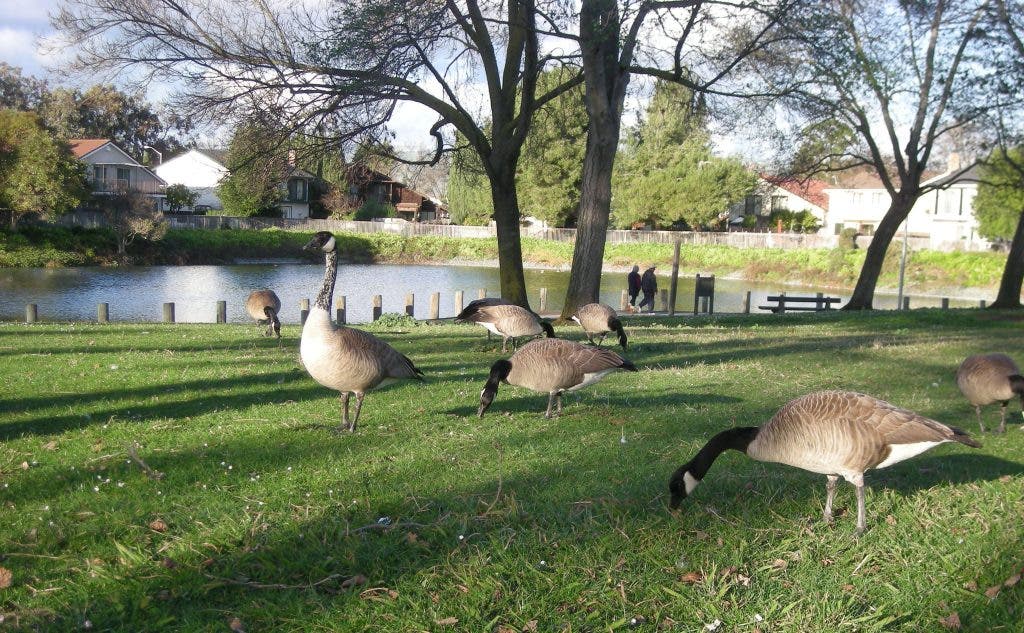
They are the guests you can always expect. They are never late and they always bring an appetite.
Canada geese have long been a familiar wintertime sight around Bay Area open spaces, lawns and golf courses. Now some are spending the whole year in Newark, and they bring some problems with them.
According to Doug Cordell of the Don Edwards San Francisco Bay National Wildlife Refuge waterfowl present potential health risks to humans.
Find out what's happening in Newarkfor free with the latest updates from Patch.
“The tremendous amount of fecal matter can be a health issue,” Cordell said.
Bacteria related to human disease have been found in waterfowl fecal matter, according to the Animal and Plant Health Inspection Service, part of the U.S. Department of Agriculture,
Find out what's happening in Newarkfor free with the latest updates from Patch.
“The fecal matter on the pathway at our can be excessive,” said , Newark’s administrative director and former maintenance superintendent, in an e-mail message. “The geese can cause significant damage to the turf.”
Cordell said that suburban areas are perfect hangouts for Canada geese. These migratory birds, which travel south from Canada, Montana and South Dakota during winter, like short grass. Well-maintained suburban parks also protect geese from encountering natural predators.
is one of the local areas most heavily populated by waterfowl. In 2007, the city began distributing information about the harm associated with overfeeding wildlife by the lake.
Woodstock said the city has used a goose deterrent on lawns to thwart congregating waterfowl, but the strategy proved to be a short-term solution. The geese just moved a short distance away.
“Every year we apply for a Federal Depredation Permit to 'addle' the resident Canadian Geese eggs,” said Public Works Director Peggy Claassen in an e-mail.
Newark coats the eggs with corn oil to prevent hatching. This works better than removing nests, because geese will relocate and build new nests, Claasen said.
All eggs that are treated with oil must be reported to the U.S. Fish and Wildlife Service.
In addition to its current egg strategy, Newark wants to install plantings along the edge of the lake, making water-to-land travel more difficult for the geese.
“If there is some sort of barrier at least two feet in height that inhibits their easy transition between the water and land, they will not find the area as appealing. So we are hoping this will make the Lakeshore Park a less attractive area for them,” Woodstock said.
Meanwhile, watch your step in Lakeside Park