Politics & Government
CA Supreme Court Approves Disbanding of CRA
The agencies will be phased out when their contracted projects are completed.

The California Supreme Court today upheld a new state law abolishing the Los Angeles Community Redevelopment Agency and hundreds of similar agencies across the state, but ruled that a companion law forcing CRAs to give a portion of their tax revenues to the state was unconstitutional.
The ruling is a major blow to redevelopment agencies, which sued earlier this year to block both laws. Since the court ruling aborted the plan to allow local governments to buy back into redevelopment, the agencies will be phased out when their contracted projects are completed.
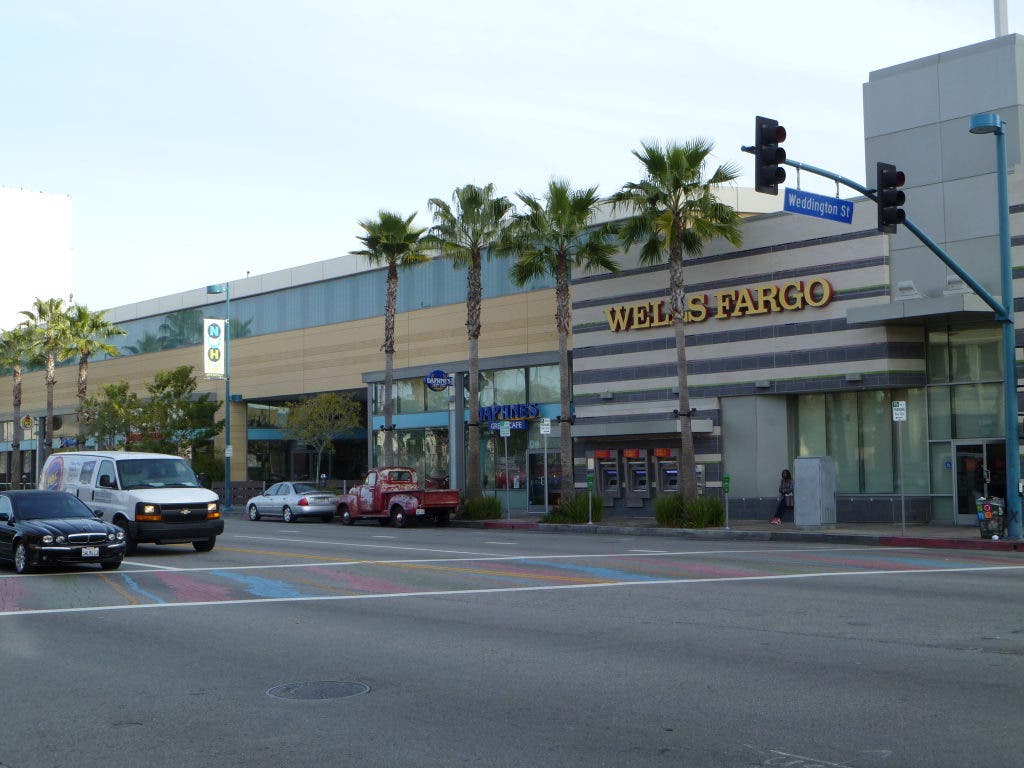
The CRA-LA has been instrumental in developing the NoHo Arts District in North Hollywood. The recent opening of the completed the 10-year, $375 million NoHo Commons project, which included housing, retail space, office space and the recently-closed .
Find out what's happening in North Hollywood-Toluca Lakefor free with the latest updates from Patch.
This past spring, North Hollywood-Toluca Lake Patch took a long look at the CRA's work in North Hollywood, both in the NoHo Arts District and the Valley Plaza area, in a five-part video series that included an interview with Gazala Pirzada, the CRA-LA North Hollywood area project manager. Check out the series to learn more about the long and complex history of the CRA in North Hollywood:
Find out what's happening in North Hollywood-Toluca Lakefor free with the latest updates from Patch.
Current CRA projects in the North Hollywood area that will be allowed to be completed will include the . Pirzada appeared at the Midtown NoHo Neighborhood Council in October, where she gave a detailed review of the CRA's current projects in North Hollywood that would be allowed to finish and others that would have to be cancelled if the dissolution of the CRA-LA were to happen.
Redevelopment agencies are funded by the increase in tax revenues generated by projects in their areas. The agencies use the revenue to invest in additional projects mainly in blighted parts of cities.
The agencies not only fund major building projects, like a proposed a new art museum, apartments and park in downtown Los Angeles and a proposed football stadium in downtown San Diego, but they also spend 20 percent of their income on affordable housing.
The court was unanimous in its opinion that the state had the right to dissolve redevelopment agencies "when the Legislature deems it necessary and proper."
However, six of the court's seven justices agreed that Proposition 22, passed by voters in March, forbids the state from forcing municipal agencies to transfer money to the state, and ruled the law invalid.
Chief Justice Tani Cantil-Sakauye dissented on that point, saying the law does not "compel" community redevelopment agencies to violate Proposition 22.
Supporters of the agencies argue they are the best economic development tool to catalyze redevelopment projects that private investors would otherwise not build.
Gov. Jerry Brown hailed the court's ruling, saying that it "validates a key component of the state budget and guarantees more than $1 billion of ongoing funding for schools and public safety."
County Supervisor Zev Yaroslavsky, who represents the North Hollywood area, also applauded the court's decision. He said the agencies long ago stopped being a catalyst to reinvigorate blighted neighborhoods.
"Unfortunately, over the years it evolved into a honey pot that was tapped to underwrite billions of dollars worth of commercial and other for- profit projects that had nothing to do with reversing blight, but everything to do with subsidizing private real estate ventures that otherwise made no economic sense," Yaroslavsky said.
Mayor Antonio Villaraigosa said he had a mixed reaction to the ruling. He said Los Angeles' redevelopment agency had created 18,400 jobs this year and called it a "proven economic development catalyst."
But he added that schools are in a dangerous and desperate financial situation.
"An investment in education at this pivotal time could save an entire generation, and those to come, from falling behind academically and economically," Villaraigosa said.
The mayor said he would invite Brown, Assembly Speaker John Perez, and Senate President Pro Tem Darrell Steinberg to meet next month to discuss a solution.
"Many will see this as a setback, but I see it as an opportunity for California to step forward and responsibly invest in our future," the mayor said.
Others called the ruling disastrous for low income housing.
"The ruling means that probably 25 percent of the citizens of Los Angeles who are rent burdened, paying above 30 percent of their income for rent, are going to continue not to be able to afford where they live," said Paul Zimmerman, executive director of the Southern California Association of Non-Profit Housing. "They'll be making decisions to pay rent or pay for medical care, food or other basic needs."
"There is virtually no evidence from past periods that the private marketplace can produce housing that is affordable to 25-30 percent of the families in Los Angeles," Zimmerman added.