Politics & Government
L.A. City Council Grudgingly OKs Funding for CRA
The 13-0 vote to save the Community Redevelopment Agency comes with some council members saying they felt like the state had put a gun to their heads.
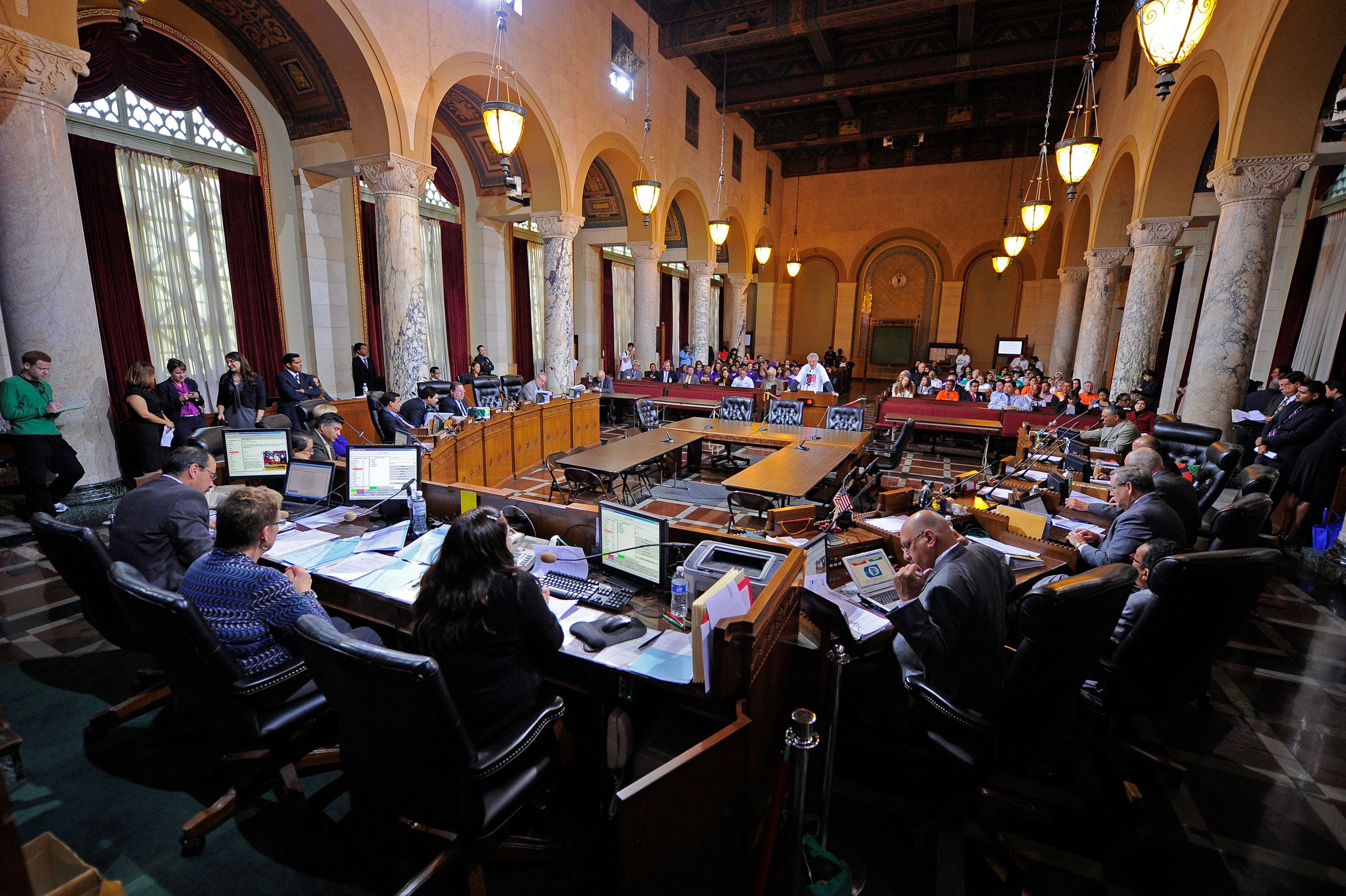
The Los Angeles City Council voted Wednesday to pay the state millions to continue the city’s Community Redevelopment Agency.
The city was forced to decide how to move forward with the agency when the state Legislature enacted two bills in June that would dissolve redevelopment agencies in California if they didn’t pay the state $1.7 billion in the next year and $400 million annually thereafter. Los Angeles is expected to pay $96.5 million for the 2011-12 fiscal year and $25.5 million for every year after.
The City Council voted 13-0 to continue the CRA through an ordinance that would allow payments to be made from the CRA-L.A. to the county, with two installments made next year in January and May.
Find out what's happening in North Hollywood-Toluca Lakefor free with the latest updates from Patch.
Council President Eric Garcetti, Councilman Tony Cardenas and several other council members said they felt like the state was putting a gun to their heads to pay or have the redevelopment agency taken away. Gov. Jerry Brown sought to dissolve the redevelopment agencies to balance the state budget.
Of the $96.5 million that the CRA-L.A. may have to pay next year, approximately $18 million of that will come out of the Hollywood area, and approximately $12.5 million will be reduced from the North Hollywood and areas, according to a report from the CRA.
Find out what's happening in North Hollywood-Toluca Lakefor free with the latest updates from Patch.
Some current projects, such at the in Hollywood, the in NoHo and the , would not be impacted by the budget cuts, according to the CRA.
Community redevelopment agencies are funded by the differential rise in property tax revenue, over a base-year assessment, flowing from projects the agency undertakes. Any increase in property tax revenue within a redevelopment zone goes to the redevelopment agency, rather than to the state.
Christine Essel, CEO of the city’s CRA, said she hoped the Supreme Court would overturn the bills before the city would have to pay the state. The CRA also filed an appeal to reduce the $96.5 million payment, she said.
Councilman Tom LaBonge and Garcetti, who both represent parts of the Hollywood area, said that the redevelopment agency helped to make the neighborhood a community.
Garcetti said that Hollywood became a redevelopment area through grassroots support of the residents, the Chamber of Commerce and community groups. The area subsequently has been transformed into a community, rather than just a tourist stop, through redevelopment, he said.
“Now we have money that is being spent, we have content that is there, we have a community,” Garcetti said.
LaBonge called the CRA a “survival tool” and praised the agency’s efforts in the city.
“Things are happening in Hollywood now,” he said.
The NoHo Arts District in North Hollywood, which LaBonge also represents, has seen significant improvements through the CRA's assistance.
A lawsuit filed by the California Redevelopment Association and the League of California Cities on July 18 seeks to overturn the two bills that force cities in California to pay the state to retain redevelopment agencies, claiming that it goes against Proposition 22, passed by voters in November.
City officials said that they hoped the constitutional amendment of that proposition, which prohibits the state from taking revenue away from local government to balance their budget, will prevent redevelopment agencies from paying the state next year.
“It’s a shame that the state Legislature has completely ignored the will of the voters,” said Cardenas, who represents a portion of North Hollywood.
City News Service contributed to this report.