Schools
Renaissance Man Bryll Schultz Retires After 19 Years at Colfax
The elementary school's most eclectic teacher says goodbye.
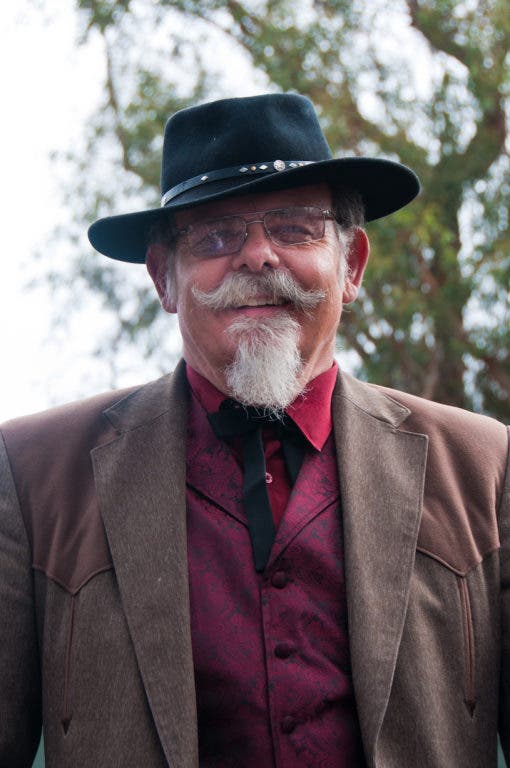


On the first day of class every year, third grade teacher Bryll Schultz conducts a special lesson for his incoming students —or rather the parents of his new students. He explains the difference between school and education.
“Education means draw out of – pushing ideas out of students,” Schultz instructs. “School means control, as in a teacher saying, ‘I want you to learn this way and I will test you to see if you did it that way.’ Education is the opposite of school.”
It’s lessons like this one that has made Bryll Schultz both the most beloved teacher at , as well as the most controversial. After 19 years teaching at this Valley Village school, Schultz is retiring. He often wears a kilt to class and makes homemade haggis on Multicultural Night. Schultz has been described as a Renaissance Man, an outside-the-box thinker, and someone who’s not afraid to rock the boat - particularly when it comes to criticizing standardized testing.
Find out what's happening in North Hollywood-Toluca Lakefor free with the latest updates from Patch.
“Testing is a permanent record of a temporary situation,” Schultz notes. “It’s more about performing than acquiring knowledge.” He adds, “Teachers teach programs instead of students. The emphasis is to try to make students all the same, but what’s so great is that they’re all different.”
Besides his opposition to standardized testing, Schultz is quite vocal about his eschewing of homework – a topic that has recently been echoed by the documentary Race to Nowhere, which put a spotlight on the stress children face when their schedules are solidly booked with studying and assignments.
Find out what's happening in North Hollywood-Toluca Lakefor free with the latest updates from Patch.
“From 1901 to 1917, it was a violation of California Civil Code to give homework to any student under the age of 15,” Schultz reveals. “Teachers should be paid to teach … not the parents.” He continues, “School should end when the bell rings. Parents who work all day shouldn’t be expected to put in the equivalent of a half day of school … especially when teachers say that parents aren’t qualified to teach.”
The unique instruction that Schultz’s students experience is legendary, and based on his simple premise that “Kids learn more from doing rather than being lectured to.” While teaching a class on health, Schultz came up with the idea to show his students how the eye works. “We built cameras out of oatmeal boxes, so if they could see the image come up, it would make it more exciting.”
When he was teaching about transportation, Schultz and his students built their own flying machines. When studying sound, they created their own musical instruments.
During most years his 3rd grade class even performs Macbeth. “I started it for kids who couldn’t stand reading,” Schultz explains. “They would read Macbeth while they listened to an audio recording.” The kids enjoyed it so much, they wanted to perform it for their parents. Schultz found that “by exposing them to good literature, the students discovered that they actually liked reading. They just didn’t like the reading program.” He adds, “When they get to high school, they don’t think that Shakespeare is boring.”
He mentions Amanda McParlane, a former student who is now in 11th grade at a prestigious east coast boarding school. Amanda recently came by to visit Schultz and told him that the students and teachers at her high school were surprised that she was already familiar with the play-that-must-not-be-named, and that in the 3rd grade she had played Lady Macbeth.
Amanda remembers, “On the first day of school, Mr. Schultz told us that we better learn something new everyday, so when we came home and our parents said ‘Hi honey, what did you learn at school today?’, we could informatively tell them in our chipper third grade voice, ‘I made my own oatmeal box camera, I made my own root beer, I read and understood Macbeth, I made my own musical instrument, (and to top it off) I learned how to make a cursive L.’ Then you could give your parents a toothy grin and march away.”
She continues, “In 3rd grade I thought everything Mr. Schultz did was crazy, or maybe I thought everything he did was genius. I can't remember. Now though, I definitely understand that the concepts and values I was introduced to in his class, most specifically a subliminal message to ‘just be yourself’, have stuck with me and have pushed me to make every decision for myself.”
Amanda adds a final message, saying, “Thank you Mr. Schultz for always being your crazy, genius self.”
Emily Morris is another outside-the-box thinker who had Schultz as a teacher seven years ago. “He thought everything we learn, we should have a good reason to learn it,” Emily remembers. “He wanted us to have knowledge with practical applications. He wanted us to be successful, rather than just be successful on a standardized test.” When asked to give a specific example, she reveals that Schultz taught her how to balance a checkbook. Emily adds, “He told us really great stories with such detail and taught us interesting Scottish songs, and we’d all sing them. It was the first time I ever felt cool.”
Tanner Jarman, a former student of Schultz’s who graduated this week from North Hollywood High School, came by to say goodbye to Mr. Schultz. “He’s one of my favorite teachers. Really lively,” he affirms. Tanner remembers making the box camera and singing Scottish songs and claims, “Mr. Schultz is one of the teachers who brought creativity to education.”
Darryl Morden was the father of Declan, a student in Schultz’s class this year. Earlier this year, Darryl passed away from a long bout of cancer, and Darryl’s widow Barbara explains how grateful she is to Schultz for enriching her husband’s last few months of life. “He rallied behind Darryl’s illness and sent him things to brighten his day,” Barbara says. She notes that her son Declan is “a square peg that doesn’t fit into the LAUSD round hole,” but that Mr. Schultz was able to relate to Declan.”
If Declan was fidgeting, Schultz would find something specific to keep him occupied.” She adds that Schultz is “well balanced. For the kids who finish quickly, he can find what works best for each child and have them hit their milestones.”
Barbara insists that Schultz “instills ethics and morals. The kids respect him. He’s a quirky, fun, eccentric guy. He’s so cool. Cool sums it up.”
Declan admits that Schultz “makes learning fun for everyone in the classroom – not just the smart ones. He’s also someone you can trust no matter what you talk about. He actually teaches kids how to learn, not just how to prepare for a test.”
Schultz offers many strong beliefs about better ways to teach that may not be so popular among current administrators. “I was originally trained to teach high school, so I didn’t have the methodology to teach what children couldn’t do,” Schultz reveals, ”but the children didn’t take those classes either. I’d rather have students reach a level higher, not pull them down to my level.”
He has personal photos of himself hanging in the classroom because he wants his students to know who he is. “Too often, children don’t know the teachers because they just seem to be part of the school,” Schultz says, and notes that in his previous school nearly two decades earlier, “the kids thought the teachers lived at the school.” Schultz did not have a good relationship with his own teachers growing up, and even had an instructor tell him that his own first name was spelled wrong. Schultz was also a high school dropout, which he claims to some extent is an asset as a teacher because his students “can’t pull something or fool me because I probably did the same thing when I was young.”
Being temporarily blinded by cataracts, shattering his heel bone and teaching on crutches, and even his 150-mile daily commute did not keep Schultz from showing up to Colfax every day. He lives in Rosamond near Edwards Air Force Base, which is 15 miles past Lancaster. After driving in morning rush-hour traffic for many years, rear-ended twice and run off the road five times, for the past few years he leaves for work just after 2 a.m., arrives at Colfax by 3:20 a.m., takes a nap, and awakens again about 6 a.m. to start his day.
Starting Monday he’ll be able to sleep in, probably even past dawn. Schultz will be spending his retirement days working on two different books. The first was inspired by a student who wondered why, unlike other teachers, Mr. Schultz always answered their questions rather than say he’ll get to it later. “What is the most important question?” Schultz asks. “The one being asked at the moment.” Schultz has collected all the questions his students have asked on various subjects, stored them in a box at home, and plans to answer them all in his book Questions That are Off the Subjects. ‘I won’t even have to index them,” Schultz says, “because they are already divided by subject.”
Schultz explained that his planned second book is a collection of essays about what he thinks about school, which he plans to call Bored of Education. He harbors strong views about discipline, which he argues actually means follower. “If you want someone to follow you, correct the behavior – not the person,” Schultz believes. “There are no bad kids. You are not your behavior.”
One of the chapters in this book will be titled “Being a Boy is Not Being a Disease,” and will include his thoughts about the over-identification of ADD and ADHD. “We shouldn’t blame boys for acting like boys,” Schultz claims, suggesting that their hyperactivity is often quite normal.
Declan Morden, who’s had his own troubles focusing in school, now enters the 4th grade with a greater love of education due to his experiences with Mr. Schultz. When asked what he thinks of his retiring teacher, Declan proclaims, “He’s the best teacher in the world!” Throughout Valley Village and beyond, hundreds of former students agree.