Community Corner
Age-Old Play Examines Dreams and Reality
CSUN's 'Life is a Dream' adds new touches to the classic play by Spanish dramatist Pedro Calderon de la Barca to enhance its appeal to contemporary audiences.

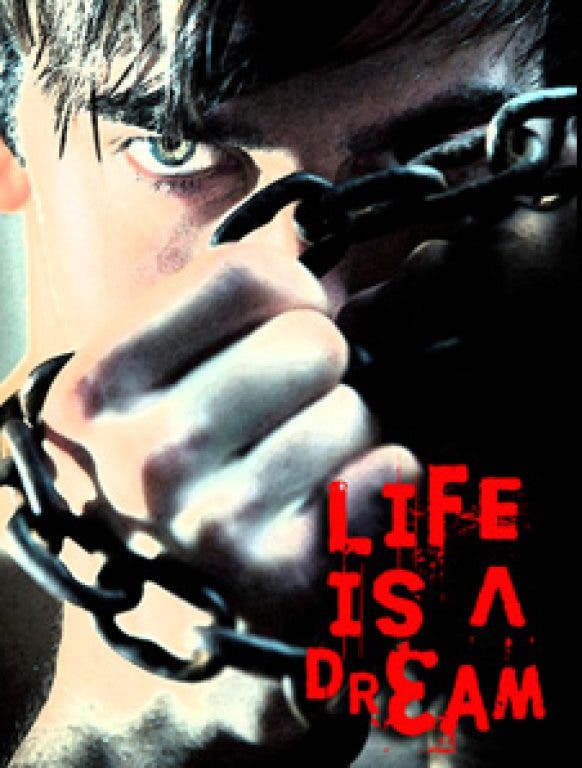
More than two centuries before Sigmund Freud, 17th century Spanish dramatist Pablo Calderon de la Barca wrestled with the connection and distinction between dreams and reality. The result of his effort, Life is a Dream, remains enthralling and enigmatic, at least as presented by the CSUN Department of Theatre that runs at 7:30 p.m. each night through Sunday at the university's Experimental Theatre.
In this drama, which is neither a tragedy nor a morality play but has elements of both, an energetic and gifted ensemble keeps the focus on some eternal questions about not only the nature of dreams but the question of free will and predestination. It suggests that those who believe one's fate is decided by the circumstances of one's birth might ask themselves how much of that is a self-fulfilling prophecy?
Life is a Dream is set in Poland, where the king, Basilio (Spanish names for Polish characters must have been the rage in 1635), has locked his son, the prince, Segismundo, in a remote tower since his birth. The king's own study of the stars indicated the prince would bring disaster on the kingdom. So the king hid him away and led everyone to believe the prince died during childbirth.
Find out what's happening in Northridge-Chatsworthfor free with the latest updates from Patch.
Onto the scene comes a young woman, Rosaura, armed with the sword of the father she never knew. She wants to use it on Astolfo, the prince who promised to marry her but skipped out. Astolfo, the son of one of the king's sisters, is interested in marrying Estrella, the daughter of the king's other sister. Should the king's son not inherit the throne, it could then be claimed by Astolfo and Estrella.
But first Segismundo must be put to the test. He is drugged and brought to the palace and told of his heritage. His reckless and cruel actions quickly convince the king that Segismundo is not royal material. He is drugged again and returned to isolation, making him wonder if what he had just experienced was really a dream.
Find out what's happening in Northridge-Chatsworthfor free with the latest updates from Patch.
If so, it is a dream from which he learns many lessons. When rebels free him and he defeats the army of his father, Segismundo is a different kind of ruler.
The story is told with a color pallet that is almost entirely black and white and more than a few contemporary touches. These include the use of a strobe light and the song, Stay Awake from Mary Poppins, which serves as the opening number.
Most important, though, was that translator Nilo Cruz used contemporary English while remaining faithful to the original Spanish dialogue. That meant the cast and the audience did not have to struggle with old word construction and could focus more on the ideas that engaged de la Barca.
Several actors deserve to be singled out for praise, particularly the two who played Sagismundo and the jailer, Clotaldo. However, the program makes this impossible. Instead of listing the actor for each role, the program lumped all the actors together without a clue as to the parts they played.
It did identify Larry Biederman as director which is only fair considering the complexity of the staging and his ability to translate the essence of this play for a contemporary audience. One might quibble about whether the play would have benefitted from a few judicious cuts to its 2.5-hour length but it's hard to deny the overall value of this thoughtful and entertaining production.
Get more local news delivered straight to your inbox. Sign up for free Patch newsletters and alerts.