Community Corner
Dead Men Tell No Tales—But Their Cellphones Do
Theater Review: CSUN's production of 'Dead Man's Cell Phone' examines the impact technology has had on our lives, including our growing inability to know one another.

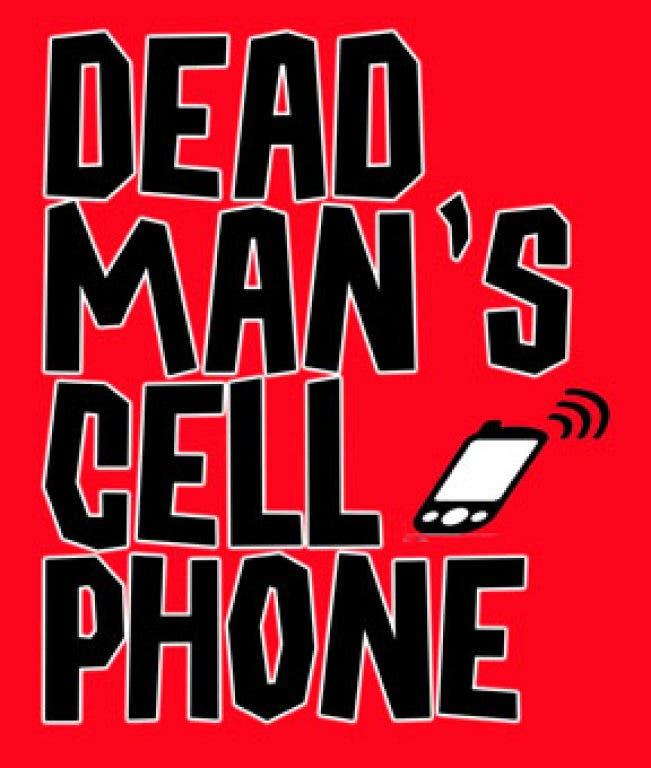

The cellphone, as playwright Sarah Ruhl makes clear in Dead Man's Cell Phone, is not just a way of making phone calls untethered to a wire and a phone jack. It is an invention that both conceals and reveals our identities, that alienates and offends just as surely as it unifies and comforts.
This production, which opened Friday and is performed in the round at CSUN's Experimental Theater, marks the first time the play has been seen by a Los Angeles audience.
Director Peter Grego faithfully presents the playwright's cautionary reflections about the impact of this technological marvel. Meanwhile, the dramatic landscape shifts so frequently between absurd fantasy and mundane reality that neither the characters nor the audience can establish a secure footing in either realm.
Find out what's happening in Northridge-Chatsworthfor free with the latest updates from Patch.
The story opens with a plausible enough scenario. In a mostly empty cafe, Jean (Erin Morse), a mousy middle-aged woman, is dining on a bowl of lobster bisque. Across the room comes the incessant ringing of an unanswered cellphone. Annoyed by the frequent calls, she moves to confront the man who is ignoring both the phone and her pleas to answer it. She soon discovers that the phone's owner, Gordon (Paul Lacayo) is dead.
Perhaps in the real world, Jean would use that cellphone to call 911 and the incident would thereafter be little more than an amusing anecdote to share with friends. Instead, Ruhl uses the dead man's cellphone to set us off on a bizarre journey through Gordon's past, present and future.
Find out what's happening in Northridge-Chatsworthfor free with the latest updates from Patch.
Using a popular song from Carousel, the playwright finds an entirely new meaning to Rodgers and Hammerstein's You'll Never Walk Alone. In this modern version, we are not alone because technology has all but obliterated solitude. Whether in a cafe or in a line, we cannot escape the once-personal conversations of others.
Before the play ends, Jean will discover that Gordon's surprisingly complicated life includes a doting but meddlesome mother (Tamee Seidling), a sweet milquetoast of a brother (Bobby Watson), an emotionally abandoned wife (Lianna Bassior), a jealous mistress (Brionde Coffey) and a shady business operation.
To comfort the others, Jean stretches the truth practically to its breaking point, reporting calls and conversations she supposedly overheard Gordon make. Amazingly, she gets away with most of these white lies.
Meanwhile, Gordon, though technically dead, lives on through the seemingly never-ending calls on his cellphone. That would have been sufficient to make Ruhl's point about how cellphones and impersonal communication as a whole keep us from truly getting to know one another.
But Ruhl is equally intent on introducing mystical elements, such as the fantasy of an afterlife determined by the final affections of the dearly departed. A benefit of that totally unforeseen plot twist is that it allows the previously wordless Gordon to open the second part with a monologue that offers his own perspective on his demise, which Lacayo delivers with perfect notes of passion and sarcasm.
CSUN's intimate presentation of this semi-comedy, semi-drama, which premiered on Friday, should result in plenty of insight as well as head scratching.
Dead Man's Cell Phone, CSUN's Experimental Theater, 18111 Nordhoff St., Northridge. Performances scheduled for Saturday and Sunday, Oct. 8-9, and Wednesday through Sunday, Oct. 12-16. All performances start at 7:30 p.m. except on Sundays, when the play starts at 2 p.m. For tickets, call 818-677-2488.
Get more local news delivered straight to your inbox. Sign up for free Patch newsletters and alerts.