Politics & Government
Hidden Creeks Developers Face Tough Questions
Proposed 188-home development would need to be annexed into city.
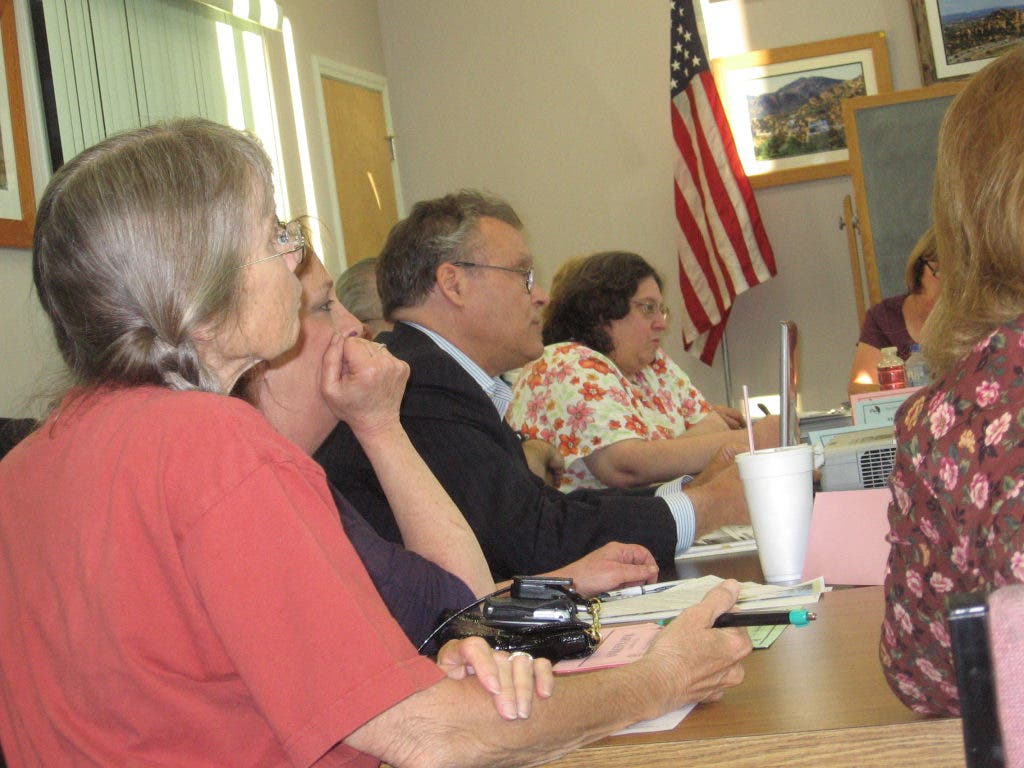


Developers of a controversial 188-home development proposed for the hills above Chatsworth faced tough questions recently from the land use committee of the Chatsworth Neighborhood Council.
The property, in unincorporated Los Angeles County, would need to be annexed into the city of Los Angeles to have access to city utilities and services, including fire and police. County planning laws would restrict the acreage to 33 ranchettes but city rules would allow the 188 homes.
In a seemingly backward process, the Los Angeles City Council would have to approve the Hidden Creeks Estates and Preserve. Then, the county’s Local Agency Formation Commission (LAFCO) would determine if annexation should be approved. LAFCO could reject annexation even if the City Council approves it.
Find out what's happening in Northridge-Chatsworthfor free with the latest updates from Patch.
If city hearings begin this summer, and if all approvals are in place, groundbreaking could begin about a year later.
“There will be no financial burden to the city,” said Encino-based attorney Wayne Avrashow when asked about gaining city approval before the annexation issue is decided.
Find out what's happening in Northridge-Chatsworthfor free with the latest updates from Patch.
In a meeting last week with officials of developer Forestar Real Estate Co., the land use committee drilled down on protecting equestrian trails, maintaining public access, adding more horse-keeping lots, guaranteeing promises and preserving Browns Canyon.
Committee members heard Forestar's updated plans for the 285-acre property at the meeting, held at the Chatsworth Train Depot. The developers had unveiled their plan in late 2005 but later made some changes, including adding more equestrian-designated lots as sought by the committee. They also met with the Porter Ranch Neighborhood Council earlier this month.
Forestar hopes to have its first city Planning Department hearing this summer. The site is about two miles north of Sesnon Avenue, northeast of Browns Canyon Road. Primary access would be from an extension of Mason Avenue in Porter Ranch, which requires a bridge over Mormon Creek.
Most of the committee’s concerns and questions were about equestrian issues, emergency access and traffic on Browns Canyon Road, protecting trees and open space, and maintaining public access.
Plans include 25 equestrian lots adjacent to an expanded Mountain Meadows stables at the southern edge of the development, 114 acres of dedicated open space, and trails for horses and hikers circling the project. Hidden Creeks would provide about 2.5 miles of trails outside their gated community, which would link to existing historic trails through the area and other trails to be built later when the western-most portion of Porter Ranch is completed.
The trails would be permanently open to the public, the developer said. Hidden Creeks residents would have priority for stalls at the rebuilt equestrian center, but anyone could rent space. There is currently room for 80 horses, which would increase to 120. The manager said he believes there would be room for everyone who wants to board there.
More than 5,000 trees would be planted to replace an estimated 500 expected to be uprooted during construction. That would exceed the city’s minimum requirement for replacement trees.
Forestar changed the name of the development to Hidden Creeks Estates and Preserve to highlight the 114 acres to be permanent open space. Most of the planned open space, which is around the edges of the property, is not buildable.
Although the lots are already penciled in, Chatsworth committee member Diana Dixon-Davis asked for more horse-keeping lots. Representatives of the developer said they didn’t want to have smaller lots and it would be difficult to take acreage from one lot and give it to another.
The designated equestrian lots would have at least 20,000 square feet. Forestar is requesting a zone change on the other lots to RE-11, which requires at least 11,000 square feet. However, only two lots are slightly less than 11,000 square feet. Many lots are much larger than the minimums, the developer said.
Committee secretary Teena Takata said she is concerned about the ratio of horse versus non-horse properties.
“The minority is horse-keeping,” Takata said. “Thirteen percent of the lots are proposed under the present configuration. … It does make the continued [debate] of horse-keeping and trails a difficult issue as time goes on.”
Committee members and stakeholders cited incidents in which housing developments start off horse-friendly, but over the years become adversarial.
Helen Hollander, who boards her horse at Mountain Meadows, said some horse owners, like her, would rather board their horses than be responsible for the daily feeding and caring of the animals.
Hollander believes that hiking trails would be better maintained and the canyon kept cleaner if the development is built.
Kimberly Powers, manager of Mountain Meadows, said the development would enhance the equestrian community with more horses onsite.
Several committee members asked how the developer could guarantee that the relatively few equestrian lots would be protected if, for instance, a homeowners association wanted to deny residents the ability to have horses on their property in the future. Other concerns centered on protecting the trails for public access.
The developer originally planned only five equestrian lots but boosted the number after meeting with the Neighborhood Council in 2006.
The Mason Avenue bridge over Mormon Canyon would be 180 feet long, 50 feet wide and about 60 feet high. The developer said the design would minimize damage to the creek bed and pristine canyon.
The final Environmental Impact Report should be available as early as this week. The Chatsworth Neighborhood Council earlier made extensive comments on the draft report, which was released in 2008.
Concerns about the project’s wear and tear on Browns Canyon Road were expressed. The developer’s representatives said the road would be upgraded, adding 13 turnouts primarily for firefighters and rebuilding a bridge that was damaged in the 2010 Sesnon fire.
“The bridge will be built based on [governmental] requirements,” said John Polito, an engineer who works for the developer.
Access to the narrow, steep and winding Browns Canyon Road has been restricted since the bridge burned. All construction traffic would use the road.
There were many questions about secondary access to the gated community from Browns Canyon Road. The developer promised that there would be only emergency vehicular access, but that horses could go through. Some committee members wanted specifics about who would open the locked gate in case of emergency but those details have not been determined.
Homes are expected to sell for between $1.3 million and $2.5 million, based on a normal real estate market, developers said.
According to the developer, the project would bring $229 million in community investment, nearly $4 million in fees to support local schools, 4,360 construction jobs and $4.7 million in annual sales and property tax revenue to the cash-strapped city of Los Angeles.
The development would include a 19-acre park with sports fields, a community meeting room, basketball court, tot-lot, picnic areas and parking for about 100 cars. The park would be outside the Mason Avenue gate and intended for public use. Forestar said it would build the park and dedicate it to the city.
Charlotte Brodie, trails coordinator for ETI Corral 54, the Chatsworth chapter of a national nonprofit equestrian organization, is concerned about the destruction of open space.
“To see it go is hard. I’m concerned about maintaining the trails,” Brodie said.