Politics & Government
Sanders Alleges Disenfranchisement As Lead In California Slips
Sen. Bernie Sanders leads the California primary in every major poll, but a key part of his base has been slow to turn out in early voting.


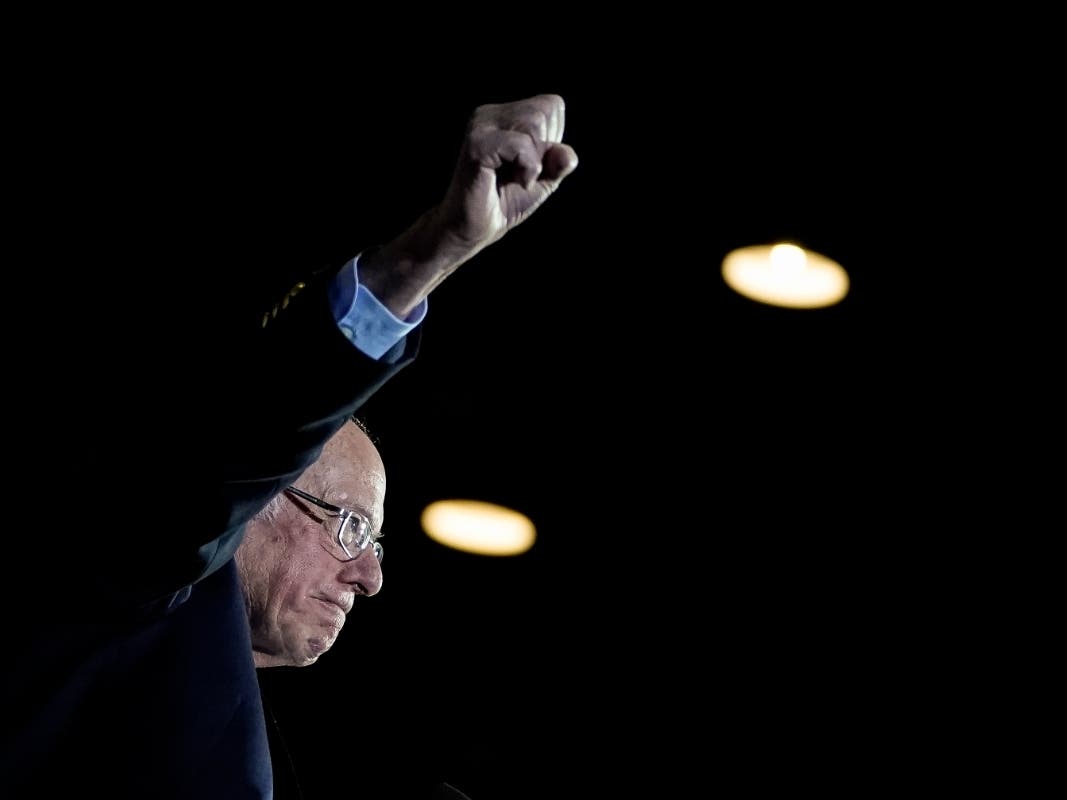
LOS ANGELES, CA — With voting already underway and just over a week until Super Tuesday, one thing seems clear: California is Bernie Sanders’ to lose.
Every major poll has Sanders firmly in the lead, but it’s been an unusual week of headlines for the Sanders camp, and the polls hint at some volatility. One poll released early last week gave Sanders a commanding double digit lead while subsequent polls cut his lead in half. Then he got an unwelcome endorsement from Russia, which, according to the intelligence community, is intervening in the 2020 election on behalf of President Donald Trump on the right and Sanders on the left. And by Friday, Sanders was campaigning in Orange County while accusing the state of disenfranchising his supporters. All that makes for an unpredictable week as Golden State voters cast their ballots going into Super Tuesday.
Having moved up its primary to exert more influence over the presidential election, California is the biggest prize of Super Tuesday (March 3) with 415 delegates. The most populous state in the nation, California can deliver a nearly insurmountable delegate lead for Sanders, the frontrunner, or breathe new life into the campaigns of faltering contenders such as former Vice President Joe Biden and Sen. Elizabeth Warren.
Find out what's happening in Northridge-Chatsworthfor free with the latest updates from Patch.
Early last week, a Public Policy Public Institute of California poll showed Sanders blowing away his nearest competitor, Biden. According to that poll, Sanders led with 32 percent of likely voters compared to Biden’s 14 percent. However, just a couple days later, two more major polls showed Sanders with much smaller leads.
The Monmouth University poll shows:
Find out what's happening in Northridge-Chatsworthfor free with the latest updates from Patch.
- Sanders, 24 percent
- Biden, 17 percent
- Mike Bloomberg, 13 percent
- Warren, 10 percent
- Pete Buttigieg, nine percent
A UMass Lowell Center for Public Opinion poll shows:
- Sanders, 24 percent
- Warren, 16 percent
- Biden, 13 percent
- Buttigieg, 12 percent
- Bloomberg, 12 percent
6. Amy Klobuchar, seven percent
According to the primary rules established by the state’s Democratic party, delegates will be awarded only to the candidates with at least 15 percent of the vote in each district.
That means the top vote-getters will run away with a massive haul of delegates. “California is the big prize on Super Tuesday. As the poll currently stands, it’s possible that only two or three candidates reach viability in any given congressional district. That would enable Sanders to rack up half the delegates or more while only earning one-quarter of the total vote,” said Patrick Murray, director of the independent Monmouth University Polling Institute. According to the Monmouth Poll, Sanders derives his support largely from California’s youth and Latino vote while voters over 65 fall heavily in favor of Biden followed by Bloomberg. For her part, Warren has a smaller share of the youth vote and ties Sanders for 18 percent of the non-Hispanic white vote in California.
With early voting already under way, voter turnout is on track to be high.
“There is a high level of interest in voting in this primary, suggesting there could be record turnout. If this pans out, it is likely to include a relatively high share of Latino voters, a group that is particularly friendly to Sanders,” added Murray.
But even as Sanders ran away with the Nevada caucuses Saturday, he called into question the fairness of California’s primary system. No party preference voters, who are a major part of Sanders’ base, represent about 25 percent of the California electorate, surpassing the Republican party. Those voters are permitted to vote in the Democratic primary, but they specifically have to request a Democratic ballot. The Sanders camp worries that this means fewer no party preference voters will turn out to vote. And among early voters, that appears to be the case.
According to Political Data Inc., voters from the two major parties have each returned twice as many mail-in ballots as the voters with no major party preference.
"Unfortunately, under the current NPP participation rules, we risk locking out millions of young people … millions of young people of color — and many, many other people who wanted to participate in the Democratic primary but may find it impossible for them to do so," Sanders said at a campaign event in Santa Ana, according to Politico. "And that seems to me to be very, very wrong."
Independent voters wishing to vote in the Democratic primary have until Tuesday, one week before the election, to request a partisan ballot from their county registrar of voters.
For the first time in a long time, California voters are poised to play a major role in a presidential primary. For directions on how to vote in the March 3 primary, click here.
Get more local news delivered straight to your inbox. Sign up for free Patch newsletters and alerts.