Politics & Government
Leading Oceanside: Mayor Esther Sanchez
Oceanside Mayor Esther Sanchez shares her 2022 priorities to address crime, homelessness, beach erosion, controlling development & tourism.

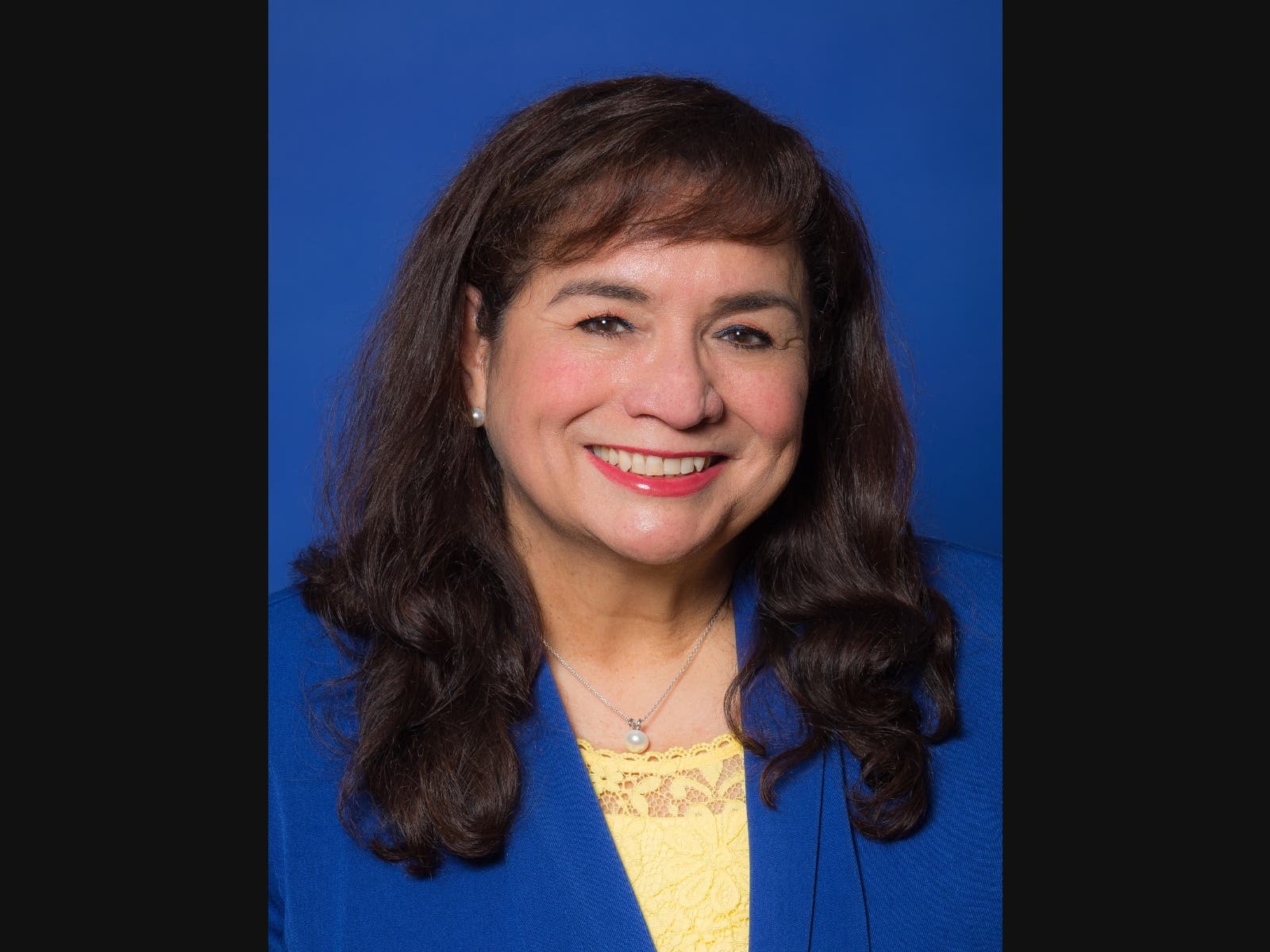
OCEANSIDE, CA — Now that mask mandates and other restrictions are nearing the likely end, the Patch reached out to Mayor Esther Sanchez about her vision for moving Oceanside forward in 2022 and beyond.
Mayor Sanchez was first elected to the Oceanside City Council on November 7, 2000, her initial run for local office. After Oceanside switched to District elections, she was elected Councilmember for District 1 in November 2018. She was elected Mayor in November 2020.
As the leader of Oceanside what are your priorities, what solutions are you planning and what can all of us do to make Oceanside better every day?
Find out what's happening in Oceanside-Camp Pendletonfor free with the latest updates from Patch.
The Mayor started by identifying the six biggest challenges and then provided an overview including her plans for addressing each of the issues in both the short and long term.
- Controlling development
- Addressing crime and fiscal crisis in public safety
- Achieving equity with the city’s diverse communities
- Achieving and then maintaining a better balance between tourism and locals
- Addressing beach erosion issues
- Addressing Homeless issues
Controlling Development
Find out what's happening in Oceanside-Camp Pendletonfor free with the latest updates from Patch.
"The biggest challenges in 2022 include changes in the state law and how that's going to impact our citizens.
We need to control development and maintain the character of Oceanside. We need to ensure new housing is truly affordable as well as ensure impacts are addressed by new developments including infrastructure, which is not in the law. In fact, many of those requirements were waived in the state law.
For the first time in decades, we have been updating our general plan via amendments and it has been a mess in terms of controlling development. Every time that happens we get a whole lot of folks saying we're against this and we do it anyway. But we don't really study the impacts.
When I first got to city hall 22 years ago, which was about the last time we updated our general plan, we would go out to the public and every single corner of the city. Back then it was smaller, so it was more personal and it was easier to hear concerns. But now I don't see that happening.
What happened? We were doing this during COVID and that meant we were doing this all virtually and not as many people are on social media. Plus many were very concerned about COVID and losing jobs and then kids being at home and there are all those stressors. So how can you address something about the future when you're so worried about the present. Right?
We need to invest more time in public education and outreach. This whole process is hugely dependent on the vision that we all have. Obviously, we're going to have differing visions. But the job of the city is to try to find a consensus on that.
I believe this year once it's safer, we should be going to different parts of the city and reconfirming the conclusions that staff has come up with. The critique for me is we need to involve the public more. The worst thing that could happen is we do this for two or three years and then we have standing room only all the way out to the street for people that are upset about what the general plan says.
I think in the short term we need to reverse the form-based planning that was adopted. A little over a year ago Councilmember Weiss proposed to erase the density limits in downtown, it's called form-based planning. He's a very bright man and probably more of a numbers guy. I'm more of an urban planner. I'm more about the impacts to the environment, in terms of infrastructure and then how that relates to us, humans, the community and space, and all of that.
I believe we need to lower the heights and change the parking requirements for developments and lobby Sacramento to address problems being created and support initiatives to bring back local control.
The new project that the council just approved for downtown, they said we're going to wave density because this is a density bonus. Well, in fact it was not a density bonus project because there were no limits. An apartment that is the size of a very small bedroom will have a kitchenette and somewhere in there a really tiny bathroom. And that's it. To call this project workforce housing, I think it's more of a vacation rental and I think that's really the point here.
We need to do things like we did on the Hallmark project in South O. We gave direction to staff to lower the heights and it seems like they're coming back to do that. If we could do that for South O, we can do it for the rest of our communities.
I've been talking to other mayors and they are really moving forward on putting in boundaries on what the state SB 9 and 10 are intending and keeping local control. I need to start getting involved in that dialogue and start talking about limiting the density and keeping Oceanside's character."
Addressing crime and fiscal crisis in public safety
"It's costing the city and taxpayers more to maintain our own police department. Even though we're looking at increases in revenues from tourism, I see a decline in the quality of life of our residents, I really do – less parks and recreational programs and facilities, higher housing costs, less open space; smart growth policies being erased by state governmental elimination of local control.
The staff was actually supporting increasing our OPD sworn officers by 23% in response to how we're losing officers. This is not just in Oceanside or even regional it is countrywide what is happening in terms of public safety.
Chief Armijo is coming up with a plan to hire non-sworn officers to address gaps in personnel. We have also been asked by the community to look at hiring more civilians. I appreciate that the chief is trying to address that and I'd like to hear more from the public. But my concern is in training.
I'm assuming these community officers will not be carrying guns. But what would they be doing? In some at-risk communities, there needs to be a better transition.
We need to get back to community policing and more preventative programs, such as after-school programs, athletic, job training opportunities, health-based recreational programs.
We need to help get the kids off the streets right now and back in school. I think that's part of why the crime rate has spiked and we don't need to let that happen. In order to lower the crime rate, it truly is this whole idea about neighborhood watch programs and working with the police department. Of course, it's not just OPD right, it's also the Fire Department. I have been asking them for their plan for ensuring an acceptable response time. If it was a five-six minute response time, I'd be okay with that but when you get 10, 15, 20 minute response time. I'm also hearing that Carlsbad has been responding to more of our calls for service and that's expensive.
So the short term is establishing the Community Relations Commission. That's very critical and also long term, strongly consider extending Measure X and putting it back on the ballot in 2024. Measure X has been a huge plus in being able to address public safety, homelessness and some after school programming."
Achieving equity with the city’s diverse communities
"We have a lot of working families, workforce-type families still in Oceanside and we need to retain them if we're going to be successful.
How can we get back to some level of hope? And I think the ARPA Funds should be helping us on that. The Chamber is doing these Rising Star programs. I'm so grateful that they're doing that because many of those kid's stories, that's happening everywhere.
More than 50% of our community is diverse and I see that as a plus.
I think that people enjoy experiencing the different cultures that we have here, Samoan, Filipino, Latino, African American and so many diverse cultures. There's no other coastal city like Oceanside. Now, it's obviously gonna gentrify but I really want to try to slow that down. Because we need our workforce population.
A Community Relations Commission would be very important for the L. G. B. T. Q community, for our Latino communities because I think the elders want more for their kids, they've gone through this and they'd like more for their kids, so how can we do that?
We need to get a process for getting complaints heard and resolved in a way that is respectful and will get us to a better situation.
For me, it's about achieving equity. So the ARPA funds to address COVID impacts on the city's working families, as well as re-establishing dialogue between the city and its diverse communities."
Achieving and then maintaining a better balance between tourism and locals
"That is a big one for me. I am a local and my family has been in Oceanside for five generations.
For example, there's tension developing over Phase II of beachfront improvements – the Junior Seau beach community center, pier plaza, bandshell and amphitheatre – it’s all one public park. I know that the beach resort is putting pressure on staff and our council members to basically control at least right in front of it.
We should prioritize the needs of the residents; there is room for tourism-related events, but it should continue to be under the management and control of the city to ensure the public is not priced out.
We need to provide recreational opportunities for people. Maybe we could do a pickleball court right outside the beach community center. But that's what I'm concerned about. The local's concerns versus tourism.
I do want to prioritize the needs of the residents in this whole planning process. Yes. I think there's room for other programming like tourism or public art, things like that of course. But we need to make sure that we take care of our residents first and especially maintain management control of the city by the city.
I think that we've done a pretty good job in terms of building affordable housing, but it's just not enough because we keep building regular housing and then recently turning that into vacation rentals so we're kind of losing some housing stock, which to me is discouraging. I really would like to see some kind of limits. I'm not saying go away, but some kind of limits. I don't think the neighborhood policy is working. I keep hearing complaints about vacation rentals. My concern is, let's not take too much of our housing stock to put there, especially when we're in the middle of a housing crisis. I mean if we were out of the housing crisis, that's a different discussion."
Addressing beach erosion issues
"This has been a passion for decades, since I was part of SANDAG Shoreline Working Group that makes recommendations to the board of directors.
We looked at how long the sand would stay and studied all the storms and what ends up happening and it was determined that we've got to have a better grain of sand.
So we already knew back then it was a big deal deciding on a source of sand and being sustainable. Their recommendation was we do these studies every five years and in between, there would be other sand nourishing programs by the individual cities. Especially in the north coastal areas. The Army Corps of Engineers has a project in every one of these cities, everyone gets some kind of free sand replenishment every year. Solana Beach ended up increasing their T. O. T. to pay for sand replenishment.
For them, it's been coming from the lagoons and maybe that's why they may be ahead of us because we have this agreement regarding the harbor and that's not a good source of sand. But we can't stop that because we need to maintain the integrity of the harbor entrance. The harbor dredging is essential for the public safety of watercraft and long-term sustainability of the harbor but it's not good quality sand. What we need to do is also have our own sand nourishment project.
I do feel that because Carlsbad for example, gets 100,000 to 200,000 cubic yards of sand from Oceanside every year because that's the natural migration. We need to do this as a regional project.
I don't think we'll get there faster unless we do partner with other cities. And my concern is that step is being minimized. This idea that we can act as an isolated city and do a pilot project 600 ft out into the ocean. There's nothing like that. It's two football fields. I can't even begin to imagine the impacts on our beach and making it more dangerous to be out in the ocean. Near the groins, it would likely cause riptides, which means younger kids won't be able to go out there and it would require a lot more lifeguards. It's not really the solution.
Encinitas is doing this Living Shoreline Project that has happened in other states and I think that's what we really can do in the short term. It's been approved. It's gone through the process. It's been successful in the short term.
It's unfortunate we still don't have our scoop permit. That is the opportunistic sand program where you can actually move sand without getting any additional permits. Getting that would be huge for us.
The obvious short-term thing is to find a source of sand. I think that is the study that we should be doing now. Whatever sand replenishment plans we do we need a source of sand, the best potential, most cost-effective source of sand. Where is that? It could be one of the lagoons. How much would it cost? Let's hope that we can do this as soon as possible. And as soon as we have our permit, let's do a project, because if we have that permit then we can easily just put sand on the beach and this is how much it costs.
Why don't we just do the short term while we're determining what's going to happen in the long term? I think we're starving our beaches needlessly. Because we all agree that we need sand replenishment and we need to go through this process of finding out what will be the best potential. We didn't study living shoreline projects. Let's do that too. Let's just add that to the study. And work with our north coastal cities and have a good relationship because when you have a good relationship, it's more likely than not that you will get your project through faster.
I want us to be embracing a regional proposal that may end up having sand in Oceanside that will then cover Carlsbad and then maybe sand in Encinitas that could cover Solano Beach. That's where we really need the science. How can we equally benefit from this so that we all agree to a plan?
We need to include in the SANDAG plan financial support for a regional approach for this because it's not just a coastal issue and everyone goes to the beach. Whatever issues we have in the county, it's a shared cost whether it's wildfires or maintaining our beaches or whatever.
We can't delay. We need to have sand nourishment now. The way to do that is to find that source of sand and get staff to come up with a plan, hopefully within nine months. The question, why did we only get $1.8 million to do a study? Well, that was the only thing we asked for, we've been asking for that study for many years and we were told by the Army Corps if we paid $1 million, they will complete it. And we said no thank you. We probably should have just said yes.
When we went this past year I felt that the Army Corps was open-minded. There was only one person that seemed to push back because we didn't want to pay $1 million. So now we're getting the $1.8M and we need to do it. Obviously, the Army Corps is going to have to be consistent with their recent study on Solana Beach and Encinitas, so we need to work together on this. I'm an optimist, I believe that we can get to what we need and that is to preserve our shoreline. So let's put sand on the beach immediately."
Addressing Homeless issues
"I have high hopes for the 50-bed shelter and the housing project that we just approved. For the folks who have mental health issues. And then in a broader sense, long term we really need to get the county much more involved in this.
I've been talking with Supervisor Jim Desmond about it and I think that we're all in agreement we need to find solutions for the hardest to address. Before COVID we didn't really work closely with our County Supervisors. But Jim Desmond has been very responsive about COVID and help with the homeless and he really picked up on it and I appreciated his attitude during this.
The county controls mental health and social service workers. We need to develop places where people can actually get to these steps to be able to go on their own. We can have affordable housing projects for vets for seniors, for families, for youth with wraparound services to try to get them back on their feet.
But the hardest population within the homeless are those with mental health issues.
The public doesn't want to see the trash, the encampments, and people walking around yelling. Now we are going to have a shelter that is more sustainable than the hotel voucher program.
If we want a better quality of life, we need to take responsibility for our own homeless.
Obviously, we don't want to attract homeless from elsewhere and that's why I insisted on no more than 50 beds. I think the proposal was 150 but then it's more of a regional project.
In the long term, we need to really push hard for these programs and get the county to look at the conservatorships. That's something that we can do. I think the state is finally looking at that as well as a possible solution from least restrictive to closed lock facility.
We did have a job fair, which was really fun to do and we may be doing that again. That might help us to get more people back on their feet, start slowly. Obviously, affordable housing is terribly important. Real affordable housing. When it comes to the city being able to do planning for it, I think you really have to do it in a way that is much more structured and work with experts that are able to build affordable housing and understand how the system works in terms of getting tax credits and how to fund those loans.
I think our community is special. I think our residents are willing to have this dialogue and understand that, there are gonna be some pros and cons and we need to build consensus and you may not get everything. The city may not get everything, but you know, building that consensus I think is so very healthy for a city like ours."
Final words
"The final thing I want to say is I love Oceanside and I am excited about moving forward in a positive way on our environmental issues, on zero waste on everything that will make our city better quality of life for all. That includes our at risk communities and everybody. I'm excited that I was able to get the support to be the first woman mayor. To be able to work together towards these solutions."
Mayor Sanchez was born and raised in Oceanside. She attended Laurel Elementary, Jefferson Junior High and Oceanside High, graduating in 1974. She received a scholarship to Brown University, where she received her B.A. degree in Urban Studies. Esther then attended University of California, Hastings College of Law and received her Juris Doctorate, passing the California Bar on her first try. She has worked as an attorney for over 30 years, in both the public and private sector.
Get more information about Mayor Esther Sanchez and the Oceanside City Council.
Related articles:
Leading Oceanside: Deputy Mayor Ryan Keim
Leading Oceanside: Councilmember Peter Weiss
Have a news tip or suggestion on how we can improve Oceanside-Camp Pendleton Patch? Interested in advertising your business in Oceanside? Email any inquiries to me at lisa.frost@patch.com.