Schools
Oceanside School District Gets 'D' in Serving Minority, Low-Income Students
The local district is not alone in getting a poor report card from a nonprofit called The Education Trust—West. Officials say they are working to do better.
Oceanside educators say they were aware of the “achievement gap” among white, minority and low-income students in their district that was highlighted by a recent statewide report, and they are already working to close the gap.
The report, released in late April by The Education Trust—West, issued a letter grade to 146 California school districts based on the performance of African-American, Latino and low-income students. Not a single district earned an overall A grade; most districts earned C’s and D’s.
The Oceanside Unified School District, which serves 19,500 kindergarten through 12th-grade students in Oceanside and at Camp Pendleton, received a D.
Some 2,500 military dependents attend the three base elementary schools, and children of military families also attend other district schools, although the district could not provide a more specific number.
“In a minority-majority state like California, where Latino and low-income students comprise more than half of the student population, these statistics are downright dangerous to the state’s future prosperity,” said the report by the Oakland-based nonprofit advocacy group.
In compiling its overall grades, the group used four different measurements: academic performance of low-income students and students of color; student improvement; achievement gaps between white and African-American and Latino students; and college readiness among students of color.
The first three categories were based on state Academic Performance Index (API) ratings, which are issued each year to measure the performance of schools, school districts and subgroups of students. The API ratings reflect student performance on California standardized tests.
The final category—college readiness—was based on the percentage of high school graduates who have completed the A-G course sequence, a series of classes required for eligibility for the University of California and California State University systems.
Although this was the first such report by The Education Trust—West, the group plans to conduct this analysis annually, said Lindsey Stuart, a data and policy analyst with the nonprofit. The purpose is to spur a conversation and questions about how to fix the achievement gap.
“We want people in the communities going to the school board and asking those very questions,” said Stuart.
In Oceanside, educators have been aware of the achievement gap for several years and have already put in place programs to address it, said Duane Coleman, associate superintendent for educational services.
“We’re not happy with what we’re seeing,” said Coleman. “What was reported, we are committed to fixing that. We’re already taking steps to do that.”
This year, the district has launched a new program to monitor student performance in the A-G, or college prep, series of courses. It has also reduced the number of credits required for graduation, which will allow students time to retake the A-G college prep courses if necessary and earn a grade of C or better, Coleman said.
The district has also reached out to African-American, Latino and Polynesian parents to determine what the district can do to better help their children succeed in school, Coleman said, and created a program called College Bound that educates both parents and students about how to prepare for and succeed in college.
Terry Decker, the Oceanside district’s director of assessment and evaluation, said it will take time for these efforts to show up in the district’s API scores. He also noted that some Oceanside schools—such as the three elementary schools serving children from Camp Pendleton—have smaller achievement gaps than the districtwide average.
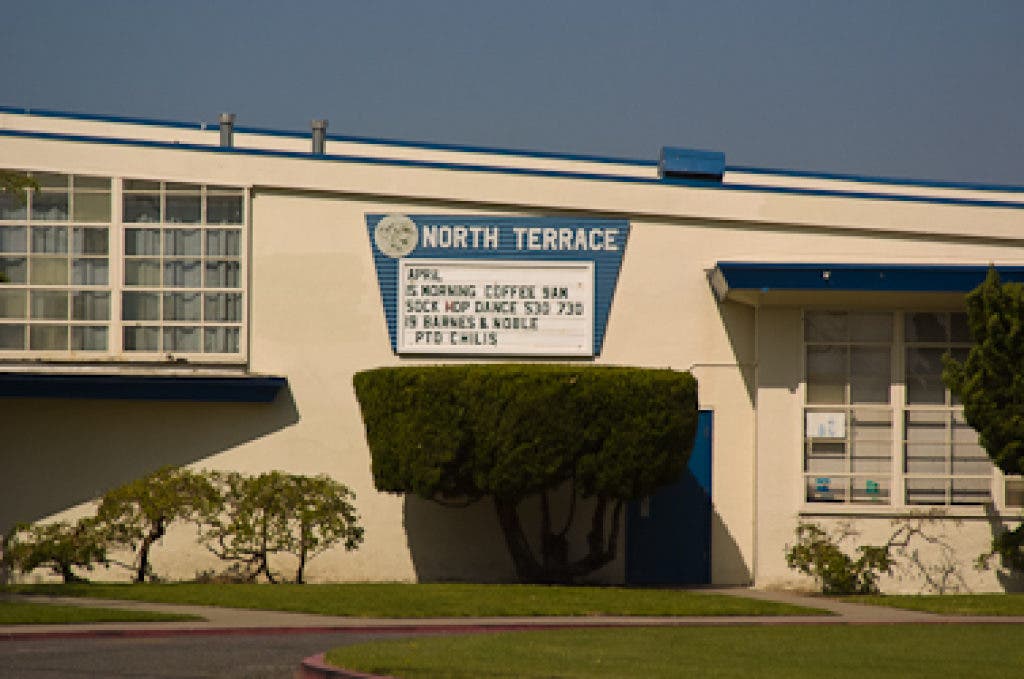
For example, under the Education Trust report’s grading system, Stuart Mesa Elementary would receive A’s for the performance of African-American and Latino students vs. white students. Santa Margarita Elementary would receive a C and B respectively, and North Terrace Elementary would receive an A and C.
The Education Trust report doesn’t contain only bad news. The report also highlights districts that the report’s authors believe are achieving strong results with their minority and low-income students.
“When high expectations are set for students they’re going to rise to meet those expectations,” Stuart said.
Oceanside officials are optimistic their efforts will pay off.
“I just think we’re really headed in the right direction. We certainly know where there are gaps in our system that we have begun to address, to close the achievement gap and improve the A-G rates. We think we have a system and a culture that allows us to improve,” Coleman said.
You can download the Oceanside Unified’s report card or see those of other California school districts by visiting the The Education Trust—West site.