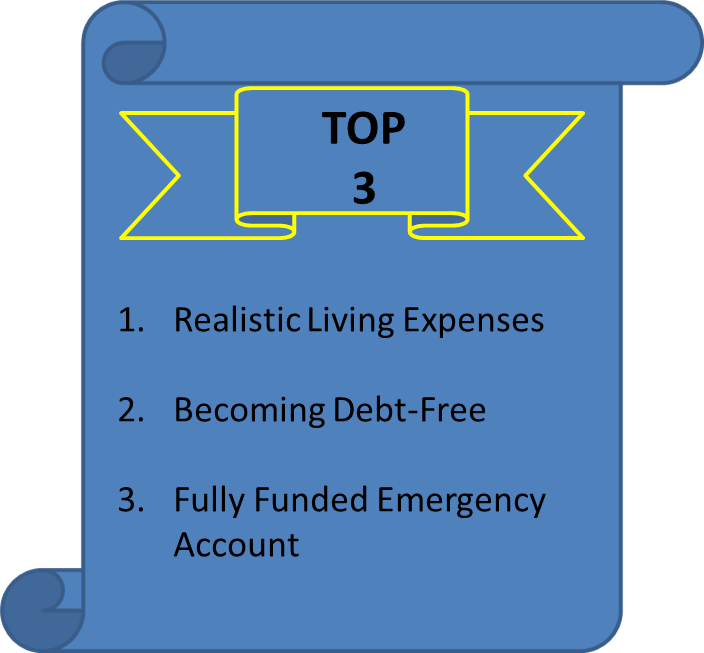
I joke around when I share stories about my youth with audiences. One of those stories goes something like this. “When I was 21 and in the Army I had this friend who was 26 and I would think dang my friend is old”. As you grow older, the concept of age changes. What you once thought of as old no longer seems old, or at least the number continues to get larger as time goes by. Another misguided concept I embraced when I was younger was why plan for retirement because I will be dead by then. I am sad to say there are still folks out there that think this way and are not properly planning for retirement. Keep in mind that retirement isn’t a question of if; it is a question of when. It is also about making the right decisions now, planning for the worst and hoping for the best. Keep the following in mind as you chart a course toward retirement and you can plan on enjoying those golden years instead of working yourself into the grave.
1. Realistic Living Expenses
If you think a loaf of bread and a gallon of milk is expensive now, how much more expensive it will be 20 or 30 years from now? Will it be twice as expensive, three times expensive? A great example: when I was in my teens I remember buying gas for my car around $1 a gallon and now, almost 30 years later, I am paying upwards of $4 a gallon. That cost has increased by over 300%. As the cost of living increases, you will need more retirement money saved up to pay for it. The only way you can be prepared is by setting aside more money now.
Find out what's happening in Oceanside-Camp Pendletonfor free with the latest updates from Patch.
2. Becoming Debt-Free
Would you believe it if I told you that American’s 50 and up had a higher combined balance on their credit cards in 2012 than did people who are younger? Having debt at any age puts you at a higher risk for a financial disaster but as you get older that risk grows exponentially. Having little or no debt at retirement is extremely important. Let’s say you have a house payment of $2,000, credit cards that cost you $200 every month and a $300 car payment. When you are working it might be manageable but having to pay out $2,600 each month on a fixed income can really hurt. Your goal should be to be completely out of debt by the time you retire, ideally earlier.
Find out what's happening in Oceanside-Camp Pendletonfor free with the latest updates from Patch.
3. A Fully Funded Emergency Account
Most experts recommend having at least 3-6 months of your living expenses in a liquid emergency fund, but that is for people who are working. It might make be a little smarter though to have more in your emergency fund, unless your plan is to go back to work after you have retired. There is no “one number fits all”, but you might consider having at least 1-2 years of your post-retirement living expenses in an accessible emergency fund. The reason for the large emergency fund is if you need a large amount of cash and you need it quickly, if you pull it from your retirement funds, there could be extra taxes, fees, an or penalties. Also if all of your money is in the market, if you needed a large part of it while the market was down, you would be going against the old rule of to buy low and sell high.
There are many things to consider when you think about planning for retirement. By thinking of those things and taking action while you are in your 20’s and 30’s you greatly increase your chances of a comfortable retirement, but it is never too late to start preparing.
Steve Repak, CFP® is a Professional Speaker and the Author of Dollars & Uncommon Sense: Basic Training For Your Money