Neighbor News
The Disability Justice Gap: What Happens When Nobody Answers the Door?
I never expected to spend a year fighting for help.

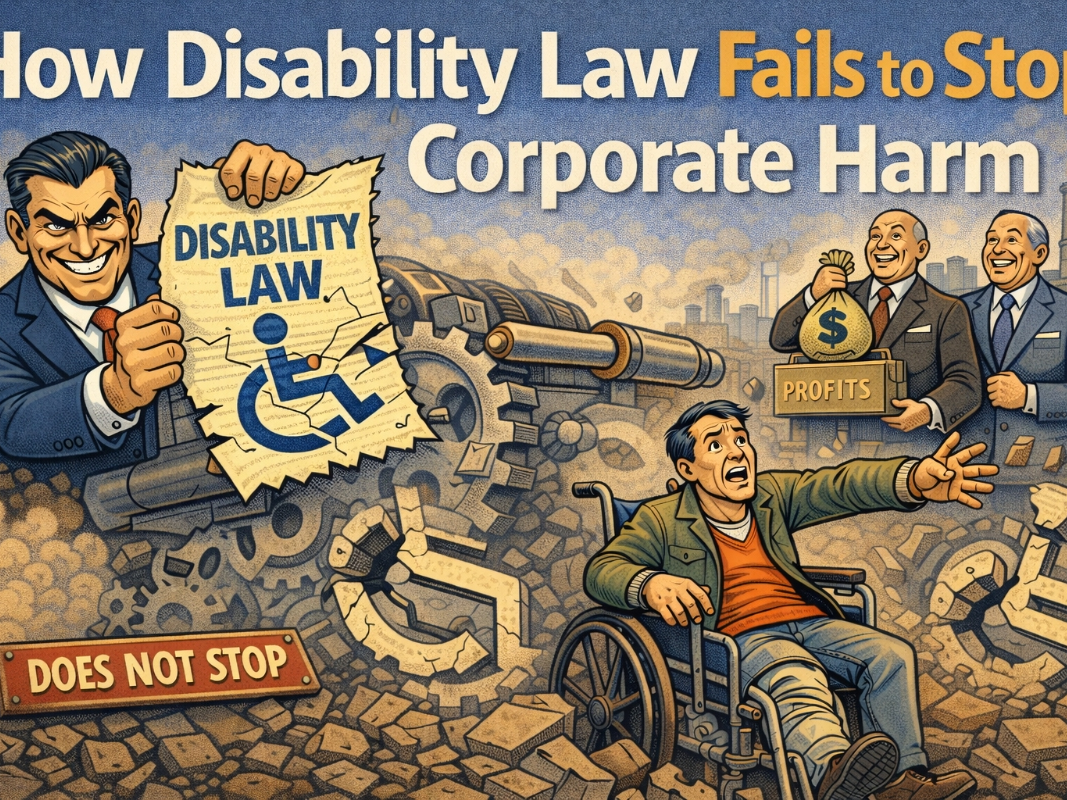
Like most people, I believed that if a disabled person encountered a problem covered by federal and state civil rights laws, there would be resources available. Advocacy groups would advocate. Agencies would assist. Legal aid organizations would provide guidance. If nothing else, someone would at least answer the phone.
Instead, I discovered something far more troubling.
For nearly a year, I have been attempting to navigate a disability accommodation dispute. The details of my case are still being reviewed through the appropriate channels, but what began as a request for a reasonable accommodation quickly evolved into something much larger. It became an education in what happens when a person who needs help enters a system that appears designed to send them somewhere else.
Find out what's happening in Orange Countyfor free with the latest updates from Patch.
Over the past year, I have contacted fair housing organizations, disability advocacy groups, legal aid providers, attorney referral services, private attorneys, government agencies, elected officials, and media organizations throughout Southern California. My search for assistance has stretched across Orange, Riverside, and San Diego counties. I filed complaints, gathered records, learned housing law, researched procedures, and spent countless hours attempting to find someone willing or able to help.
The responses were remarkably consistent. Some organizations never replied. Some lacked the resources to assist. Others referred me to another organization, which often referred me somewhere else. The result was a frustrating cycle in which finding help became a full-time job in itself.
Find out what's happening in Orange Countyfor free with the latest updates from Patch.
What concerns me most is not my own situation. It is what my experience reveals about the growing gap between rights that exist on paper and the ability to enforce those rights in reality.
I am persistent. I have access to a computer. I can research. I can write. I can organize documents and navigate government websites. I have extensive medical records, a pending complaint before the California Civil Rights Department, and enough determination to keep pushing forward when many people understandably would have stopped long ago.
If someone with those advantages cannot find meaningful assistance, what happens to the senior citizen who struggles with technology? What happens to the disabled veteran suffering from PTSD? What happens to the person working multiple jobs, caring for family members, or managing a disability that makes navigating bureaucracy nearly impossible?
We often celebrate the protections created by the Americans with Disabilities Act, the Fair Housing Act, and California's civil rights laws. Those protections matter. They were earned through decades of advocacy and remain essential safeguards for millions of Americans.
But rights are only as meaningful as a person's ability to access them.
When people spend months searching for help and cannot find it, something is wrong. When advocacy organizations are overwhelmed, legal aid programs are stretched beyond capacity, and ordinary residents are left to navigate complex systems alone, something is wrong. When a disabled person must become their own advocate, investigator, records clerk, and legal researcher simply to be heard, something is wrong.
This is not a partisan issue. Disability does not care about political affiliation, income level, age, or background. At any moment, any one of us can become the person who needs an accommodation, needs an advocate, or needs someone to explain what comes next.
The true measure of a community is not whether it has laws promising equal access. The true measure is whether people can actually access the help those laws were intended to provide.
My hope is that local leaders, advocacy organizations, legal service providers, and community members begin asking difficult questions about the disability justice gap that continues to grow around us. How many people are being turned away? How many calls go unanswered? How many residents simply give up because the process becomes too overwhelming?
Most importantly, what are we going to do about it?
Because sooner or later, someone in your family, your neighborhood, or your community will need help. When that day comes, the question will not be whether the law exists.
The question will be whether anyone answers the door.
Call to Action
If you have experienced similar barriers while seeking disability accommodations, fair housing assistance, or legal advocacy, share your story with local elected officials, advocacy organizations, and community publications. Communities cannot fix problems they refuse to acknowledge.
And if you are an attorney, advocate, elected official, housing provider, or organization serving the public, ask a simple question: If a disabled resident called your office tomorrow asking for help, would they know where to turn, and would anyone answer?