Neighbor News
The New Face of Housing Discrimination Isn't "No." It's "Not Yet."
Civil rights protections exist on paper. Enforcing them is another matter entirely.

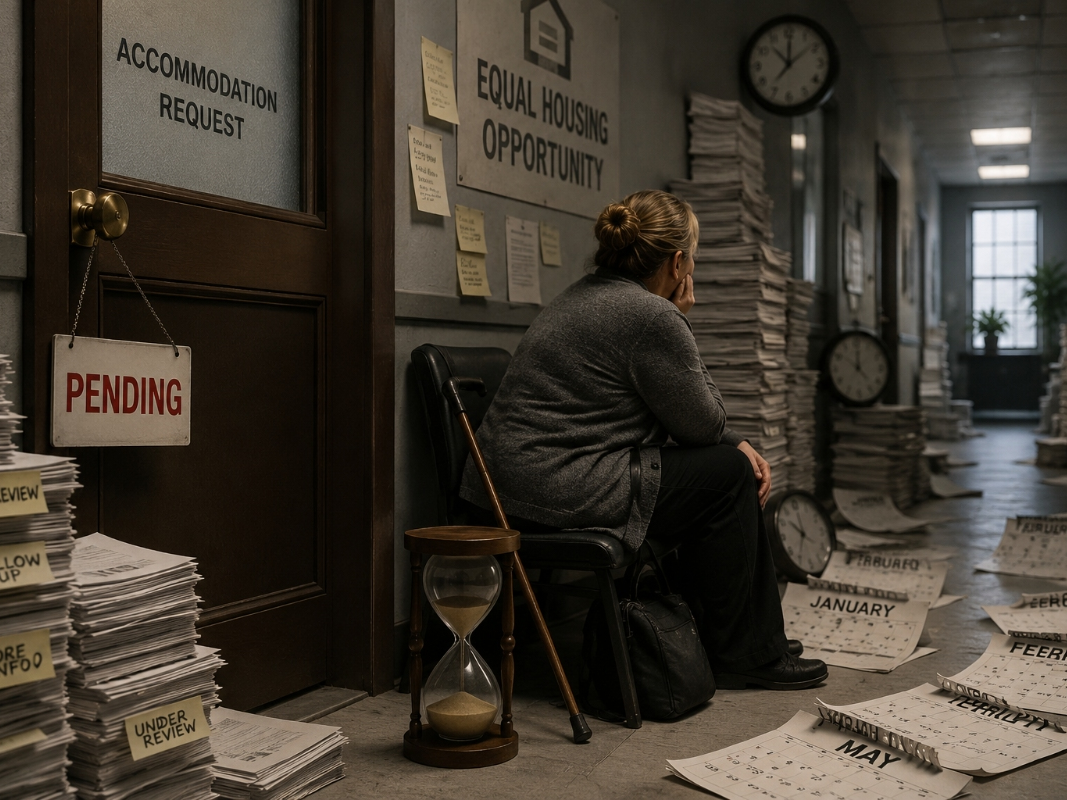
There is a common misconception about housing discrimination.
Most people imagine a landlord looking a disabled tenant in the eye and saying, "No."
That still happens. But in 2026, discrimination often looks different.
Find out what's happening in Orange Countyfor free with the latest updates from Patch.
It looks like unanswered emails.
It looks like requests for more documentation after documentation has already been provided.
Find out what's happening in Orange Countyfor free with the latest updates from Patch.
It looks like months of delays, shifting explanations, and promises that something will happen "soon."
It looks like waiting.
And waiting.
And waiting some more.
The Fair Housing Act and California's fair housing laws were created to ensure that people with disabilities have equal access to housing. On paper, those protections are clear. In reality, exercising those rights can feel impossible.
Over the last year, I have learned that there is a vast difference between having rights and being able to enforce them.
When I requested a housing accommodation related to my mobility disability, I believed the process would be straightforward. I had medical documentation. I had a long-established disability history. I had every reason to believe that if I followed the rules, the system would work.
Instead, I found myself navigating a maze of correspondence, procedural delays, agency complaints, legal research, and unanswered questions.
What surprised me most was not the complexity of the law.
It was the lack of practical access to help.
I contacted fair housing organizations. Disability advocacy groups. Legal aid offices. Attorney referral services. Private attorneys. Government agencies. Elected officials. Media outlets.
Many were sympathetic.
Few could help.
This is what many call the justice gap.
For people with resources, legal rights can often be enforced.
For people without resources, legal rights frequently exist only on paper.
A person facing housing discrimination may need to become their own investigator, records custodian, researcher, advocate, and legal assistant before they ever find someone willing to review their case.
The result is predictable.
Many people simply give up.
Not because their claims lack merit.
Not because the law is unclear.
But because the process itself becomes exhausting.
For disabled individuals, the burden can be even greater.
Every month of delay carries consequences.
Medical treatment may be postponed.
Mobility may worsen.
Anxiety increases.
Housing stability becomes uncertain.
Life does not pause while paperwork circulates between departments and attorneys.
The calendar keeps moving.
The rent keeps coming due.
The disability does not take a break.
Meanwhile, government agencies across the country continue to investigate and settle fair housing complaints involving accommodation requests, disability rights, and failures to comply with federal protections. These cases send an important message: equal housing opportunity is not achieved simply by avoiding outright denial. Housing providers must engage in good faith and respond in a meaningful and timely manner.
The public conversation about discrimination often focuses on dramatic moments. The obvious denial. The shocking statement. The smoking gun.
But many disabled tenants never receive a dramatic rejection.
Instead, they receive something far more difficult to challenge.
A perpetual maybe.
A delayed response.
A promise to revisit the issue later.
A process that stretches for months while their daily lives remain interrupted.
The most troubling question is not whether these delays are intentional.
It is whether the outcome is any different.
If a person waits so long that the accommodation loses its value, what exactly has been accomplished?
Civil rights protections are only as strong as a person's ability to access them.
Until we address the growing justice gap, many disabled tenants will continue to discover that obtaining an accommodation is not the hardest part.
Surviving the process is.
Tara Lynn Valentine is an Orange County resident, disability advocate, and business owner who has spent the past year navigating housing accommodation issues and researching fair housing enforcement.