Crime & Safety
Oil Spill: Wildlife Impact Still Uncertain As Tar Balls Wash Up
As sticky tar balls reached San Diego County this week, crews were making some progress on cleanup efforts in Orange County. What to know.


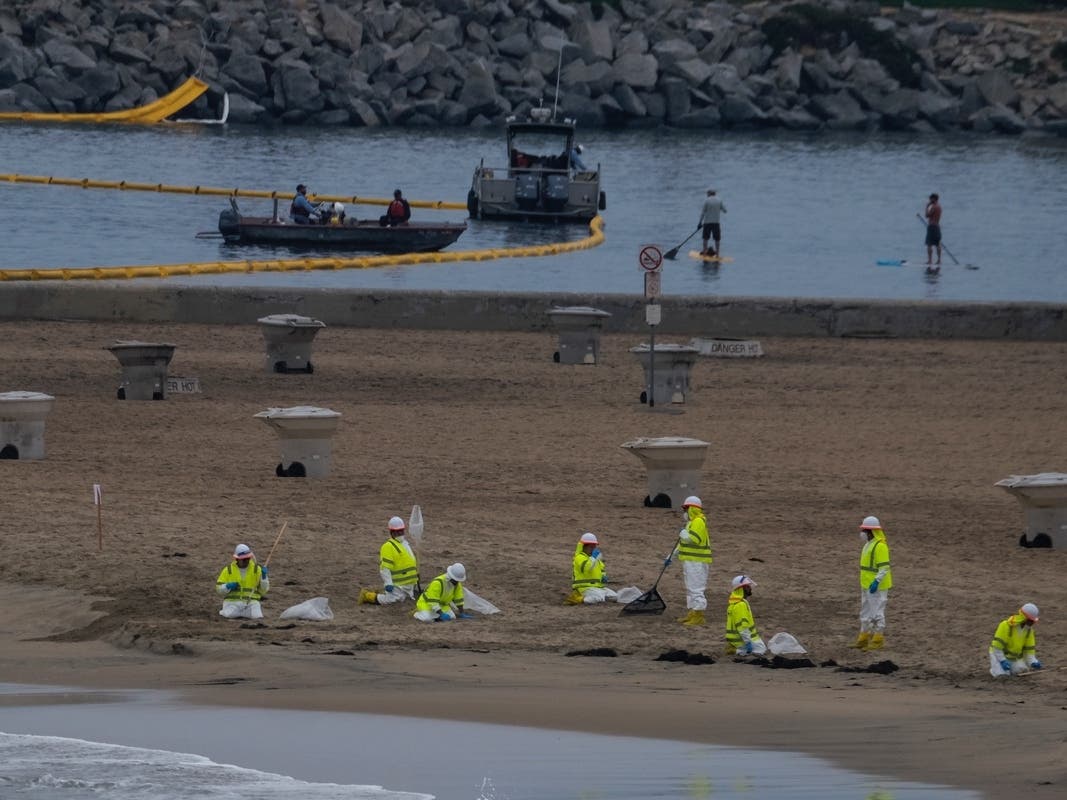
ORANGE COUNTY, CA — Tar balls were still washing ashore in San Diego over the weekend as crews made progress on cleaning up potentially one of the largest oil spills in recent Golden State history. On Saturday, more than 1,300 first responders were responding to the spill, officials said.
One week after a crude oil slick was spotted off the coast in Southern California, officials were still racing to determine just how devastating the massive spill will be for marine life. But environmentalists are already suspecting the damage won't be as dire as once thought.
“Based on what we're seeing, it's a lighter impact than expected of a worst-case discharge,” California Fish and Wildlife Lt. Christian Corbo said. “We're hoping to see less impacts to the shoreline, less impacts to wildlife, based on that lowered threshold.”
Find out what's happening in Orange Countyfor free with the latest updates from Patch.
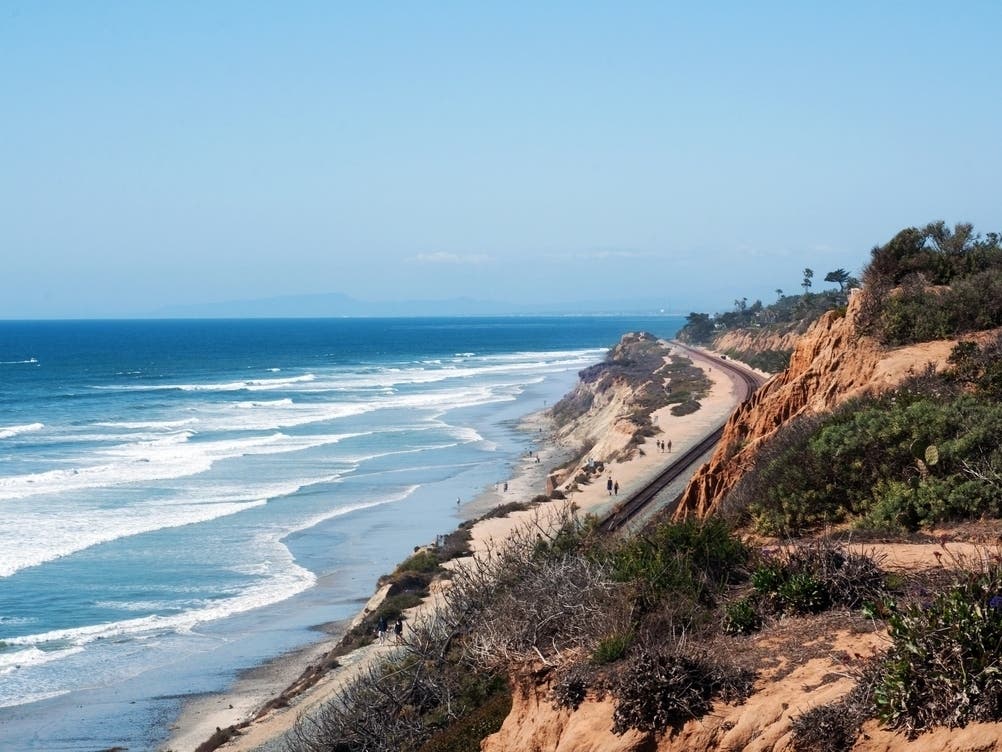
Offshore recovery teams responding to spill have not observed any free-floating oil in the water for three consecutive days, according to the Southern California Spill Response. However, officials were warning residents to be wary of tar balls, which were washing up on the beach in Southern California as the spill crept south with the ocean current.
"The public may encounter tarballs on San Diego and Orange County beaches. Oil contains hazardous chemicals, and for safety reasons, we recommend not handling tarballs or any oil," oil spill response officials wrote in a statement. Beachgoers who encounter tar balls were urged to report them here: tarballreports@wildlife.ca.gov.
Find out what's happening in Orange Countyfor free with the latest updates from Patch.
As of Saturday, some 5,544 gallons of crude oil have been recovered by vessel. And the Coast Guard is now estimating that a minimum of 25,000 gallons of oil spilled from Amplify Energy's ruptured pipline off the shores of Orange County. A maximum of 132,000 gallons — the amount the pipeline was able to hold — may have spilled into the ocean.
Initially, the news that 122,000 gallons may have leaked into the ocean was devastating to Orange County residents. The stretch of coastline is famous for its rolling surf and beach culture. Officials feared that the waters would have to remain closed for months as the cleanup effort continued. On Thursday, Huntington Beach Mayor Kim Carr said she was "cautiously optimistic" that surfers could return to the water in weeks.
"My kids surf in those waters...This is not only something that needs to be dealt with on a political level, it is very much a personal level too because this is our part of culture here," Assemblymembers Patrick O'Donnell said at a news conference last week. "These oceans are part of our culture."
The following beaches were open for volleyball, sunbathing and other activities, but visitors must stay out of the water:
- Huntington Beach
- Laguna Beach
- Newport Beach
- Huntington Beach State Park
- Bolsa Chica State Park
- Crystal Cove State Park
Although the spill so far is less calamitous than previously predicted, the long term fate of the ocean's plant and wildlife remain unknown.
In coastal spill situations, birds are typically among the first creatures to be impacted as heavy crude can adhere to their feathers. At least 10 oiled birds were found dead over five days, and 25 were recovered.. Those recovered include seven snowy plovers, which are a threatened species, according to the Oiled Wildlife Care Network.
Researchers this week were also shifting to monitor the wellbeing of a precious ecosystem that is seldom considered compared with birds and dolphins — the microbiome.
Scientists from the National Oceanic and Atmospheric Administration were working to determine the impact on bacteria, fungi, algae spores, viruses, zooplankton and some of the smallest fish in the ocean.
"When it comes to the lingering effects of oil slicks on marine organisms, size matters,” John Incardona, a research toxicologist at NOAA’s Northwest Fisheries Science Center in Seattle, told the Los Angeles Times. “Smaller organisms are going to get a bigger dose. Mature animals with gills and livers are generally less vulnerable to the toxic effects of oil."
As heavy crude continued to creep south, investigators were still working to determine whether a ship’s anchor might have snagged, bent and ruptured a pipeline owned by Houston-based Amplify Energy Corp. that shuttles crude from its three offshore platforms to a facility on the shore.
Investigators said Friday that that pipeline was likely damaged by a ship’s anchor several months to a year before the spill. Coast Guard Capt. Jason Neubauer, chief of the office of investigations and analysis, said after the first strike it’s possible other ships’ anchors subsequently struck the steel pipe that brings oil to shore from three platforms out at sea. Investigators previously said a large section of the pipe was bowed after being struck and dragged along the seabed.
It remains unknown just when the slender crack first started leaking oil. No ships have been identified as suspects at this point.
According to data provided Saturday afternoon by the Unified Command handling the cleanup effort:
-- More than 1,300 people are conducting response operations.
-- To date, 5,544 total gallons of crude oil have been recovered by vessel.
-- 13.5 barrels of tar balls were recovered Friday.
-- Approximately 232,500 lbs. of oily debris has been recovered from shorelines.
-- Three overflights were scheduled for Saturday.
-- 11,400 feet of containment boom have been strategically deployed.
SEE ALSO:
"We’re going to be looking at every vessel movement over that pipeline, and every close encroachment from the anchorages for the entire course of the year," Neubauer said.
At a news conference in Huntington Beach Wednesday, Amplify Energy CEO Martyn Willshire faced a barrage of questions about whether Amplify reported the spill in time. Federal officials determined this week that Amplify did not quickly shut down operations after a safety system alerted to a possible spill.
Willshire denied these accusations during the conference, maintaining that Amplify reported the spill as quickly as possible after the company learned of the leak.
At a certain point, Willshire walked away from a reporter's question during Wednesday's news conference, leaving an empty podium at his back.
"We are working with them, giving them all the transparency and information that we have," Willsher said.
As for whether there was an alarm that alerted crews to a pressure drop, he said. "We are conducting a full investigation of that ... to see if there was anything that should have been noticed."
But he questioned whether there were any signs of alarm.
"I'm not sure if there was a significant loss of pressure," Willsher said, adding that when his company's crews saw oil in the water at 8:09 a.m., an emergency response was initiated.
Willsher said his company was also unaware of any reports of a sighting of oil in the water as early as 6 p.m. Friday.
"If we were aware of something (last) Friday night, I promise you we would have immediately stopped all operations and moved forward," he said.
Ever since the devastating 1969 Santa Barbara spill that spurred today's environmental movement, the Golden State has become a role model for restricting offshore oil drilling. But this week's ecological disaster has reignited arguments over whether the state should do away with such drilling altogether.
But that's easier said than done.
The state hasn't issued a new lease for another platform in state water in five decades but drilling from existing facilities continues. Similarly, an effort in Congress that aims to halt new drilling in federal waters — more than 3 miles off the coast — wouldn't stop drilling that's already happening.
Gov. Gavin Newsom said Tuesday during a visit to Orange County that it's easier to resist new drilling than to wind down what already exists.
"Banning new drilling is not complicated," Newsom told reporters. "The deeper question is how do you transition and still protect the workforce?"
He urged a new sense of urgency to curb oil production, including by issuing more permits for well abandonment.
"It's time, once and for all, to disabuse ourselves that this has to be part of our future. This is part of our past," he said.
Elly is one of 23 oil and gas platforms installed in federal waters off the Southern California coast, according to the Interior Department's Bureau of Ocean Energy Management. Besides Elly, a processing facility, there are 20 others that produce oil and gas, and two are being decommissioned.
The offshore platform system has been linked to earlier leaks, including a 2,000-gallon spill that led to a $48,000 federal fine against the operator for improper calibration of a leak-detection system. The corroded pipeline carried oil, water and gas from Eureka to Elly, the Los Angeles Times reported about the 1999 incident.
The City News Service and Associated Press contributed to this report.
Get more local news delivered straight to your inbox. Sign up for free Patch newsletters and alerts.