Politics & Government
Feinstein Defeats de Leon In California's Battle Of Liberals
Sen. Dianne Feinstein fended off a progressive challenge by state Sen. Kevin de Leon to head back to a Senate that moved even further right.


LOS ANGELES, CA — Californians once again turned to veteran Senator Dianne Feinstein to steer the state through the remainder of President Trump's first term.
The 85-year-old senator was re-elected over progressive challenger state Sen. Kevin de Leon. Voters broke with the state Democratic Party in choosing Feinstein and rejecting de Leon's call for more aggressive resistance to the Trump administration. In do so, California voters keep a centrist senator but also one of the most influential Democrats in Congress. Republicans appeared on track to strengthen their majority in the Senate Tuesday night, and Feinstein campaigned, in part, on her ability to work through gridlock even if that means compromising with Republicans.
Not surprisingly, it’s been a battle between the left and lefter in California’s U.S. Senate race. The race reflects the tension in a party being pulled leftward since 2016. The battle between ideological purity and pragmatism isn't likely to end any time soon among Democrats in California.
Find out what's happening in Pacific Palisadesfor free with the latest updates from Patch.
As predicted, early returns put Feinstein in the lead Tuesday night with a 10 point lead as of 10:35 p.m. Several outlets including CNN and the Sacramento Bee projected her victory not long after polls closed Tuesday.
Going into Tuesday, Feinstein, the 85-year-old centrist, seemed likely to keep her seat as one of the most influential Democrats in the Senate. Though she may coast into re-election, it was still a bruising campaign season which saw the state Democratic Party issue a surprise endorsement for de Leon, sending a clear message that they party is eager to see a more combative approach to handling the Trump administration. For California Republicans, it was a frustrating election offering them a choice between a far-left Democrat who vowed to fight President Donald Trump at every turn and a centrist Democrat who took center-stage in the bitter Brett Kavanaugh Supreme Court nomination hearings.
Find out what's happening in Pacific Palisadesfor free with the latest updates from Patch.
Going into election day, Feinstein led de Leon 45 to 36 percent, according to a poll by the UC Berkeley Institute of Governmental Studies. A Public Policy Institute of California poll from mid-October had the her ahead by 16 points. In both polls, Democrats favor Feinstein at least 2- 1, while independents favor de Leon. Up to half of Republicans say they either will not vote in the race between two Democrats or are undecided.
Throughout the campaign, de Leon sought to to appeal to voters looking to take the liberal fight to Trump.
Related: 2018 Election Results: Vote A Referendum On 'Trump's GOP'
"We cannot move California's progress forward if the status quo keeps resisting the resistance," de Leon said, though he did not call out Feinstein directly. "I do believe it's time for a new approach. I do believe it's time for a new voice."
He frequently reminded voters that Feinstein famously called on them to give Trump a chance following his surprise win in 2016. De Leon, the first Latino president pro tem of the California Senate in more than a century, has seized on comments that Feinstein made when she said voters should have "patience" with Trump and that she still hoped he could be a "good president."
Despite those remarks in the first year of Trump's presidency, Feinstein has largely voted with Congressional Democrats in opposing Trump's policies. She’s hardly his ally after she almost derailed Kavanaugh's nomination to the Supreme Court by bringing forth allegations of sexual assault by the judge. Her role in the historic Supreme Court nomination hearing also burnished her liberal credentials while drawing the wrath of Trump supporters.
Throughout her long career, she has become slightly more liberal as her party lurches leftward.
Namely, she has move to the left on the death penalty, recreational marijuana and fracking.
Feinstein is perhaps best known as a strong advocate for gun control and for being the author of the 1994 Federal Assault Weapons Ban, which expired in 2004. She became mayor of San Francisco when Mayor George Moscone and Supervisor Harvey Milk were shot in City Hall in 1978. She has made gun control a focus of her campaign at a time when the issue has been a national talking point in the aftermath of several mass shootings.
De Leon, 51, represents the state Senate's 24th District, which encompasses downtown and East Los Angeles. He vowed to be a liberal lion for California as a tougher critic and open enemy of of President Donald Trump on issues ranging from immigration and healthcare to climate change.
Feinstein has the endorsement of Gov. Jerry Brown, gubernatorial candidate and Lt. Gov. Gavin Newsom, Los Angeles Mayor Eric Garcetti and the Los Angeles Times, among many others. But she was snubbed by the state Democratic Party, which endorsed her opponent. De Leon also has the backing of more labor unions, including the powerful California Labor Federation and Service Employees International Union, as well as many of his colleagues in the Senate and other state, city and county officials. La Opinion, the largest Spanish-language newspaper in the country, has also endorsed him.
Both candidates support universal health care, but de Leon has backed a push to create a single-payer system in California, something Feinstein doesn't endorse. Her record on immigration rights includes her Keep Families Together Act, which aims to end the practice of separating children from parents at the U.S.-Mexican border, and she sits on the Senate committee responsible for immigration reform. De Leon introduced California's "sanctuary state" bill, which is supported by a majority of California voters, particularly in Los Angeles, San Francisco and San Diego counties.
In the only debate between the two candidates, Feinstein sought to claim her experience as an asset, while de Leon argued that politicians in Washington lacked courage to take action on critical issues such as immigration reform and climate change.
In addition to serving as the ranking member of the judiciary committee, Feinstein's seniority in the Senate affords her key seats on the intelligence and appropriations committees. Characterizing herself as a veteran of partisan infighting, she positioned herself as better able to step up if Democrats regain control of the House.
"You can march, you can filibuster, you can talk all night," Feinstein said. "It doesn't change anything. What changes things are elections."
That and a campaign budget that dwarfs de Leon's -- her campaign had $4.2 million in cash available as of Oct. 17, while he had just under $300,000 - - have helped give her what seems enough of an edge to win, barring unexpected support for de Leon from Republican voters.
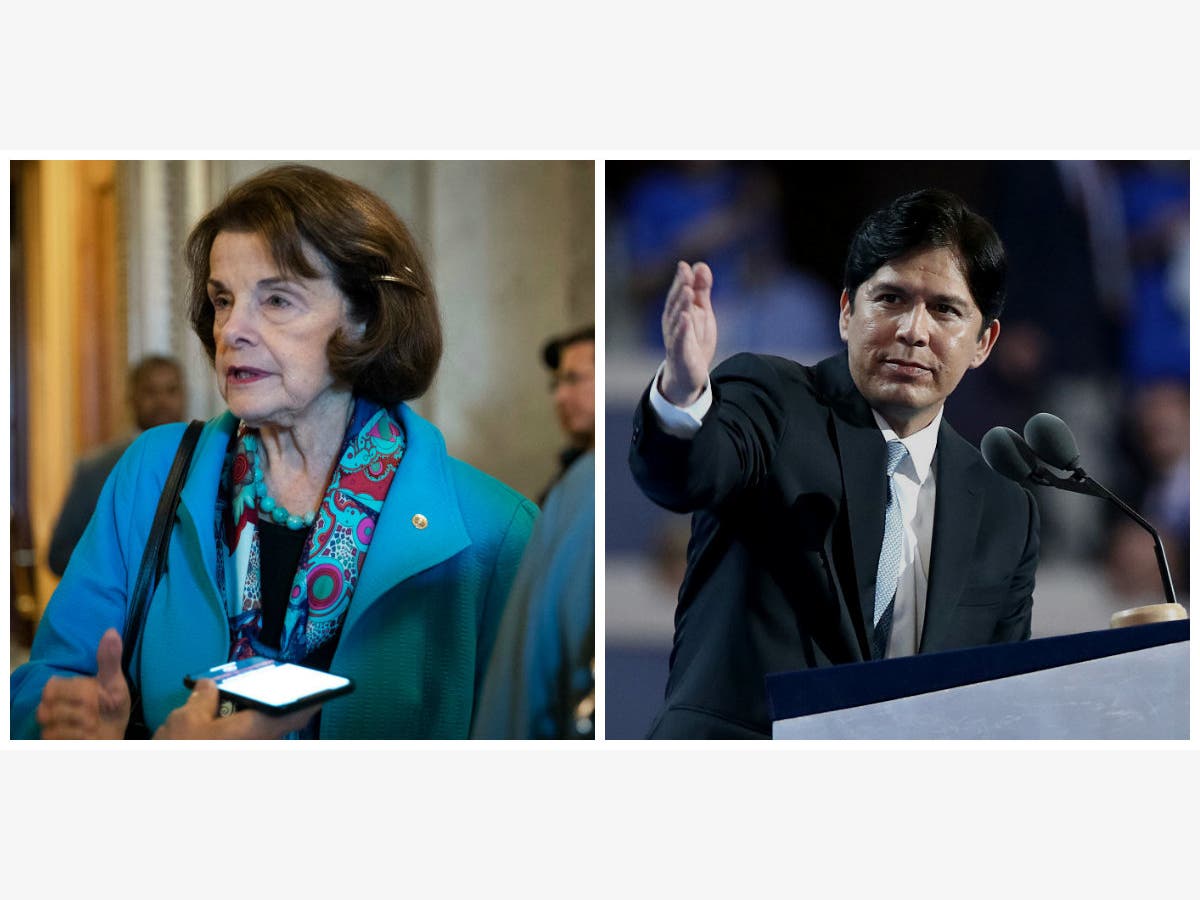
City News Service and Patch Staffer Paige Austin contributed to this report. Photo: Sen. Dianne Feinstein (D-CA) talks to reporters as she exits the Senate floor following the Senate's confirmation of the nomination of Judge Brett Kavanaugh to the U.S. Supreme Court, October 6, 2018 in Washington, DC. Kavanaugh was confirmed in a 50-48 vote on Saturday. (Photo by Drew Angerer/Getty Images)
JULY 25: California State Senator Kevin de Leon delivers a speech on the first day of the Democratic National Convention at the Wells Fargo Center, July 25, 2016 in Philadelphia, Pennsylvania. (Photo by Jessica Kourkounis/Getty Images)
Get more local news delivered straight to your inbox. Sign up for free Patch newsletters and alerts.