Community Corner
Glowing Blue Waves Hit Southland Beaches Thanks To Algae Bloom
A massive algae bloom spanning the length of Southern California's coastline is causing glowing blue waves.


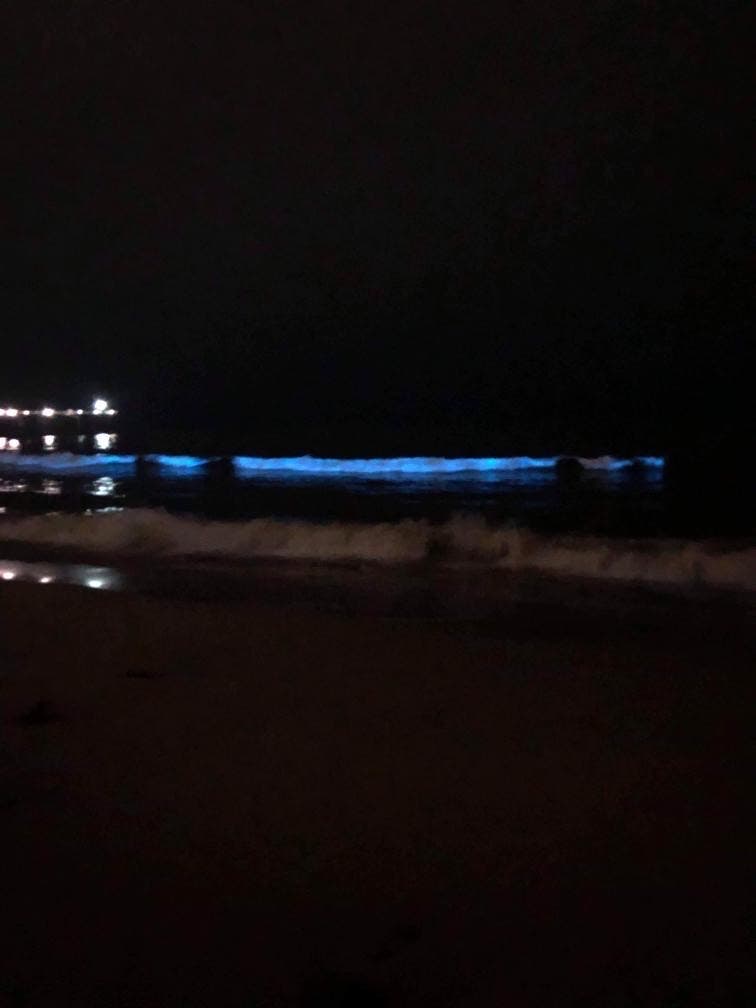
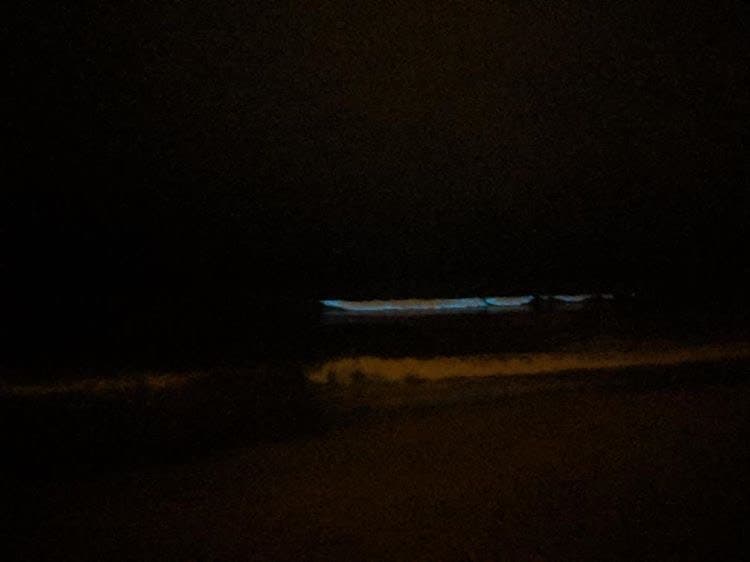
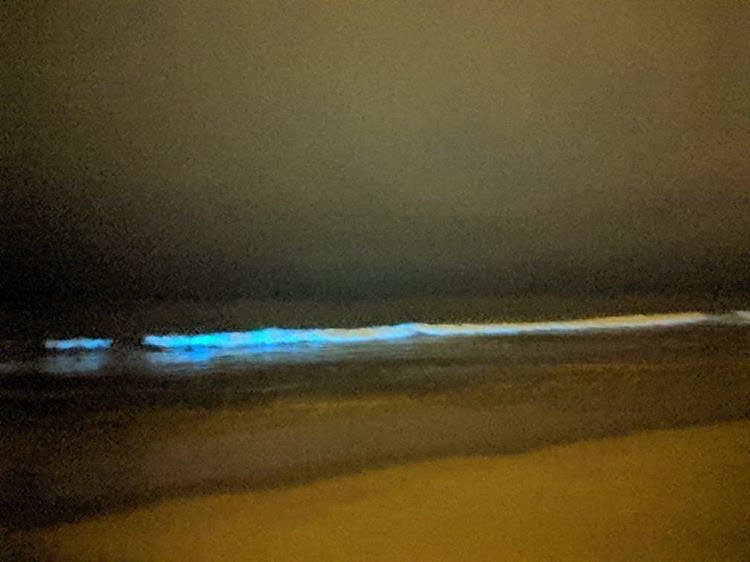
LOS ANGELES, CA — One of Southern California’s most stunning natural phenomena is lighting up Southern California’s coastline even as most beaches remain closed to the public. A massive algae bloom spanning the length of Southern California’s coastline has caused glowing blue waves to crash upon the shore at night from Los Angeles to San Diego for more than a week now.
The algae bloom, known as a “red tide” is bioluminescent, and it glows when agitated by splashing or by waves. Red tides are unpredictable, and they don’t occur in Southern California every year. It’s not clear how long the red tide will continue or if it will outlast the beach closures. The majestic blue tides have been spotted sporadically in Hermosa Beach, Huntington Beach and Carlsbad.
The phenomenon is caused when large numbers of dinoflagellates form a bloom. Dinoflagellates use bioluminescence as a predator avoidance behavior, according to bioluminescence expert Michael Latz, a scientist at Scripps Institution of Oceanography at UC San Diego.
Find out what's happening in Pacific Palisadesfor free with the latest updates from Patch.
The current red tide is due to aggregations of the dinoflagellate Lingulodinium polyedra, Latz said. The species is known for its bioluminescent displays.
Red tides are unpredictable and not all of them produce bioluminescence. Scientists do not know how long the latest display will last. Local red tides have lasted for days like in May 2018, or for one to two weeks like the red tides in September 2013 and June 2019, Latz said.
Find out what's happening in Pacific Palisadesfor free with the latest updates from Patch.
Kristina Houck contributed to this report.
Get more local news delivered straight to your inbox. Sign up for free Patch newsletters and alerts.