Community Corner
Purim Comes Early at Kehillat Israel
Costumed revelers make a joyful noise to celebrate a historic victory of the Jewish people
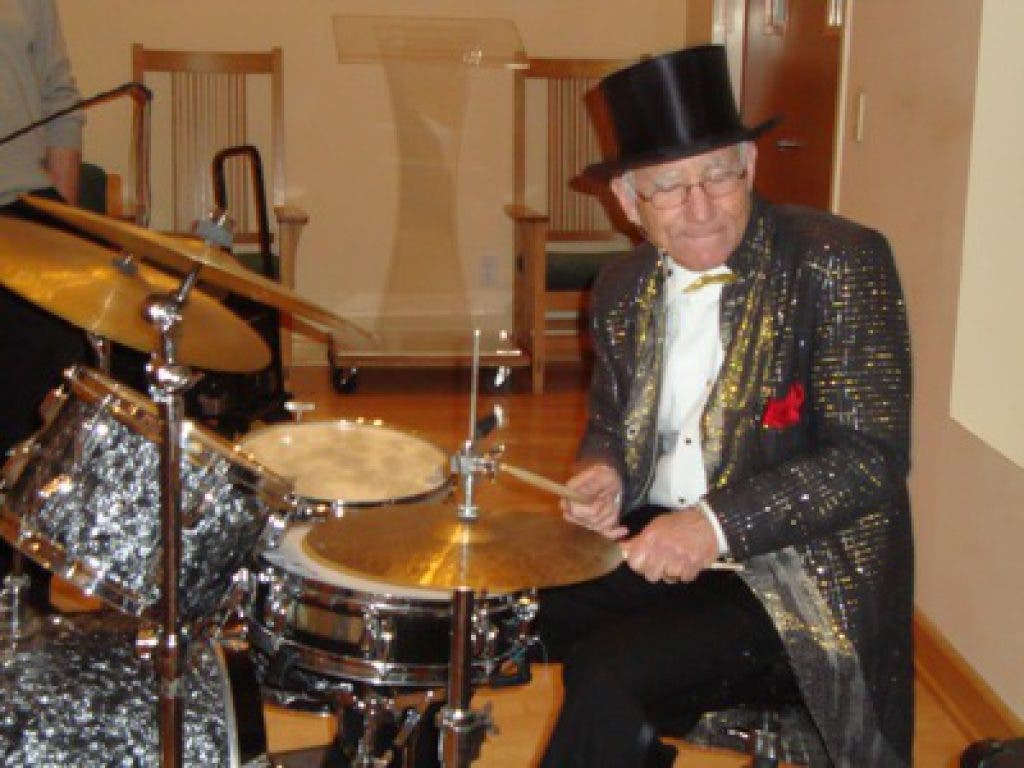


Palisades synagogue got a jump on Purim – literally – with two bouncy castles in its courtyard Friday afternoon. The inflated citadels were overflowing with tiny superheroes, jocks, faeries and, of course, Queen Esthers, representing the heroine of our story.
Purim is a holiday that commemorates a Jewish triumph over the threat of annihilation in ancient Persia. The tale is told in the Scroll or Megillah of Esther, a biblical scripture that relates how the wicked Haman, vizier of King Ahasuerus, won a decree of death against all the Jews of the city of Shushan. But beautiful and Jewish Queen Esther and her cousin Mordecai appealed to the king and he allowed them to turn the decree around and exact revenge on their would-be destroyers. He also replaced Haman with Mordecai as Prime Minister.
The victory of life over death is celebrated by turning everything upside down. It’s like Mardi Gras and April Fools Day rolled into one. Revelry includes masks and costumes, games and plays, and drinking (though all they served at the synagogue was lemonade).
Find out what's happening in Pacific Palisadesfor free with the latest updates from Patch.
God is never mentioned in the megillah but traditional teaching is that the Almighty is working behind the scenes to achieve the happy outcome. The mystical meanings of Purim have to do with hiddenness and revelation. Rabbi Amy Bernstein explains what she finds "therapeutic" about the masquerade:
All the things that we want to let out about ourselves, that we’re not comfortable doing necessarily the rest of the time when we’re ourselves, and the way we can let go differently, and have a real sense of humor about life and about ourselves and different situations.
Find out what's happening in Pacific Palisadesfor free with the latest updates from Patch.
Rabbi Bernstein, blinged out in skintight leopard pants and poufy blonde wig, said she was Bethany Bernstein, Real Housewife of Atlanta. See for yourself when you view the picture gallery.
The Kehillat Israel festival began during Friday Shabbat. Four hundred costumed characters enjoyed entertainment by circus acts including acrobats, jugglers and a magician, all whipped into shape by ringmaster Rabbi Stephen Carr Reuben.
After the performances and pizza, the rowdy crowd moved into the temple sanctuary but the din never subsided, even when the new , completed just last week, was unrolled for the entire congregation to see.
Little kids smushed together on the center rug to listen to teenagers of the synagogue’s B’nai B’rith Youth Organization chapter perform a Purim shpiel (play) of the Book of Esther. Attentively, they all made sure to spin their graggers (noisemakers) loudly to blot out the name of Haman every time it was mentioned. Then they all jumped up for the costume parade, which you can see in the accompanying video.
Finally, Cantor Chayim Frenkel read select portions from the congregation’s new, hand-written Megillah Esther, fulfilling one of the commandments of Purim. He finds in the story a lesson on the nature of perseverance:
That we are not going to let one person murder us, to make us extinct. They’ve certainly tried from the Amalekites all the way to the Hamans, the Hitlers, and they’ve done a good job in persecuting us but we’re still here. And we’re still perpetuating values that are universal values of doing good for the world and being good role models and a beacon of light, an Or LaGoyim. That’s what the Torah says that we are, we’re a people who are a light unto the nations.
Rabbi Reuben closed the service with the traditional mourners’ Kaddish prayer, in remembrance of deceased loved ones as well as the victims of this week’s tragedy in Japan and the Fogel family, murdered in their beds by terrorists in the Itamar settlement in the West Bank.
“Do we let that be the end of the story?” asks Rabbi Bernstein, referring to a mass killing that occurred in Israel while she was there during another Purim. “Or do we say No, we’re going to find a way to hold both of those things together, to hold both the tragedy and reality of what happens and how scary that is and the things we can do to each other as human beings and how horrible that can be? Or do we find a way to hold that with levity and some light and some humor and some goodness and some hope and some optimism? And I think that’s what Purim is.”