Crime & Safety
Elizabeth Holmes, Disgraced Theranos Founder, Gets 11 Years In Prison
Holmes, 38, has been accused of scheming to blindside investors in the blood-testing company.


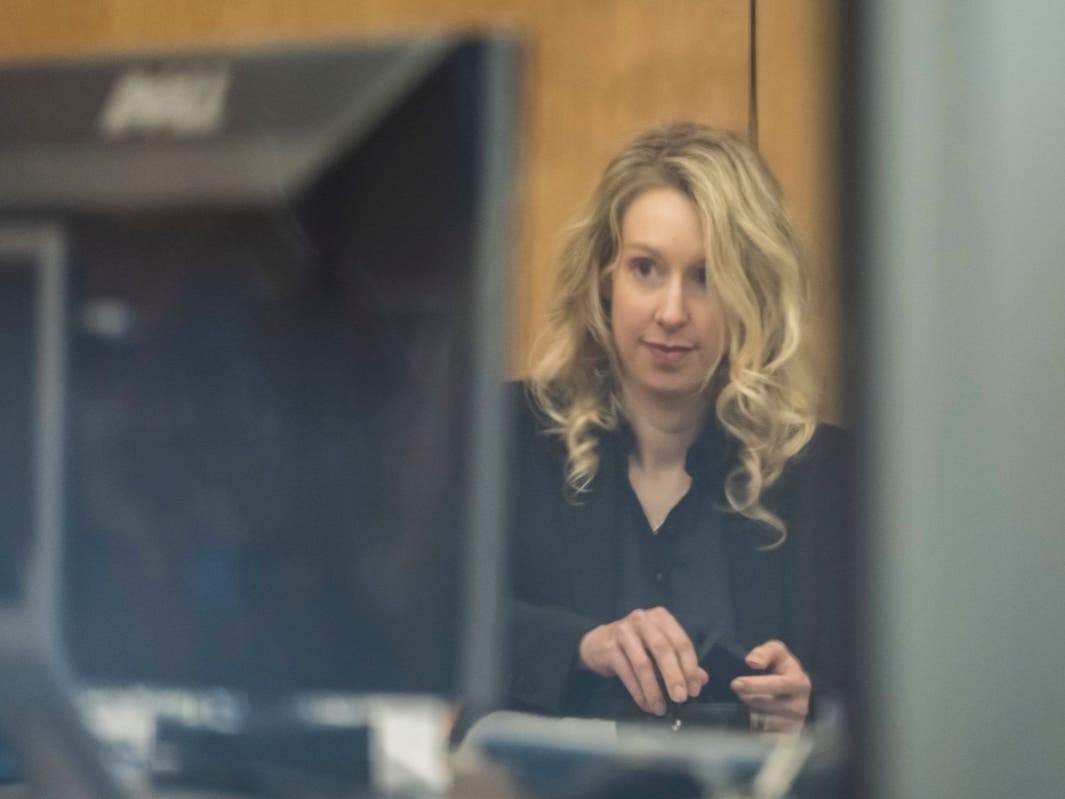
PALO ALTO, CA — Elizabeth Holmes, the founder of disgraced medical startup Theranos who was found guilty of investor fraud in January, was sentenced to 11.25 years in prison on Friday.
Her prison sentence will be followed by three years of supervised release and Holmes will be required to self-surrender on April 27, NBC's Scott Budman reported from the courtroom.
"I am devastated by my failings," Holmes said just before sentencing, according to Budman. "I have felt deep pain for what people went through, because I failed them ... To investors, patients, I am sorry."
Find out what's happening in Palo Altofor free with the latest updates from Patch.
“What is the pathology of fraud?" U.S. District Judge Edward Davila said just before announcing the sentence. "Is it the inability to accept responsibility? Perhaps that [is] the cautionary tale to come from this case.”
Holmes, 38, has been accused of scheming to blindside investors in the blood-testing company, asserting that using a state-of-the-art portable device known at the Edison, Theranos was able to test for hundreds of diseases and conditions using a single drop of blood — a claim which turned out to be patently false.
Find out what's happening in Palo Altofor free with the latest updates from Patch.
The saga played out on screen in an HBO documentary and an award-winning Hulu TV series about her meteoric rise and mortifying downfall.
Following a 15-week trial that concluded in January, a jury found Holmes guilty of one count of conspiracy and three counts of wire fraud in connection with a multi-million-dollar scheme to defraud investors in Theranos, Inc.
Months later, in July, her partner—Theranos Chief Operating Officer Ramesh “Sunny” Balwani—was found guilty of two counts of conspiracy and ten counts of wire fraud in connection with Theranos' operations.

On Friday, U.S. District Judge Edward Davila took center stage to determine Holmes' sentence, with the federal government recommending she is sent to federal prison for 15 years while her lawyers requested no more than 18 months, preferably served in home confinement.
Federal prosecutor Robert Leach, who emphatically declared Holmes deserves severe punishment for engineering the scam, wrote a 46-page memo to the judge arguing that Holmes "preyed on hopes of her investors that a young, dynamic entrepreneur had changed healthcare." In the years since Theranos crashed and burned, Holmes' most vehement critics emphasized how the scheme endangered patients whose doctors relied on the accuracy of Edison lab tests to make crucial decisions about treatment for serious illness.
Meanwhile, Holmes' lawyers argued that she deserves more lenient treatment as a well-meaning entrepreneur who is now a devoted mother with another child on the way. Their arguments were supported by more than 130 letters submitted by family, friends, and former colleagues praising Holmes.
Holmes, of Woodside, California, founded Theranos, which was based in Palo Alto and Newark, California, in 2003.
She claimed that her invention, a minilab that was able to perform a full range of tests using a blood sample obtained from a finger prick, also could provide results that were faster and more accurate than those yielded by conventional methods.
Evidence submitted during the trial demonstrated that Holmes knowingly made false representations about Theranos technology to investors and potential investors, despite knowing that the minilab had accuracy and reliability problems, performed a limited number of tests, and was slower than some competing devices, according to the Department of Justice.
Evidence also showed that when the Edison machines failed, Holmes resorted to using conventional machines to perform much of Theranos’s blood testing.
The Associated Press contributed to this report.
Get more local news delivered straight to your inbox. Sign up for free Patch newsletters and alerts.