Health & Fitness
Lessons Learned From Babushkas Living in Shadow of Chernobyl
According to award-winning filmmaker Holly Morris, 'Home and community are forces that rival even radiation.'

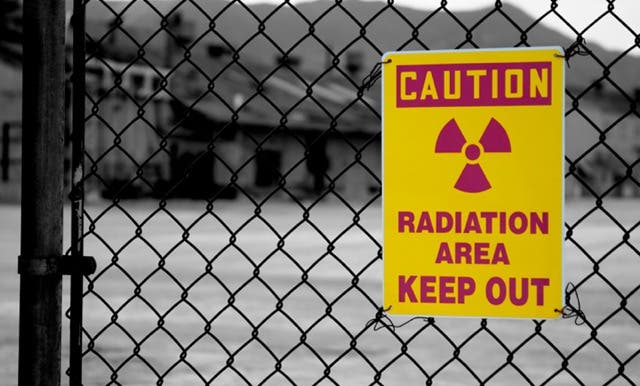
How is it that a bunch of 80-year-old grandmas living on the most radioactive farm land on earth are able to outlive their city-dwelling counterparts by as much as10 years? No one knows for sure, but according to Holly Morris, it may have something to do with the sense of connection that these women couldn’t find anywhere else.
“The power of motherland, so fundamental to that part of the world, seems palliative,” says the director and producer of the award-winning documentary “The Babushkas of Chernobyl,” which chronicles the lives of three of these women. “Home and community are forces that rival even radiation.”
It was 30 years ago when one of the reactors at Chernobyl's Vladimir Illyich Lenin Nuclear Power Station in the former Soviet Union exploded, sending radioactive material throughout Russia, Belarus, and Ukraine. Over 160,000 people were relocated from the area. However, about 180 “self-settlers” remain, most of them women, refusing to leave the only home they’ve ever known.
Find out what's happening in Palo Altofor free with the latest updates from Patch.
It’s unlikely that any of us will ever live through such a tragedy or face such steep odds against our survival. Still, there’s a lesson to be learned from these women about how we might navigate our way through situations that, although perhaps not as obviously overwhelming, can feel just as toxic.
Not too long after the incident in Chernobyl, a good friend of mine found herself in just such a position. After living with an abusive husband for 15 years, she divorced, remarried, and again found herself in an unhappy – some might say toxic – marriage, ultimately suffering from a debilitating disease.
Find out what's happening in Palo Altofor free with the latest updates from Patch.
“For the next two and a half years, I sought medical help, endured endless medical tests, and took countless prescription drugs,” she writes in a published account. “But my health continued to deteriorate. Finally, during one visit, the doctor told me that I had stomach cancer, and that this particular type could not be treated medically.”
As her symptoms worsened, she found that she was unable to eat most foods and could hardly sleep. Then one day she tried to commit suicide by downing a bottle of sleeping pills, leaving her in a coma and eventually in the hospital on life support. When she regained consciousness five days later, she realized the only thing she had neglected to do throughout her many years of misery was to pray for help. Over time this realization would translate into a renewed and ongoing commitment to seeing herself, not as the victim of capricious human circumstances, but as the expression of a consistently loving God.
“As I lay in the hospital bed over the next three days, unable to sleep at all, much of what I had learned in… Sunday school 30 years earlier flooded into my thought,” she writes, describing a kind of spiritual homecoming. “To the astonishment of the physicians, I recovered from the effects of the overdose in those few days.”
Still, she found herself having to confront the larger problem of the cancer diagnosis. After being released from the hospital – and with encouragement from a friend – she continued with her prayers. This gave her a sense of hope that she could be healed, and within five months, she was. Since then she hasn’t experienced a single symptom of cancer.
“A wonderful transformation of my character has also taken place,” she writes, “and, in turn, my marriage is now harmonious and happy.”
Although my friend’s experience is worlds apart from that of those intrepid babushkas in Chernobyl, her story provides an equally compelling example of what Holly Morris describes as the “transformative connections to home” and “the magnificent tonic of personal agency and self-determination.” In the case of the babushkas, it was the determination to maintain a healthy, even sacred, spirit of community in the midst of an isolated wasteland. For my friend, it was a desire to nurture those long-neglected spiritual roots that would eventually restore not just her body and her marriage, but her sense of home in the Divine.
In both cases, there are lessons for us all to learn.
Eric Nelson writes about the connection between consciousness and health from his perspective as a practitioner of Christian Science. He also serves as the spokesperson for Christian Science in Northern California. Connect with him on About.Me/NorCalCS. This article originally appeared on Communities Digital News.